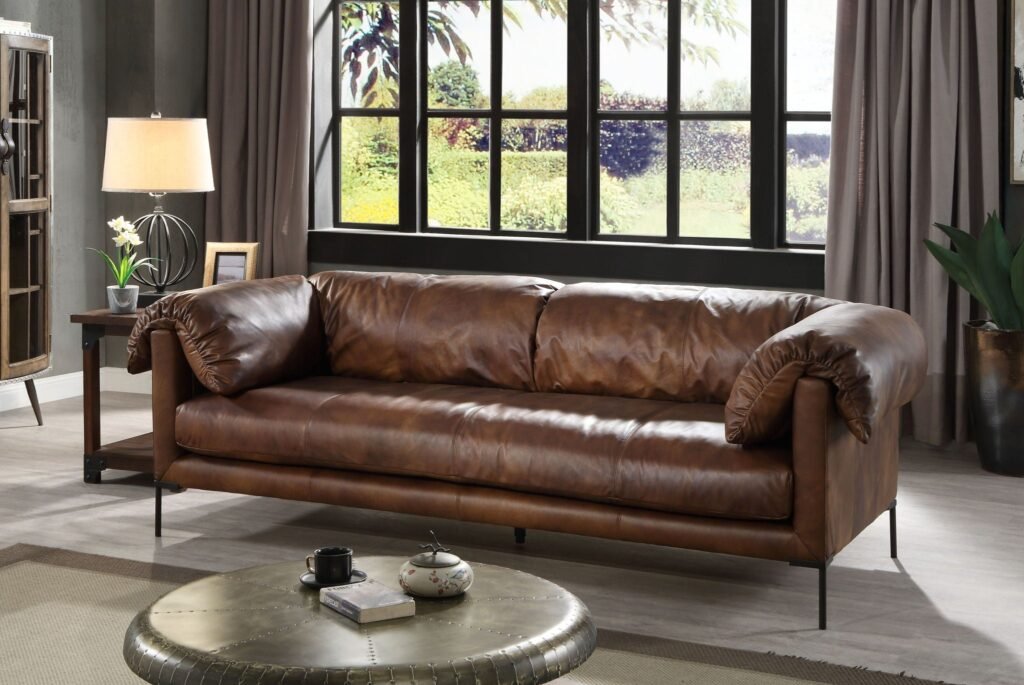
Learning how to clean a leather sofa without leather cleaner is easier than most people expect. A bottle of store-bought leather cleaner is convenient, but it is not the only way to keep a leather sofa looking good. Simple household ingredients such as white vinegar, mild castile soap, and olive oil can remove everyday dirt, lift stains, and restore softness — as long as you use them correctly and match the method to your type of leather. The key is to work gently, test every solution in a hidden spot first, and never soak the leather. Before you start, gather soft microfiber cloths, a vacuum with a brush attachment, white vinegar, castile soap, olive oil, cornstarch, and rubbing alcohol.
Identify Your Leather Type Before You Clean
Not all leather sofas are made the same way, and the cleaning method that is safe for one type can damage another. Check the tag sewn under a cushion or on the underside of the sofa for the leather type or a care code. If the tag is missing, try a simple water-drop test on a hidden area: place one drop of water on the surface. If it beads up and sits on top, you almost certainly have finished or protected leather, which is the most common type for sofas. If the water soaks in and darkens the spot, you have unfinished or aniline leather, which absorbs moisture easily and needs a much gentler touch.
Finished leather has a thin protective coating that resists stains and moisture, and the methods in this guide are designed for it. Aniline and semi-aniline leather look softer and more natural, but they stain easily and should only be cleaned with a barely damp cloth and a product made specifically for them. Suede and nubuck are not smooth leather at all — they have a velvety nap, and water, vinegar, or oil will leave permanent marks on them. If your sofa is suede or nubuck, skip the methods below and use a suede brush and a suede-specific cleaner instead. When in doubt about the type, test in the least visible corner and wait for the spot to dry fully before moving on.
Step 1: Vacuum and Dust the Sofa
Every cleaning session should start with dry removal of dust, crumbs, and pet hair. Run the vacuum over every surface using the soft brush attachment, working in short, even passes. Pay attention to the seams, creases, and the gaps between cushions, where dirt collects and grinds into the leather every time someone sits down. Use the crevice tool for the space between the seat and the backrest, and lift each cushion to vacuum underneath. Finish with a dry microfiber cloth wiped across the arms, back, and seat. This step matters: wiping a dirty sofa with a damp cloth drags grit across the surface and creates the faint scratches that make leather look dull over time. The same habit applies to other furniture care jobs — for example, stopping a dog from chewing furniture starts with keeping the piece clean and unattractive to chew.
Step 2: The Vinegar and Water Wipe
For routine cleaning, a simple vinegar solution is one of the most effective options. Mix equal parts distilled white vinegar and lukewarm water in a spray bottle or bowl — one cup of each is plenty for a full sofa. Dampen a microfiber cloth in the solution and wring it out until it is barely moist. Wipe the leather in small sections, working from the top of the backrest down to the seat and arms, using light, even pressure. The vinegar cuts through body oils, light grime, and the sticky film that builds up from everyday use, while the water keeps it gentle.
Do not spray the solution directly onto the sofa, and do not let any section stay wet. After wiping each section, follow immediately with a second clean, dry cloth to buff away moisture and lift the loosened dirt. The vinegar smell fades as the leather dries, usually within an hour. This method works well as a monthly maintenance clean and is safe for finished leather. It is not the right choice for unfinished leather, because the moisture will soak in, and it should never be used on suede.
Step 3: The Castile Soap Solution
When vinegar alone is not enough — for example, after a spill or a build-up of grime on the armrests where hands rest — a mild castile soap solution is the next step up. Add just a few drops of liquid castile soap to a bowl of lukewarm water and stir gently until the water is slightly cloudy. You want a very dilute solution; too much soap leaves a sticky residue that attracts more dirt. Dip a soft cloth into the solution, wring it out well, and wipe the leather in small circles. Work one section at a time and rinse the cloth often in clean water.
Castile soap is a good choice because it is a plant-based, gentle soap with no harsh detergents, dyes, or heavy fragrances. It lifts grease and dirt without stripping the leather’s natural oils the way dish soap or all-purpose cleaners can. After washing, wipe the section with a cloth dampened in plain water to remove any soap residue, then buff dry with a clean cloth. Let the sofa air-dry away from direct sunlight and heat vents, and never use a hair dryer to speed drying — concentrated heat dries out leather and can cause cracking. The same gentle touch helps with jobs like removing pet hair from a couch without a vacuum, where a damp cloth and patience beat harsh tools.
Step 4: Condition With Olive Oil and Vinegar
Cleaning removes dirt, but conditioning is what keeps leather soft and prevents cracking. A homemade conditioner made from olive oil and vinegar works well on finished leather. Mix one part white vinegar with two parts olive oil in a small bowl — for example, one tablespoon of vinegar to two tablespoons of oil. Dip a clean, soft cloth into the mixture, then apply it to the leather in thin, even strokes, working in small sections. Use very little at a time; a thin coat is all you need, and excess oil will sit on the surface and feel greasy.
Let the conditioner sit for about ten minutes so the oil can absorb, then buff the entire surface with a dry cloth until it feels smooth and looks evenly satiny, not shiny or sticky. The vinegar in the mixture helps the oil spread evenly and adds a light cleaning action, while the oil replenishes the moisture that cleaning strips away. If the leather still looks dry after buffing, repeat with a second very thin coat rather than applying a heavy one. Do this conditioning step every few months, or more often in dry climates or homes with strong heating, where leather loses moisture faster.
Step 5: Remove Grease Stains With Cornstarch
Grease stains from food, body lotion, or oily hands are common on leather sofas, and water-based cleaners tend to spread them instead of removing them. Cornstarch is the fix. Sprinkle a generous layer of cornstarch directly over the grease stain and leave it in place for several hours, or overnight if you can. The powder draws the oil out of the leather as it sits. The next day, brush the powder away gently with a soft brush or vacuum it up with the brush attachment, then wipe the area with a clean, dry cloth.
For a fresh grease spot, blot first with a dry cloth to lift as much oil as possible before applying the cornstarch — never rub, because rubbing pushes the grease deeper into the leather. If a faint mark remains after the first application, repeat the process once more. This method works best on fresh stains; old, set-in grease marks may lighten but not disappear completely. Avoid using talcum powder as a substitute if anyone in the home has breathing sensitivities, and never try to dissolve a grease stain with dish soap or a degreaser, which can strip the finish and leave a pale patch.
Step 6: Treat Ink Stains With Rubbing Alcohol — Carefully
Ink is one of the hardest stains to remove from leather, and rubbing alcohol is one of the few household items that can lift it. This method requires caution, so reserve it for small ink marks and always test first. Dampen a cotton ball or a cotton swab with rubbing alcohol — not dripping, just moist — and dab it gently onto the ink stain. Work from the outside edge of the mark inward so you do not spread the ink, and switch to a clean part of the cotton as the ink transfers onto it. Check your progress every few seconds.
Stop as soon as the ink is gone and wipe the area with a cloth dampened in plain water, then dry it and apply a small amount of conditioner. Rubbing alcohol can dry out leather and may remove some color from the finish if you rub hard or leave it sitting, so never pour it directly on the sofa and never scrub. If the stain is large, old, or on aniline leather, do not attempt this method — a professional leather cleaner is the safer choice.
Step 7: Treat Mold and Mildew
A leather sofa stored in a damp room or left near a leak can develop mold or mildew, which shows up as white or greenish spots and a musty smell. Act quickly, because mold can stain leather permanently and spread to nearby furniture. Move the sofa to a well-ventilated area or open the windows, and wear gloves and a mask while you work. Start by wiping the surface with a dry cloth to remove loose mold spores — do this outdoors if possible so the spores do not settle elsewhere in the room.
Next, mix equal parts white vinegar and water and wipe the affected areas with a barely damp cloth, then dry the section immediately. Vinegar is naturally effective against many common household molds and is far gentler on leather than bleach, which should never be used on a leather sofa. For stubborn spots, repeat the vinegar wipe after the area has dried. Once the mold is gone and the leather is fully dry, condition the area lightly to restore moisture. Finally, fix the cause — improve ventilation, reduce humidity, or move the sofa away from the damp wall — or the mold will return.
Building a Simple Conditioning Routine
A leather sofa lasts longest when cleaning and conditioning happen on a schedule rather than only after a spill. A practical routine looks like this: dust and vacuum weekly, wipe down with the vinegar solution once a month, and condition every three to four months. In a home with pets, children, or heavy daily use, wipe the armrests and seat cushions more often, since those areas collect the most body oil and dirt. Keep the sofa out of direct sunlight, which fades and dries leather, and at least a few inches away from radiators and heating vents. Rotate the cushions regularly so wear stays even. A consistent routine takes only a few minutes a week and prevents the deep grime and cracking that are expensive to fix later.
Mistakes to Avoid
The most common way people damage a leather sofa is by using the wrong product or too much water. Never soak leather — water that pools in seams or soaks into the padding causes stiffness, warping, and mold. Never use bleach, ammonia, acetone, nail polish remover, or abrasive cleaners, all of which strip color and finish. Avoid dish soap and all-purpose sprays, which leave residue and dry out leather over time. Do not skip the spot test: every solution should be tried first on a hidden area and allowed to dry fully before you clean the visible surfaces. Never clean suede or nubuck with these methods, and never use a stiff brush or scouring pad.
FAQ
Can I use vinegar on a leather sofa?
Yes, diluted white vinegar is safe for finished leather. Mix equal parts vinegar and lukewarm water, apply it with a barely damp cloth, and buff the area dry right away. Do not use vinegar on unfinished leather, aniline leather, or suede.
What can I use instead of leather conditioner?
A thin mixture of olive oil and vinegar works well as a homemade conditioner for finished leather. Apply a small amount with a soft cloth, let it sit for about ten minutes, then buff dry. Use it every few months to keep the leather soft and prevent cracking.
How do I remove a grease stain from a leather sofa?
Sprinkle cornstarch over the stain and leave it for several hours or overnight. The powder absorbs the oil. Brush or vacuum it away, then wipe the area with a dry cloth. Repeat once if a faint mark remains, and avoid dish soap or degreasers on the stain.
Is it safe to use rubbing alcohol on leather?
Rubbing alcohol can remove small ink stains, but use it with care. Dab it on with a cotton swab, work from the outside edge inward, and stop as soon as the ink lifts. Wipe with plain water, dry the area, and condition it afterward. Never pour alcohol on leather.
How often should I clean my leather sofa?
Vacuum and dust weekly, wipe it down with a mild solution once a month, and condition every three to four months. Homes with pets, children, or heavy daily use may need the armrests and seat cushions wiped more often.
Can I use olive oil alone on leather?
Olive oil alone can work, but mixing it with a little vinegar helps it spread evenly and adds light cleaning action. Always apply a very thin coat, let it absorb, and buff away any excess so the surface does not feel greasy.