
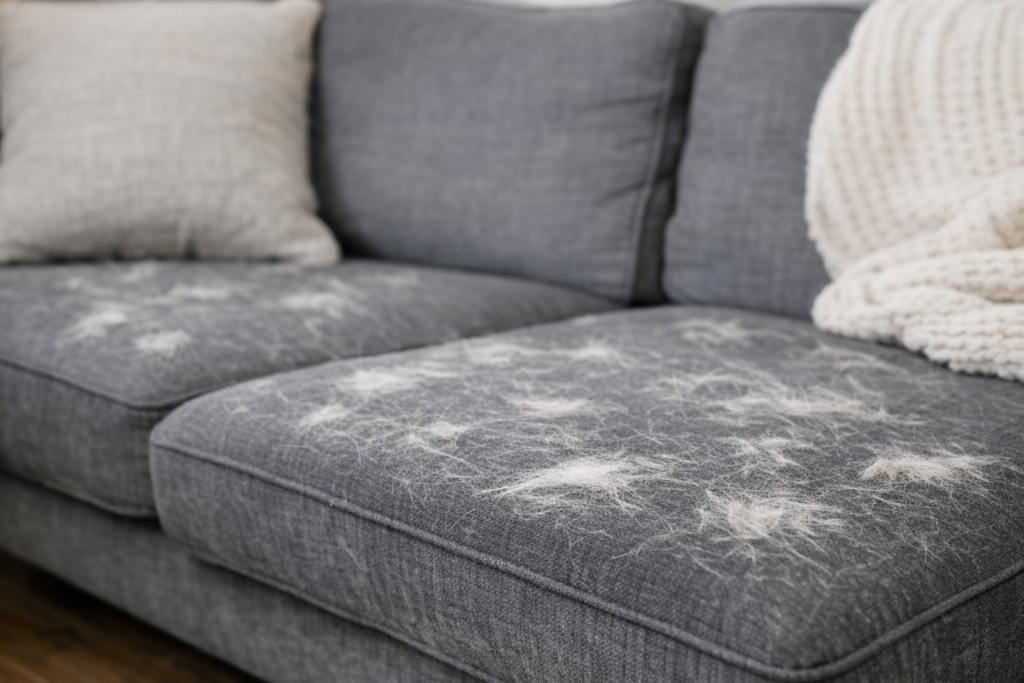
Learning how to remove pet hair from a couch without a vacuum is a practical skill for any pet owner, because pet hair gets everywhere and the vacuum is not always charged, working, or close at hand. Hair weaves itself into fabric, clings to cushions with static, and collects in the seams and crevices where fingers cannot easily reach. The good news is that a vacuum is not the only tool that works. Rubber, dampness, and static are your best allies: a damp rubber glove can pull a surprising amount of hair off a cushion in seconds, and a window squeegee can roll a whole sofa clean in a few minutes. This guide covers the fastest methods first, then the tools for stubborn hair, and finally the habits that keep the couch cleaner between deep cleans.
Why Pet Hair Clings So Tightly to Couches
Pet hair sticks to upholstery for two reasons: texture and static. Fabric surfaces have tiny fibers that catch and hold hair, especially woven materials, velvet, microfiber, and tweed. Smooth leather and faux leather shed hair easily, but most fabric couches grip it. Static electricity adds to the problem. As pets move across the cushions, friction builds a small static charge that makes hair cling to the fabric instead of falling to the floor.
Hair also works its way into the weave over time. Every time someone sits down, pressure pushes loose hair deeper into the fabric. That is why a quick brush with a dry hand rarely works: the hair is not just sitting on the surface, it is partly embedded. The methods that work best either create friction in the opposite direction, use moisture to break the static grip, or roll the hair into clumps that can be lifted away. Understanding this helps you pick the right method for your couch material instead of wasting effort on a technique that cannot grip the hair.
Method 1: The Damp Rubber Glove
The damp rubber glove is the single most effective no-vacuum method for most fabric couches, and it costs nothing if you already have dishwashing gloves at home. Put on a clean rubber glove, run it under the tap, and shake off the excess water so the glove is damp but not dripping. Then wipe your gloved hand across the cushion in long, firm strokes in one direction.
The rubber creates friction that rolls the hair into loose clumps, and the dampness breaks the static charge holding the hair in place. You will see small rolls of hair form almost immediately. Pick them up and drop them in a bag or bin, then wipe the same area again. Work cushion by cushion, and re-wet the glove whenever it starts to dry out.
For the best results, wipe toward yourself or toward one edge of the cushion so the hair collects in one place instead of spreading around. Use the fingertips of the glove to work along seams and piping, where hair tends to gather. A textured rubber glove works even better than a smooth one, but any rubber or latex glove will do the job. If you have a silicone oven mitt, it works the same way and covers a larger area per stroke.
Method 2: A Damp Cloth or Sponge
A damp cloth or sponge is the simplest method of all, and it works well for a quick daily clean. Take a clean microfiber cloth, a cotton washcloth, or a kitchen sponge, dampen it, and wring it out so it is barely moist. Wipe the couch in one direction using firm, even strokes. The damp surface grabs hair and holds it instead of pushing it around, which is the problem with a dry cloth.
Rinse the cloth frequently as it loads up with hair. A microfiber cloth is the best choice because its split fibers trap hair effectively, but an old cotton T-shirt works too. For stubborn patches, press the damp cloth down and drag it slowly; the slow drag gives the fibers time to grip the hair.
A damp sponge has an extra advantage on textured fabric. The rough side of a dry kitchen sponge, used dry, can also pull hair out of upholstery, but use it gently and test it first on a hidden corner. On delicate fabrics such as velvet or silk blends, a sponge can damage the nap, so stick to a soft, damp cloth for those materials.
Method 3: A Window Squeegee
A window squeegee is surprisingly effective on couches, and it is the fastest method for a large sofa. Hold the squeegee at a slight angle and drag it across the cushion in long strokes, always moving in the same direction. The rubber blade creates strong friction that rolls hair into a neat line at the end of each stroke. Gather the line of hair with your hand and throw it away.
This method works on almost every fabric, including microfiber, canvas, and tightly woven upholstery. It is especially good for the flat areas of seat cushions and backrests, where you can take long, uninterrupted strokes. For the arms and the front edge of the couch, use shorter strokes and overlap them so no patch is missed.
A squeegee also reaches into the slight dips and curves of a cushion better than a flat cloth. If you do not own a squeegee, a rubber-edged dustpan or even a sturdy rubber spatula can work in the same way on a smaller scale. The principle is the same: a rubber edge dragged firmly across fabric collects hair into rolls.
Method 4: Lint Rollers, Tape, and Sticky Tools
Lint rollers are the classic tool for pet hair, and they work well on couches for light, surface-level hair. Roll the sticky surface across the cushion in overlapping passes, and peel off the used sheet when it is full. A large roller covers a sofa much faster than a small one, so if you have a choice, use the wider size.
When a lint roller runs out, wide packing tape works as a substitute. Wrap a strip around your hand with the sticky side facing out, then pat and press it across the cushion. Masking tape works too, but it is less sticky and needs replacing more often. Tape is best for spot cleaning, such as the armrest where a cat likes to sleep, rather than the whole couch.
A reusable sticky roller, the kind you rinse clean under water, is a good long-term option for pet owners because it never runs out of sheets. Wash it after each use so the sticky surface stays effective. Whichever sticky tool you use, it works best after a rubber glove or squeegee pass has already loosened the embedded hair and brought it to the surface.
Method 5: A Fabric Brush or Pet Grooming Brush
A stiff fabric brush, sometimes sold as a clothes brush, can pull pet hair out of upholstery that other methods miss. Brush the cushion firmly in one direction, using short, quick strokes. The bristles reach into the weave and lift hair that is partly embedded. Collect the loosened hair with your hand or a damp cloth afterward.
A pet grooming brush, especially a slicker brush with fine wire bristles, works even better on sturdy fabrics, but test it first on a hidden spot. Wire bristles can snag delicate weaves, so avoid them on velvet, chenille, or loosely woven fabric. For those materials, a soft-bristle clothes brush or a rubber grooming mitt is safer.
Brushes are also useful for the seams and piping around cushions, where hair packs into the narrow groove. Run the brush along the groove, then wipe the loosened hair away with a damp cloth. Doing the seams last, after the flat surfaces, keeps hair from falling back onto areas you already cleaned.
Method 6: Pumice Stone and Other Friction Tools
A dry pumice stone, the kind sold for cleaning or for feet, can be surprisingly good at removing pet hair from sturdy upholstery. Rub it gently across the fabric in one direction and watch the hair roll into clumps. The rough, porous surface grips hair the way rubber does. Use light pressure and test it first on a hidden corner, because pumice is abrasive and can damage delicate or loosely woven fabrics.
Other household items work on the same friction principle. A rubber-soled shoe, wiped across the cushion, can roll hair into clumps. A dampened rubber balloon, rubbed across the fabric, uses static in your favor: the balloon attracts the hair and lifts it off. These are handy tricks when you have no dedicated tools, but the glove, squeegee, and damp cloth methods are faster for a whole couch.
Whatever friction tool you use, always work in one direction and collect the hair frequently. Scrubbing back and forth just moves the hair around and pushes some of it deeper into the weave.
Cleaning the Crevices, Seams, and Under the Cushions
The flat surfaces are the easy part. The crevices between cushions, the seams, and the space under the cushions collect a large share of the hair, and they need a different approach. Remove the seat cushions and set them aside. Use a damp cloth wrapped around your hand to wipe along the frame, the base, and the gaps where the cushions sit. A rubber glove is ideal here because it can press into narrow spaces.
For the narrow gap between the backrest and the seat, wrap a damp cloth around a ruler or a butter knife and slide it along the gap to pull out the trapped hair. A strip of wide tape wrapped around a thin object works the same way. Clean the underside of the cushions too, since hair collects there and falls back onto the frame every time the cushion is moved.
Do not forget the back and sides of the couch, especially if pets sleep behind it or rub against the arms. A quick pass with a damp glove over the arms and the back keeps the whole piece looking clean, not just the seating area.
Reducing Pet Hair on the Couch Every Day
Removing hair is only half the job. The other half is keeping it from building up. Covering the couch is the most effective step. A washable throw blanket or a fitted couch cover catches most of the hair, and you can shake it out or wash it far more easily than cleaning the couch itself. Choose a smooth, tightly woven cover in a color close to your pet’s fur so the hair is less visible between washes.
Brushing your pet regularly makes a real difference. A few minutes of brushing outdoors or over a hard floor, two or three times a week, removes loose fur before it reaches the couch. During heavy shedding seasons, daily brushing helps even more. A healthy diet and regular grooming support a healthy coat, which sheds less overall.
Set a quick daily routine. A two-minute pass with a damp glove or a lint roller each evening prevents the buildup that makes a deep clean necessary. It is far easier to remove a thin layer of fresh hair than a thick layer that has been pressed into the fabric over a week. Keep a rubber glove or a lint roller in a basket beside the couch so the habit is easy to maintain.
For related fabric care ideas, our guide on removing red wine stains from carpet without club soda covers gentle stain lifting on home fabrics, and our article on getting rid of static cling in clothes without dryer sheets explains the static problem that makes hair cling to fabric in the first place. If you want to keep light-colored fabrics looking fresh, see how to keep a white shirt white without bleach for more gentle fabric care tips.
Mistakes to Avoid
The most common mistake is using a dry cloth or a dry hand to wipe the couch. Dry wiping pushes hair around and presses some of it deeper into the fabric, and static makes it cling harder. Always dampen the cloth or glove first. A second mistake is scrubbing back and forth instead of working in one direction. Hair rolls into removable clumps only when every stroke moves the same way.
Another error is using a harsh brush on a delicate fabric. A wire slicker brush or a rough pumice stone can snag velvet, chenille, or loosely woven upholstery, leaving permanent damage that is worse than the hair. Test any new tool on a hidden corner first. Finally, avoid using a wet vacuum-style carpet cleaner or soaking the cushions with water to remove hair. Excess moisture can soak into the foam, cause mildew, and leave a damp smell that is much harder to fix than pet hair.
Frequently Asked Questions
What is the fastest way to remove pet hair from a couch without a vacuum?
A damp rubber glove or a window squeegee is usually fastest. Wipe the glove or drag the squeegee across the cushion in one direction, and the hair rolls into clumps you can pick up by hand. A full sofa takes about five to ten minutes this way.
Does a damp cloth really work better than a dry one for pet hair?
Yes. Dampness breaks the static charge that holds hair to fabric, and a damp surface grips hair instead of pushing it around. A dry cloth often just moves the hair from one spot to another, while a damp cloth collects it.
Can I use a lint roller on a fabric couch?
Yes, lint rollers work well for light surface hair on most fabric couches. They are best used after a rubber glove or squeegee pass has loosened the embedded hair. For heavy hair, a lint roller alone is slow and uses many sheets, so start with a friction method first.
How do I get pet hair out of couch seams and crevices?
Remove the cushions and wipe the frame and gaps with a damp rubber glove. For narrow seams, wrap a damp cloth around a ruler or a butter knife and slide it along the groove. A strip of wide tape wrapped around a thin object also pulls hair out of tight spaces.
Will a couch cover really reduce pet hair on my sofa?
Yes, a washable throw or fitted cover is the most effective long-term step. It catches most of the hair before it reaches the upholstery, and shaking it out or washing it is far easier than cleaning the couch itself. Choose a smooth, tightly woven fabric.
How often should I clean pet hair off my couch?
A quick two-minute pass with a damp glove or lint roller once a day prevents buildup, and a thorough clean once a week keeps the couch looking fresh. During heavy shedding seasons, you may need a quick pass twice a day on the spots where your pet sleeps most.












1 thought on “How to Remove Pet Hair From a Couch Without a Vacuum”
Comments are closed.