
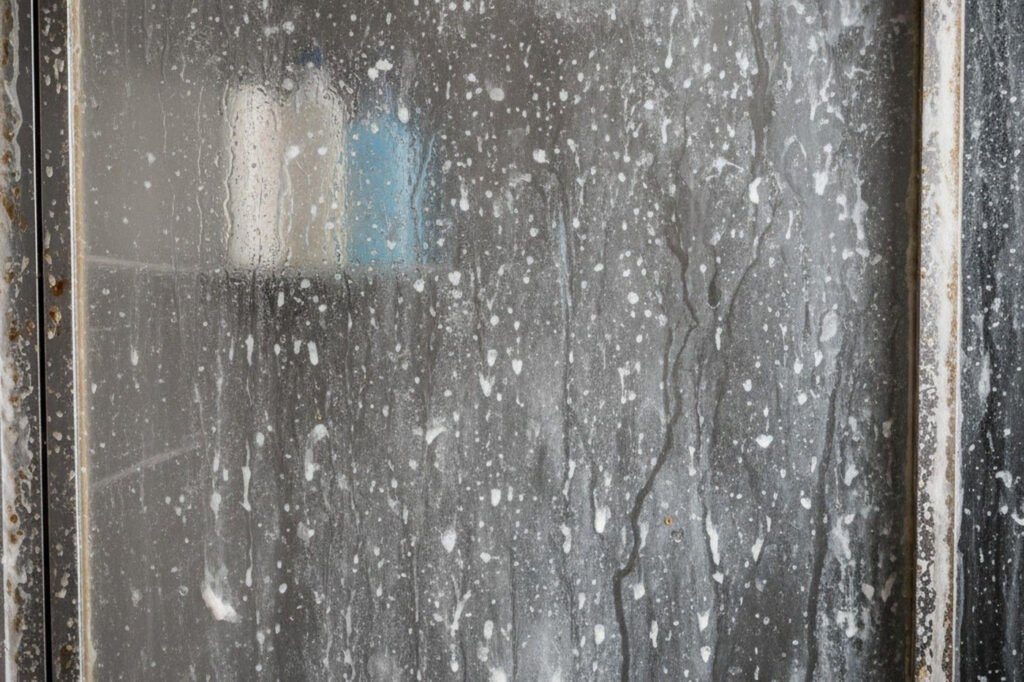
Soap scum is the dull, chalky film that coats shower walls, glass doors, faucets, and tubs. It builds up slowly, so one day you notice your once-clear glass door looks cloudy and your tile has lost its shine. The good news is that learning how to remove soap scum from shower without bleach is easy, and the methods below are safer for your lungs, your plumbing, and your fixtures than harsh chlorine cleaners. Bleach can irritate eyes and skin, damage grout and metal finishes over time, and create dangerous fumes if it ever mixes with another cleaner. The alternatives in this guide — baking soda, dish soap, citric acid, and a few other pantry staples — cut through soap scum just as well on everyday buildup, and they leave your bathroom smelling fresh instead of chemical.
Before you start, gather a few basics: baking soda, dish soap, white vinegar if you are comfortable using it, a spray bottle, a non-scratch scrub sponge, an old toothbrush for grout lines, and a squeegee. Ventilate the bathroom by opening a window or running the exhaust fan, and wear rubber gloves if you have sensitive skin. Work from the top of the shower down so dirty water runs over areas you have not cleaned yet, and rinse as you go.
What Is Soap Scum, and Why Is It So Stubborn?
Soap scum forms when the fatty acids in bar soap and body wash react with the calcium and magnesium in hard water. The result is a sticky, insoluble residue that clings to every surface the water touches. Unlike plain dirt, soap scum does not dissolve in water, which is why a quick rinse never removes it and why it returns so fast after cleaning. Homes with hard water get the worst buildup, but even soft water leaves a film over time because soap itself leaves residue behind.
The film also traps body oils, dead skin, and shampoo residue, which is why an old layer of soap scum can look yellow or gray and feel slightly greasy. Once the layer gets thick, it bonds to the surface and protects itself from casual wiping, which is why it needs a cleaner that can break it down chemically or lift it with gentle abrasion. The methods below do both.
Method 1: Dish Soap and Baking Soda Paste (Best All-Round Method)
This combination is the workhorse of bleach-free shower cleaning. Dish soap is a degreaser that breaks down the fatty part of soap scum, while baking soda provides gentle scrubbing power that lifts the residue without scratching glass, tile, or fiberglass. Together they handle most buildup in a single pass.
- Mix one cup of baking soda with enough dish soap to form a thick paste, roughly a quarter cup, in a small bowl.
- Spread the paste over the scummy areas with a sponge or your gloved hand. Pay attention to the bottom of glass doors, corners, and around the faucet, where buildup is heaviest.
- Let the paste sit for fifteen to twenty minutes. For thick, old buildup, leave it for up to thirty minutes.
- Scrub in circles with a non-scratch sponge, using firm but gentle pressure. Use an old toothbrush on grout lines and around fixtures.
- Rinse thoroughly with warm water, starting at the top and working down.
- Dry the glass and fixtures with a microfiber cloth or squeegee to prevent water spots.
Pros: Cheap, safe for glass, tile, fiberglass, and chrome, and effective on moderate to heavy buildup. Cons: Requires some scrubbing on thick layers, and the paste can be messy to rinse from textured tile. A handheld showerhead makes rinsing much easier.
Method 2: Baking Soda and Vinegar Spray (Best for Glass Doors)
If your glass shower door is the main problem, this method is the fastest way to restore clarity. The fizzing reaction helps lift the film, and the vinegar dissolves mineral deposits at the same time. Use this method on glass and glazed tile, but skip it on natural stone such as marble or granite, which vinegar can etch.
- Fill a spray bottle with equal parts white vinegar and warm water, and add a few drops of dish soap.
- Spray the glass door generously until it is fully wet.
- Sprinkle baking soda over the wet surface or onto a damp sponge, then scrub the glass in circles.
- Let the mixture sit for ten minutes.
- Scrub once more, then rinse with warm water and squeegee the glass dry.
Pros: Excellent on cloudy glass, quick, and very inexpensive. Cons: Vinegar has a strong smell while you work, though it fades fast. Not suitable for natural stone surfaces or unsealed grout that is already damaged.
Method 3: Citric Acid Spray (Best for Hard Water Areas)
Citric acid is a natural compound found in citrus fruit, and it is one of the best cleaners for mineral-heavy soap scum. It dissolves the calcium in the residue rather than just scrubbing at it, which makes it ideal if your shower also has hard water stains.
- Dissolve two tablespoons of citric acid powder in a spray bottle of warm water and shake until it is fully dissolved.
- Spray the solution generously over the soap scum and let it sit for fifteen minutes.
- Scrub with a non-scratch sponge, using a toothbrush on grout and corners.
- Rinse with warm water and dry the surfaces with a cloth.
- For very heavy buildup, repeat the spray and wait a second time before scrubbing.
Pros: Dissolves mineral deposits as well as soap scum, leaves no strong odor, and is safe for most tile and glass. Cons: Citric acid powder may not be in every kitchen, and like vinegar it should not be used on marble or other acid-sensitive stone.
Method 4: Hydrogen Peroxide for Discolored Grout and Corners
Standard three percent hydrogen peroxide, the kind sold at any drugstore, is a mild cleaner that brightens grout and kills mildew at the same time. It is a good choice when soap scum has stained the grout lines gray or yellow.
- Pour hydrogen peroxide into a spray bottle, or apply it directly to a sponge.
- Spray the grout lines, corners, and any stained areas, and let it sit for ten to fifteen minutes.
- Scrub the grout with an old toothbrush, working along the lines rather than across them.
- Rinse well with warm water and dry the area.
- For a stronger paste, mix hydrogen peroxide with baking soda and apply it to the grout before scrubbing.
Pros: Brightens grout, handles mildew, and is easy to find. Cons: Works more slowly than the dish soap paste on thick soap scum, so use it as a follow-up for stains rather than your first step on heavy buildup. Never mix hydrogen peroxide with vinegar in the same bottle.
Method 5: A Daily Shower Spray That Prevents Scum
The easiest soap scum to remove is the kind that never forms. A simple daily spray takes less than thirty seconds after each shower and keeps the film from bonding to the surface in the first place.
- Mix one part white vinegar, one part water, and a few drops of dish soap in a spray bottle. Label it clearly and keep it in the shower.
- After each shower, spray the walls, door, and fixtures lightly. There is no need to rinse or wipe.
- Once a week, do a quick scrub with the dish soap and baking soda paste to catch anything the spray missed.
Pros: Almost eliminates deep cleaning sessions, and costs pennies per week. Cons: It only works if you use it consistently. If you already have heavy buildup, clean it thoroughly first, then start the daily spray habit.
Method 6: Steam and a Squeegee for Glass Doors
Sometimes the simplest tool is the best one. Hot steam softens soap scum, and a squeegee removes it before it dries back onto the glass. This method uses no cleaner at all, which makes it perfect for a quick refresh between deeper cleans.
- Run the shower on hot for two to three minutes with the door closed to build up steam.
- Turn the water off and immediately wipe the glass with a microfiber cloth or a squeegee, working from top to bottom.
- For any spots that remain, rub them with a damp cloth sprinkled with baking soda.
- Dry the edges and tracks with a towel so water does not pool and leave new spots.
Pros: No chemicals at all, fast, and great for maintenance. Cons: Will not remove thick or old buildup on its own. Keep a squeegee in the shower and use it after every shower for the best results.
How to Clean Soap Scum From Specific Surfaces
Different shower surfaces need slightly different care. Glass doors respond best to the vinegar spray or citric acid method, followed by a squeegee dry. Glazed ceramic and porcelain tile can handle all of the methods above, including the baking soda paste and a non-scratch sponge. Fiberglass and acrylic tubs and surrounds should never be scrubbed with anything abrasive — stick to the dish soap paste and a soft sponge, and rinse well. Chrome fixtures clean up beautifully with a cloth dampened with the vinegar spray, followed by a dry buff with a microfiber towel. Natural stone tile, including marble, travertine, and slate, needs a pH-neutral stone cleaner instead of vinegar or citric acid, and only a soft cloth should touch it. Sealed grout can handle the baking soda paste and hydrogen peroxide, but damaged or crumbling grout should be repaired before any deep cleaning.
What NOT to Do When Removing Soap Scum
A few common mistakes make soap scum harder to remove or damage your shower. Never mix bleach with vinegar, ammonia, or any other cleaner, because the combination can create toxic fumes. Never use steel wool, metal scrapers, or harsh scouring pads on glass, fiberglass, or acrylic, because the scratches they leave will trap soap scum even faster. Never use an oven cleaner or a heavy-duty degreaser in the shower unless the label says it is safe for bathroom surfaces, because these products can damage finishes and leave residues that are hard to rinse away. Never pour large amounts of undiluted vinegar on natural stone, and never let any cleaner dry on the surface before rinsing, because dried cleaner can leave its own film behind.
How to Keep Soap Scum Away for Good
Once your shower is clean, a few small changes will keep it that way. Switch from bar soap to a liquid body wash or shower gel, because bar soap contains the fats that create the worst scum. Squeegee the glass and walls after every shower, which takes about twenty seconds and removes the water that carries minerals and soap residue. Use the daily spray described above to stop the film from bonding. Fix dripping faucets and showerheads, since a constant slow drip leaves a steady trail of mineral deposits. Improve ventilation by running the exhaust fan during and after showers, because a damp shower grows mildew and holds onto residue longer. Finally, wipe down the fixtures once a week with a dry microfiber cloth to keep chrome and glass shining.
The same gentle approach works elsewhere in the bathroom too. If your tub needs attention, see how to clean a bathtub without bleach for matching methods, and if the glass door also has mineral marks, how to remove hard water stains from a shower door without vinegar covers that exact problem. For the fixture above the shower, how to clean a shower head without vinegar will keep the spray strong and the nozzles clear.
Frequently Asked Questions
What dissolves soap scum the fastest?
A paste of dish soap and baking soda is usually the fastest option for everyday buildup, because the soap dissolves the fatty part of the scum while the baking soda scrubs it away. For heavy mineral-heavy scum, a citric acid spray left to sit for fifteen minutes before scrubbing works even faster on glass and tile.
Can I remove soap scum without vinegar?
Yes. The dish soap and baking soda paste needs no vinegar at all, and citric acid or hydrogen peroxide are good substitutes for the vinegar spray. The daily prevention spray can also be made with water, a few drops of dish soap, and a small amount of rubbing alcohol instead of vinegar.
Will baking soda scratch my glass shower door?
No, baking soda is a very fine, soft abrasive and is safe for glass shower doors when used with a soft sponge or cloth. Avoid steel wool, scouring pads, and harsh powdered cleansers, which can scratch glass and leave permanent marks.
How do I remove old, thick soap scum?
Apply the dish soap and baking soda paste thickly and leave it for thirty minutes, then scrub with a non-scratch sponge and rinse. If a chalky layer remains, follow up with a citric acid spray, let it sit for fifteen minutes, and scrub again. Two rounds are usually enough even for scum that has built up over months.
Does switching soap really help prevent soap scum?
Yes, it makes a noticeable difference. Bar soaps contain fats and talc that react with hard water to form scum, while liquid body washes and shower gels contain fewer of those ingredients. Switching to a liquid wash, combined with squeegeeing after each shower, can cut new buildup dramatically.
How often should I clean my shower to prevent soap scum?
Use a daily spray and squeegee after each shower, and do a proper scrub with the dish soap and baking soda paste once a week. In homes with very hard water, a quick midweek wipe of the glass door keeps the film from ever getting thick enough to need heavy scrubbing.











1 thought on “How to Remove Soap Scum From Shower Without Bleach”
Comments are closed.