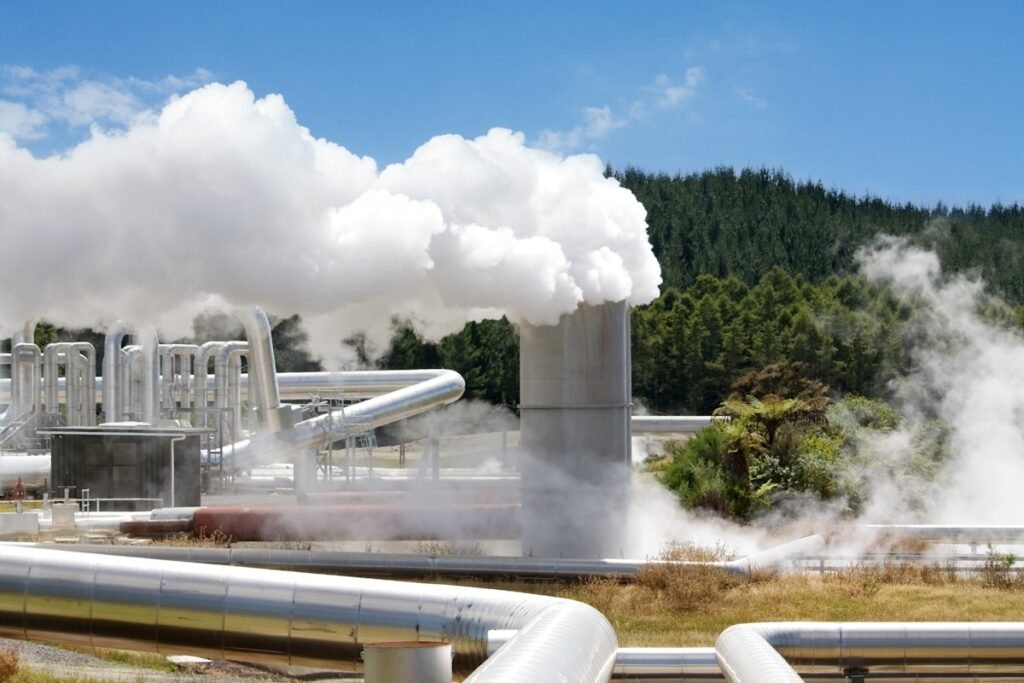
Arunachal Pradesh has formally inaugurated a geothermal-powered drying unit at Dirang in West Kameng district, putting the earth’s own heat to work for farmers in the hill state. The facility was inaugurated by Dasanglu Pul, Minister for Women and Child Development, Cultural Affairs, and Science and Technology, in the presence of May-Elin Stener, Ambassador of Norway to India, and Phurpa Tsering, MLA-cum-Advisor to Science and Technology and Public Works, along with scientists and experts from India, Norway and Iceland.
The unit uses geothermal energy to dry agricultural and horticultural produce, offering a sustainable alternative to conventional drying methods. For farmers in remote hill areas, where produce often spoils before it can reach a market, reliable drying can be the difference between a wasted harvest and a saleable crop.
How the earth’s heat dries the harvest
The technology draws on the natural temperature and flow of a geothermal well to run the drying unit, with no solar panels and no diesel generators involved. Produce such as ginger, turmeric, herbs and fruit can be dried steadily and hygienically, extending shelf life and preserving quality. The approach is expected to help minimise post-harvest losses, improve the preservation of farm produce, enhance farmers’ income and strengthen agricultural livelihoods across the region.
Experts from Norway and Iceland, both countries with long geothermal experience, have been involved in guiding the work at Dirang.
Why it matters for hill farmers
Post-harvest loss is one of the quietest problems in hill farming: a good crop can lose much of its value if it cannot be dried, stored or moved in time. In remote villages the options are often limited to weather-dependent sun drying or expensive fuel-based drying, while a unit running on heat from the ground removes both the fuel cost and the weather risk.
The state’s first geothermal drying unit was commissioned and performance-tested earlier, and the formal inauguration at Dirang marks the next step, from a working demonstration to a facility presented as a model for wider use. The state has also been exploring geothermal power for remote and border areas, where grid supply is unreliable and diesel is costly to transport.
What comes next
The real test now is adoption: how many farmers use it, whether it is maintained through the seasons, and whether the dried produce finds buyers willing to pay for better quality. If the Dirang unit proves itself in daily use, it could point to a practical clean-energy path for other geothermal sites in the state.
#ArunachalPradesh #Dirang #WestKameng #GeothermalEnergy #CleanEnergy #Farmers #PostHarvest