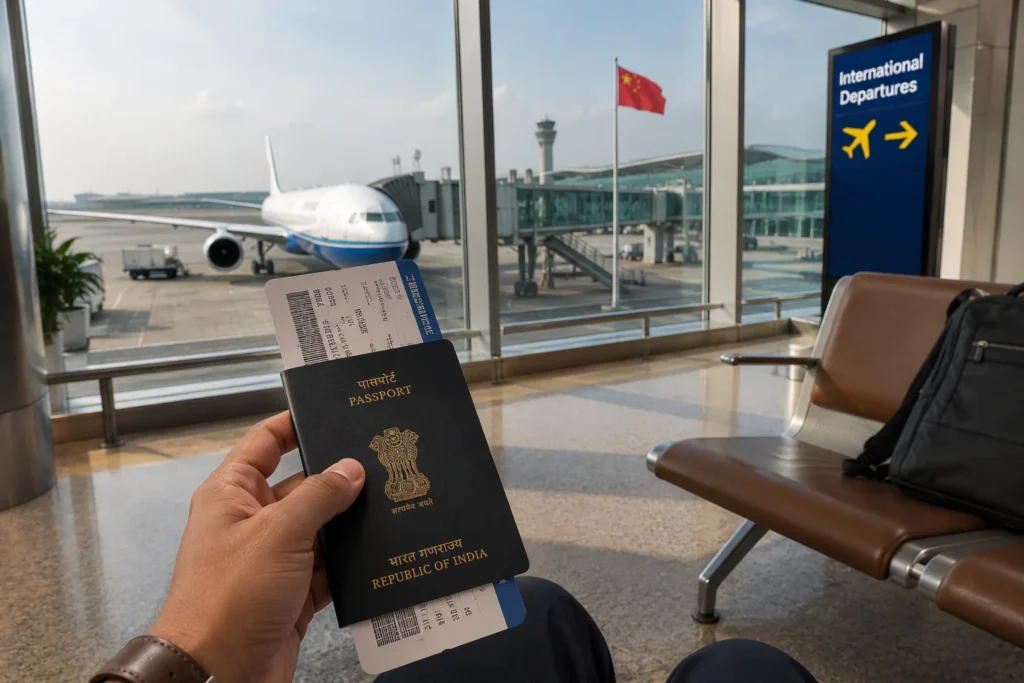
India has overhauled its visa framework, reducing the number of main visa categories from 13 to nine and sub-categories from 49 to 23, while cutting the number of fields in visa application forms by 65 to 70 per cent to simplify the process for foreign nationals.
The changes are aimed at making the visa regime more compact, coherent and responsive to the requirements of foreign nationals visiting India, the Ministry of Home Affairs (MHA) said. They are expected to make travel easier for tourism, healthcare, education, research and business.
The nine new categories
The revised framework comprises nine main categories: Business, Diplomatic, Work, Journalist, Medical, Official, Student, Visitor and Miscellaneous visas. The government said it examined visa systems in developed countries and international standards before finalising the revised framework.
The latest exercise follows an earlier rationalisation that had already cut the main categories from 22 to 13 and the sub-categories from 63 to 49. The most recent changes were formally undertaken in late August, with the government now setting out the full details.
Tourist Visa becomes Visitor Visa
A major change is the replacement of the Tourist Visa with a broader Visitor Visa covering tourism, short-term business meetings, medical consultations, wellness retreats and cultural courses. The Visitor Visa has two sub-categories, V-1 and V-2, with V-1 meant for short, 30-day multiple-entry visits and V-2 for longer or repeat visits with one-, five- or ten-year validity options, along with a special six-month multiple-entry mountaineering provision.
Student visas have also been streamlined into S-1 for school, undergraduate and postgraduate study and S-2 for doctoral and research work.
When the new system takes effect
India currently offers electronic visas through an electronic travel authorisation system covering 13 sub-categories, and e-visas are available to nationals of 172 countries. The government is upgrading its information technology systems to implement the revised framework, and visas under the new system are expected to be issued by the end of 2026.
Travellers should continue to use the existing e-visa portal until the technical rollout is complete. For the Northeast, simpler entry rules could give a further lift to tourism, adding to attractions such as Nimok Pung, a hidden gem for visitors to Arunachal Pradesh, and the tourism development plans discussed at the NEC plenary.
#IndiaVisa #VisaRules #Tourism #Travel #StudentVisa #MHA