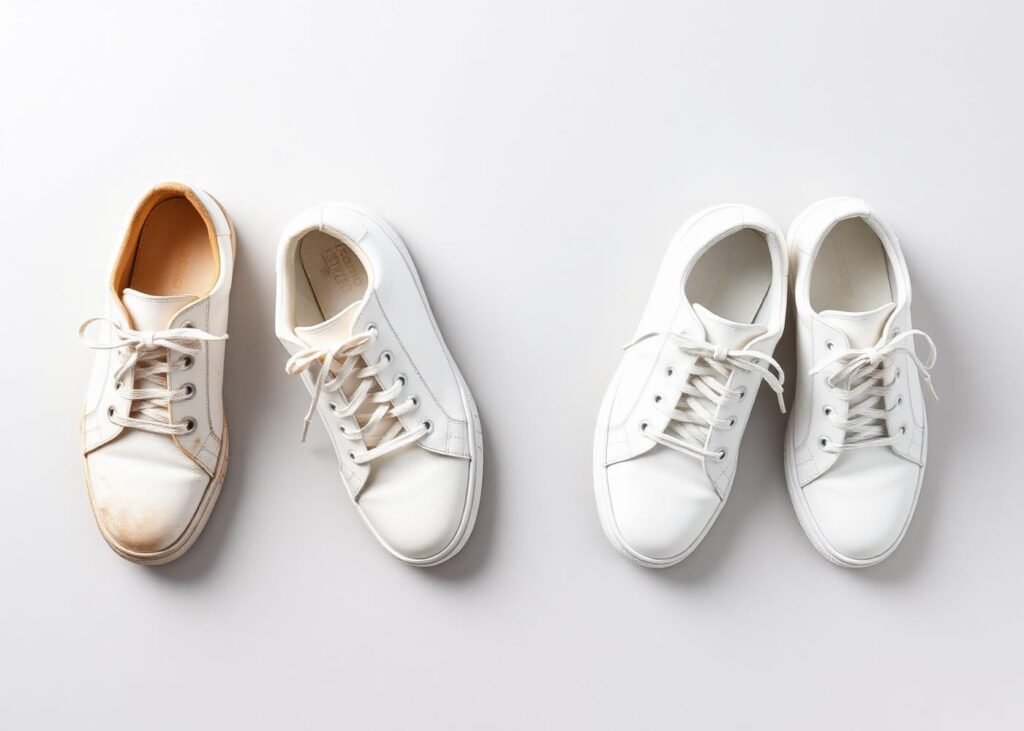
White sneakers go with almost everything, which is exactly why they get dirty so fast. One walk across a dusty sidewalk, one splash from a puddle, one scuff against a curb, and that fresh, bright look starts to fade. The good news is that learning how to keep white sneakers clean without washing them is simpler than most people think, and it is also much kinder to your shoes. A washing machine can warp the shape, loosen the glue, yellow the soles, and shorten the life of the shoe. Dry cleaning methods let you remove dirt, scuffs, and stains while keeping the structure of the shoe intact.
This guide covers the supplies to keep on hand, step-by-step dry cleaning methods for leather and canvas, how to handle specific stains like mud, grass, and grease, and the daily habits that keep white sneakers looking new for months instead of days. None of these methods require a washing machine, a dryer, or expensive equipment. Most use things you already have at home, and each one takes only a few minutes once you know the routine.
Why White Sneakers Get Dirty So Fast
White shows everything. On a dark shoe, a thin layer of dust is invisible. On a white shoe, the same dust is obvious from across the room. The materials make it worse. Canvas is woven and porous, so it absorbs dirt deep into the fibers. Smooth leather resists stains better, but it picks up scuffs and black marks from any rough surface it brushes against.
The toe box creases with every step, and dirt collects in those creases. The white rubber midsoles oxidize slowly in air and sunlight, which is why old white sneakers turn yellow even when they are clean. The advantage of dry cleaning is control. A machine soaks every part of the shoe at once, including the glue joints and the insole. Cleaning by hand treats only the dirty spot, with only as much moisture as that spot needs, so the shoe keeps its shape and dries in minutes instead of hours.
What You Need to Clean White Sneakers Without Damage
You do not need a special sneaker cleaning kit to get good results. A small collection of household items covers almost every situation, so keep them together in one spot and cleaning takes five minutes instead of turning into a project.
- A soft-bristle brush, such as an old toothbrush or a shoe brush
- A clean white cloth or microfiber cloth, so no color transfers onto the shoe
- Baking soda and white vinegar for gentle stain pastes
- Mild dish soap for spot cleaning
- A magic eraser sponge for scuffs on leather and rubber midsoles
- Plain white toothpaste, the non-gel kind, for small scuffs
- Newspaper, paper towels, or shoe trees to hold the shape while shoes dry
- A water-repellent protector spray made for shoes
Before using any cleaner on a visible part of the shoe, test it on a small hidden area first, such as the inside of the tongue. Wait a few minutes and check for discoloration. This one habit prevents almost every cleaning disaster, especially on colored accents and printed logos.
Method 1: Dry Brush First, Always
Every cleaning session should start with dry brushing, even if the shoes look only mildly dusty. Take the laces out first so you can reach the tongue and the eyelet area. Hold the shoe over a trash can or outside, then brush the entire surface with a dry soft-bristle brush, working from the top of the shoe toward the sole. Short, firm strokes lift loose dust and dried mud out of the texture before it can be ground deeper into the material. Pay extra attention to the seams and the edge where the upper meets the midsole, because dirt collects in those grooves.
For dried mud, let it dry completely before brushing. Wet mud smears and stains, but dry mud flakes off easily. Tap the soles together gently to knock off loose dirt from the tread. This dry step alone often makes a shoe look noticeably cleaner, and it takes less than two minutes per shoe.
Method 2: The Magic Eraser for Scuffs and Midsoles
A magic eraser sponge is one of the most effective tools for white sneakers, and it works on both leather uppers and rubber midsoles. Dampen the sponge lightly, squeeze out the excess water so it is barely moist, and rub it gently over scuff marks, black streaks, and the dirty white midsole. You will see the marks lift almost immediately.
Use light pressure and short strokes. A magic eraser works as a very fine abrasive, which is why it removes marks so well, but heavy pressure can dull a glossy leather finish or wear down a printed logo. Never use it on suede, nubuck, or mesh, because it will damage the texture. Run the damp eraser along the whole midsole, the wide white band between the upper and the outsole, then wipe it with a clean cloth.
Method 3: Baking Soda Paste for Stains and Yellowing
Baking soda is a gentle cleaner that works well on both leather and canvas. Mix one tablespoon of baking soda with one tablespoon of white vinegar and a small amount of warm water to form a thick paste. Apply it to the stained area with an old toothbrush, scrub in small circles, and let it sit for about thirty minutes. Then wipe the paste away with a damp white cloth and let the shoe air dry.
This paste is especially useful for the yellowish tint that develops on white canvas and midsoles over time. The mild abrasive action lifts surface discoloration while the vinegar helps break down the stain. For stubborn yellow areas, apply a second round after the first one dries. Do not use bleach as a shortcut. Bleach can turn white fabric yellow, weaken the fibers, and damage leather permanently, and it often makes the problem worse instead of better.
Method 4: Mild Soap Spot Cleaning for Canvas and Mesh
When dry methods are not enough for canvas or mesh, a small amount of mild soap and water can help, as long as you use it as a spot treatment rather than a soak. Mix a few drops of mild dish soap into a cup of warm water. Dip a clean white cloth into the solution, wring it out so it is damp rather than wet, and dab at the dirty area, working from the outside of the stain toward the center so you do not spread it.
For ground-in dirt on canvas, dip the soft-bristle brush into the soapy water, shake off the excess, and scrub gently in circles, then wipe away the loosened dirt with a fresh damp cloth. Keep the amount of water low: the goal is a damp surface, not a soaked shoe. Too much water can leave water stains on canvas and seep into the insole, where it takes a long time to dry and can cause odor. Mesh needs an even lighter touch, so use the cloth-dabbing method only and let it air dry away from direct heat.
Method 5: White Toothpaste for Small Scuffs
Plain white toothpaste, the non-gel kind, works surprisingly well on small scuffs on leather and on rubber toe caps. Squeeze a small amount onto a soft cloth or an old toothbrush, rub it into the scuff in small circles, and let it sit for about ten minutes. Then wipe it away with a damp cloth and dry the area. The mild abrasive in the toothpaste polishes away the mark without harming the leather underneath.
Cleaning the Laces Separately
Laces are often the dirtiest part of a white sneaker, and they make the whole shoe look dingy even when the upper is clean. Remove them completely, then soak them in a bowl of warm water with a small amount of mild soap or baking soda for about thirty minutes. Rub them gently between your fingers, rinse them, and hang them to air dry. For heavily stained laces, add a spoonful of baking soda to the soak.
If the laces are still gray after soaking, replace them. New white laces are inexpensive, and a fresh pair can make an older shoe look almost new again. While the laces are out, clean the tongue and the eyelet area too.
How to Handle Specific Stains
Different stains need different approaches, and using the wrong method can set a stain permanently. Here is how to handle the most common ones without washing the shoe.
Mud and Dirt
Let mud dry completely, then brush it off as described earlier. For any remaining stain on canvas, use the baking soda paste. On leather, wipe with a damp cloth and a small amount of mild soap, then dry immediately.
Grass Stains
Dab the stain with a cloth dipped in equal parts white vinegar and water, then follow with the baking soda paste. Grass stains respond well to vinegar, but they may need two rounds of treatment.
Grease and Oil
Blot fresh grease right away with a paper towel, without rubbing. Sprinkle baking soda or cornstarch on the spot and leave it for at least an hour so it absorbs the oil. Brush away the powder, then spot clean with mild soap and water.
Coffee, Tea, and Juice
Blot the spill right away, then dab with a cloth dipped in cold water and a small amount of mild soap. Avoid hot water, which can set the stain. For a dried stain on canvas, the baking soda and vinegar paste usually lifts it after one or two applications.
Dealing With Odor Without Washing
White sneakers can develop odor even when they look clean, because sweat and moisture collect inside the shoe. The fix is simple and does not involve water. Sprinkle a generous amount of baking soda inside each shoe at night and leave it overnight. In the morning, shake out the powder and wipe the inside with a dry cloth. Baking soda absorbs both moisture and odor, and it is safe for almost every shoe material.
For a stronger effect, place a dryer sheet or a small cloth bag filled with baking soda inside the shoe between wears. Never store damp shoes in a closed closet, because trapped moisture encourages odor and mildew. For more on keeping shoes fresh, see our guide on how to stop shoes from smelling, and our tips for packing shoes in a suitcase without wasting space when you travel.
How to Keep White Sneakers Clean Longer
Cleaning is only half the job. The other half is prevention. The most effective step is a water-repellent protector spray. After cleaning your sneakers and letting them dry completely, spray the entire upper evenly from about six inches away, following the instructions on the product. Let the shoes dry for several hours before wearing them. The spray creates an invisible barrier that repels water and dirt, so stains sit on the surface instead of soaking in. Reapply every few weeks, or after any deep cleaning.
Your daily habits matter just as much. Avoid wearing white sneakers on rainy days or on muddy ground when you have another option. Wipe them down with a dry cloth when you get home, before dirt has a chance to set. Store them in a cool, dry place, stuffed with paper or shoe trees so they hold their shape, and keep them out of direct sunlight, which accelerates yellowing. Treat small marks as soon as you notice them: a scuff that takes ten seconds to erase today can become a set stain next week.
Mistakes to Avoid When Cleaning White Sneakers
The most common mistakes are easy to avoid once you know them. Do not put white sneakers in the washing machine unless the manufacturer specifically says it is safe, since the machine can warp the shape, damage the glue, and yellow the materials. Do not use bleach: it often turns fabric yellow and weakens both canvas and leather. Do not use colored cloths, since dye can transfer onto the shoe when the cloth is damp.
Do not dry sneakers with direct heat from a hair dryer, a radiator, or a heater. High heat can shrink canvas, crack leather, and melt glue, so air drying at room temperature is much safer. Do not scrub suede or nubuck the way you scrub leather: those materials need a special suede brush and eraser. Finally, do not ignore the soles. A clean upper with dirty, gray soles still looks worn out. For more shoe care ideas, read our guide on how to stop shoes from squeaking without baby powder.
How Often Should You Clean White Sneakers
Do a quick dry brush and wipe-down after every wear, or at least every few wears. Do a deeper spot cleaning once a week if you wear the shoes daily, or once every two weeks if you wear them less often. Clean the laces and treat the midsoles during the deeper session, and apply protector spray after every deep cleaning.
Frequently Asked Questions
Can I keep white sneakers clean without ever washing them?
Yes, in most cases. Dry brushing, spot cleaning with mild soap, baking soda paste, and a magic eraser handle the large majority of dirt and stains. Washing is only needed if the shoes are soaked through with mud or heavily soiled inside, and even then hand cleaning is usually safer than a machine.
What is the fastest way to clean white sneakers before going out?
Dry brush the shoes to remove loose dust, then run a damp magic eraser over the midsoles and any scuffs on the leather. Wipe everything with a clean cloth. The whole process takes about five minutes and makes a visible difference.
How do I stop white sneakers from turning yellow?
Keep them out of direct sunlight when storing them, avoid bleach, and clean them regularly so dirt does not oxidize into the material. A protector spray also slows yellowing. If yellowing has already started, a baking soda and vinegar paste can lighten it, though very old yellowing may not come out completely.
Is it safe to use a magic eraser on white leather sneakers?
Yes, on smooth leather and rubber, as long as you use light pressure and keep the sponge only slightly damp. Avoid using it on suede, nubuck, mesh, or printed areas, and test on a hidden spot first.