
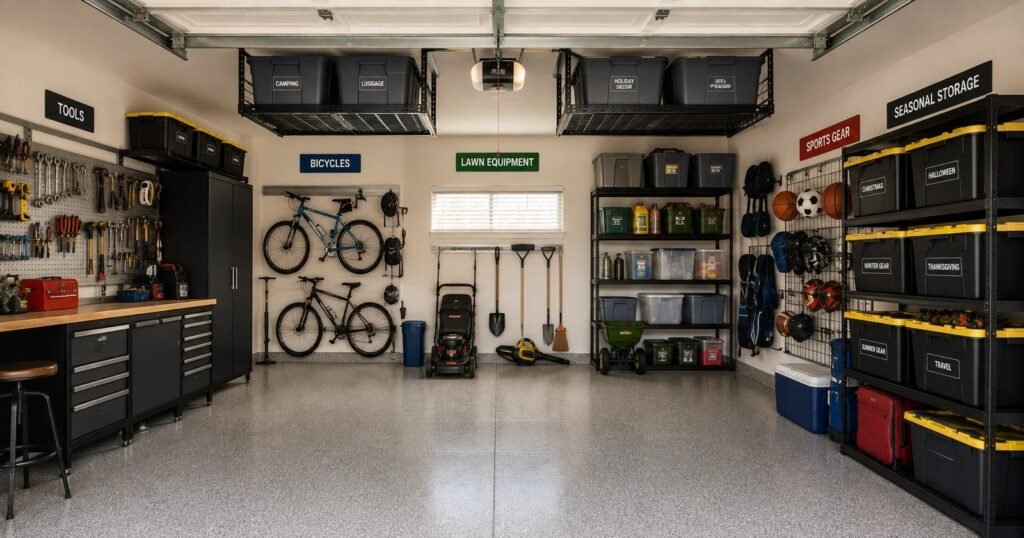
A garage can go from a useful workspace to a crowded storage cave in a single season, and the usual advice always seems to start with buying something: shelving units, wall systems, storage bins, or a full organizer kit. But learning how to keep a garage organized without buying shelves is entirely possible, and for many households it works better than a shopping trip, because the real problem is rarely a lack of shelves. It is too much stuff, no clear place for anything, and no routine to keep it that way. This guide shows you how to organize a garage using only what you already own: wall studs, ceiling joists, hooks, nails, repurposed furniture, jars, buckets, and a little planning.
Start by Decluttering: The Step You Cannot Skip
Every garage organization project that fails has the same cause: the owner tried to organize clutter instead of removing it first. No storage system, bought or free, can hold more stuff than the space allows. Before you move a single item to a wall or a hook, empty the garage as much as you can, pulling everything out onto the driveway if the weather allows, and sweep the floor while it is clear. Sort everything into four groups: keep, donate or sell, recycle, and throw away. Be honest with yourself. Broken tools you have meant to fix for years, paint cans that have gone bad, old sports gear nobody uses, and boxes of cables for devices you no longer own are the items that eat your garage. A useful rule is that if you have not used something in the past year and it has no clear future use, it goes. Keep the best of any duplicates and let the rest go. For items you are unsure about, put them in a single box marked with a date a few months from now, and if you never open it before that date, donate it unopened. Handle old paint, solvents, batteries, and chemicals properly by taking them to your local hazardous waste collection, not the regular trash. Once the sorting is done, you will know exactly what you actually own, and that list, not a store catalog, determines how much storage you really need.
Sort What Is Left Into Zones
Once the clutter is gone, the single most powerful organizing idea is zoning: giving every category of item its own area. A garage usually serves several purposes at once, and mixing them together is what creates the mess. Common zones include car care, tools and repairs, garden and yard, sports and recreation, seasonal storage, and household overflow. You do not need all of them. Pick the zones that match your life and assign each one a specific spot, based on how often you use it and where it makes sense. Car care supplies belong near the car, garden tools belong near the door to the yard, sports gear belongs near the entrance you use when heading out, and seasonal items you touch twice a year belong in the hardest-to-reach spots, such as the back wall or up high. Zones work because they turn tidying into a one-step decision: a new item simply goes to its zone, and a missing item only needs searching in one area. Label each zone clearly, even if the labels are just strips of masking tape and a marker, and walk everyone in the household through the zones once the system is set up. Within each zone, group similar items together, since grouping is what makes the next steps possible.
Use the Walls You Already Have
The walls of an unfinished garage are one of the best free storage resources in any home, and most people ignore them completely. Exposed wall studs are ready-made vertical dividers, and the gaps between them are perfect for long, thin items: shovels, rakes, brooms, fishing rods, and lumber offcuts slide neatly into those slots and stay upright and visible. You can also screw a short piece of scrap wood across two studs to make a bracket, or drive a nail into a stud to hang a coiled hose or extension cord. Hooks are the workhorses of free wall storage. A row of sturdy nails or screws along a stud can hold hand tools by their handles, while old curtain hooks, cup hooks, and even bent nails can hold lighter items such as work gloves, hats, or dog leashes. For heavier items, drive a long screw into a stud at a slight upward angle so the item cannot slide off. Always anchor into a stud, not into drywall alone, since drywall will not hold weight reliably. A scrap piece of plywood with nails driven through it in a grid makes a fine tool board, and a wooden plank screwed horizontally to the wall, with nails or hooks along its length, becomes a tool rack. Hang your most-used tools at eye level, and keep sharp tools covered or pointed away from reaching hands. Visibility is the point: when tools are visible on a wall, you use them more, lose them less, and stop buying duplicates of tools you already own but cannot find.
Look Up: Free Storage on the Ceiling Joists
The ceiling of a garage is the most underused storage space in the house, and it costs nothing to use. Exposed ceiling joists create natural compartments that are ideal for long, flat, light items. Boards, trim pieces, pipes, and fishing rods can rest across the joists, out of the way but easy to reach with a step stool. Keep the weight light and spread out, and never store anything heavy overhead that could fall on someone or damage the car. For items too short to span the joists, a couple of scrap boards laid across two joists create a simple platform for boxes of seasonal decorations or camping gear. Label the ends of boxes that face out so you can identify them from the floor. Overhead storage is best for items you need rarely, such as holiday decorations or camping equipment, while daily-use items should stay at ground level or on the wall. Safety comes first: never store liquids overhead, since a leak can drip onto everything below, never overload the joists, and never block the garage door mechanism. Check overhead items a few times a year to make sure nothing has shifted.
Repurpose Furniture, Buckets, and Jars
Before buying anything, look for furniture that is no longer earning its place indoors. An old bookshelf against the garage wall holds paint cans, cleaners, and small boxes at eye level. A dresser with drawers is perfect for small parts, fasteners, and tools, since drawers keep dust off and small items from getting lost. A small table becomes a workbench, and a cabinet with doors keeps items clean and out of sight. Old kitchen cabinets are especially useful: when a kitchen is remodeled, the old wall cabinets are often thrown away, yet mounted to garage studs they hold a large amount of supplies behind closed doors. An old filing cabinet is another excellent find, with deep, sturdy drawers on rails that suit heavy items such as tools, hardware, or car parts. Label each drawer with masking tape and a marker. The furniture does not need to look good; it needs to hold things. Five-gallon buckets are equally useful and most households already have some. A bucket holds a coiled hose, a bag of sand, or car washing gear, and several lined up along a wall create a storage row with no shelving at all. Buckets with lids stack neatly and protect contents from dust and moisture. Glass jars and kitchen containers organize the small stuff: screws, nails, and bolts disappear into a junk drawer, but in a clear jar they are visible and easy to find. Mount jar lids under a scrap board and screw the jars up into them so they hang upside down, turning wasted space into small-parts storage. Cardboard boxes suit light, dry items such as holiday decorations, but they attract moisture and pests over time, so label them clearly and stack them no more than three high. For more ideas on solving household messes with what you have, see our guide on how to remove water rings from wood without mayonnaise.
Keep the Floor Clear and Build a Seasonal Routine
If there is one rule that separates an organized garage from a messy one, it is this: keep the floor clear. The floor is for the car, for walking, and for working. Everything else belongs on a wall, on a ceiling joist, in a bucket, or in a piece of repurposed furniture. When items creep onto the floor, they pile up fast, get damaged, and make the whole space feel chaotic even if the walls are tidy. Getting things off the floor does not require shelves. Bikes can hang from hooks in the ceiling joists or from a wall hook by the front wheel. Long-handled tools stand in the gaps between wall studs, sports balls go in a net bag or an old laundry basket hung from a hook, and hoses and extension cords coil onto nails. An item is not organized until it has a home off the floor, so if you catch yourself setting something down temporarily, put it in its real home instead, since temporary piles have a way of becoming permanent. Organization is also a routine, not a one-time project. Once a season, set aside an hour to walk through the garage with a trash bag and a donation box, put away anything that has drifted from its zone, throw out anything broken, sweep the floor, and check overhead storage. Pair the check with the seasons: in spring, bring out the gardening tools and put away the cold-weather gear, and in fall, reverse the swap. The daily rule is even simpler: put things back immediately after using them. A tool goes back on its hook the moment the job is done, and a bag of sports gear goes back to its zone when you come home. This takes seconds in the moment and saves hours later.
Common Mistakes to Avoid
The first mistake is organizing before decluttering, which simply rearranges the problem. The second is creating storage without zones, which leaves you with neat piles but no system. The third is storing heavy items overhead or high on a wall where they are hard to reach and dangerous to retrieve; heavy items belong low, near the floor, where they are stable and easy to lift safely. The fourth mistake is hiding everything in unlabeled boxes. A garage full of identical mystery boxes is barely better than a garage full of piles, because you still cannot find anything without opening them, so label every container, even if the label is just a strip of tape and a marker. Another common mistake is letting one category take over: a garage can easily become a dumping ground for household overflow, old clothes, and boxes from the attic, so set a limit and remember that if a category does not belong to a zone, it does not live in the garage. The same goes for items kept out of guilt rather than usefulness. Finally, avoid the trap of buying storage as a substitute for decisions. Shelving units, bins, and wall systems are useful, but they do not solve a clutter problem on their own. If you buy storage before decluttering, you will fill the new shelves with the same clutter and end up exactly where you started, only poorer. The free methods in this guide work because they force you to decide what stays, where it lives, and how often you use it. Our guide on how to remove grease stains from a shirt without dish soap follows the same principle: work with what you have first, and spend money only when you know exactly what you need.
Frequently Asked Questions
What is the first step to organizing a garage without buying shelves?
Declutter first. Pull everything out, sort it into keep, donate or sell, recycle, and throw away, and remove anything broken or unused. No storage system can organize more stuff than the space can hold, so reducing what you own is the step that makes everything else possible.
How do I store things in a garage with no shelves?
Use the walls and ceiling you already have. Hang tools from nails and hooks driven into wall studs, store long items in the gaps between studs, rest light items across ceiling joists, and use repurposed furniture, five-gallon buckets, and jars for the rest. A clear floor and labeled zones tie the whole system together.
Are wall studs strong enough to hold garage tools?
Yes, when you anchor into the stud itself. A screw or nail driven into a solid wood stud can hold a surprising amount of weight, including hand tools, coiled hoses, and sports gear. Always anchor into the stud, not into drywall alone, and keep very heavy items low or on the floor rather than hanging them high.
How can I keep a garage organized long term without spending money?
Build a short routine: put every item back in its zone immediately after use, and do a one-hour seasonal check to clear drift, throw out broken items, and rotate seasonal gear. Zones, labels, and the habit of returning things to their home do more for long-term organization than any product you could buy.
What should I do with old paint and chemicals in my garage?
Take them to your local hazardous waste collection rather than putting them in the regular trash. Many communities run seasonal drop-off days for paint, solvents, batteries, and chemicals. Clearing these items out improves safety and frees up a surprising amount of space.
Is it safe to store things on garage ceiling joists?
It is safe for light, flat items such as boards, holiday decorations, and camping gear, as long as the weight is spread out and the items are stable. Never store liquids overhead, never overload the joists, and never block the garage door mechanism. Check overhead items a few times a year to make sure nothing has shifted.
Learning how to keep a garage organized without buying shelves is really about three things: owning less, giving everything a visible home, and keeping up a short routine. Declutter first, divide the space into zones, use your walls and ceiling, repurpose what you already own, and keep the floor clear. The result is a garage that works for your daily life, holds your car, and lets you find anything in seconds, all without spending a dollar on shelving. And if stains show up along the way, our guide on how to remove candle wax from carpet without an iron shows the same use-what-you-have mindset for another common household cleanup.













1 thought on “How to Keep a Garage Organized Without Buying Shelves”
Comments are closed.