
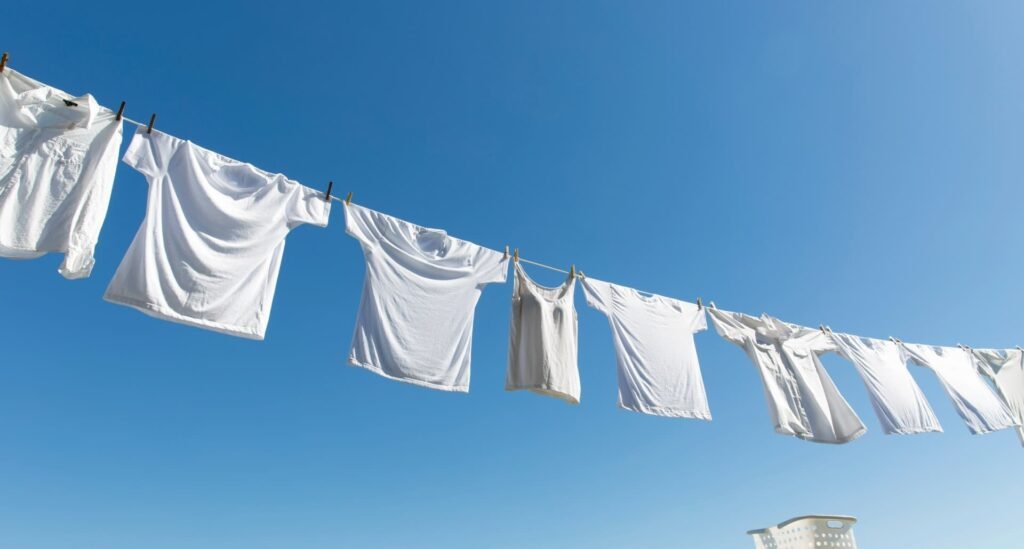
A crisp white shirt looks sharp on the first wear, but after a few washes it often starts to look dingy, gray, or yellow, especially around the collar and under the arms. Bleach seems like the obvious fix, but bleach can actually make yellowing worse over time, and it weakens cotton fibers with every use. Learning how to keep a white shirt from turning yellow without bleach is about understanding what causes the color change and changing a few laundry habits to stop it.
Yellowing has several causes, and each one needs a different fix. Sweat and body oils oxidize into yellow stains. Detergent residue builds up and traps grime. Hard water deposits minerals in the fibers. Heat from the dryer sets stains permanently. The good news is that every one of these causes is preventable with gentler methods that are actually better for your shirts. This guide covers the full routine, from washing to drying to storage.
Why White Shirts Turn Yellow
The most common cause is sweat. Sweat itself is mostly water and salt, but it also contains proteins and oils. When those proteins sit in fabric and are exposed to air and heat, they oxidize and turn yellow. The underarm area is the worst spot because it combines sweat, body heat, and friction. Antiperspirant makes it worse, because the aluminum compounds in most antiperspirants react with sweat to form yellow stains that are notoriously hard to remove.
Detergent buildup is the second culprit. Using too much detergent leaves a residue in the fibers. That residue attracts dirt, dulls the fabric, and turns gray or yellow over time. Fabric softener does the same thing, coating fibers with a waxy layer that traps grime. Many people use more detergent than they need, and the excess is slowly ruining their whites.
Hard water is the third cause. Water rich in iron and minerals leaves deposits in fabric that build up wash after wash. Iron in the water is especially bad, since it can leave a distinct yellow or rusty tint. Heat is the final factor. High dryer temperatures bake stains and residues into the fibers, setting them permanently. A shirt that comes out of a hot dryer with a faint yellow tinge will rarely get white again.
Wash White Shirts Separately, Every Time
This sounds obvious, but it is the most commonly skipped step. White shirts must be washed with whites only. Even light-colored garments shed dye in the wash, and that dye settles into white fabric as a gray or dingy tint. A single red sock or dark blue towel in the load is enough to ruin a white shirt’s brightness.
Sort by color and by soil level. Wash heavily soiled whites, such as shirts worn on a hot day, separately from lightly worn ones, so the dirt from one does not transfer to the other. Turn shirts inside out before washing. This protects the outer surface from friction and fading, and it puts the collar and underarm areas, where most of the soil is, in direct contact with the water and detergent.
Do not overload the machine. Clothes need room to move freely so water and detergent can circulate. An overloaded washer leaves detergent residue in the fabric and does not rinse properly. Fill the drum no more than three-quarters full, and give white shirts space to move.
Use Less Detergent, and the Right Kind
Most people use far more detergent than the label recommends. Modern detergents are concentrated, and the lines on the cap are often higher than necessary. Excess detergent does not make clothes cleaner. It leaves a film in the fibers that attracts dirt and turns fabric dingy over time.
Use the smallest amount that still cleans, usually about half the amount shown on the bottle for a normal load. If your shirts feel stiff or smell faintly of detergent after washing, you are using too much. A second rinse cycle can help remove residue if your machine offers one, and it costs nothing but a little extra water.
Choose a detergent made for whites, preferably one with oxygen-based brighteners rather than chlorine bleach. Oxygen brighteners lift stains gently without damaging fibers. Avoid detergents with added fabric softener for white shirts. And skip liquid fabric softener entirely on whites. It coats fibers with a waxy layer that traps body oils and accelerates yellowing.
Add a Natural Brightener to the Wash
Several household ingredients brighten whites safely, without the damage bleach causes. They work by different mechanisms, so you can use more than one, but do not combine them all in a single load. Pick one or two and use them consistently.
Baking Soda
Add half a cup of baking soda to the wash cycle along with your regular detergent. Baking soda softens water, which helps the detergent work better, and it neutralizes the acids in sweat and body oils that cause yellowing. It also deodorizes, which is a bonus for shirts worn on warm days. Baking soda is safe for all washable fabrics and will not damage fibers.
White Vinegar
Add half a cup of white vinegar to the rinse cycle, not the wash cycle. Vinegar dissolves detergent residue and mineral deposits, leaving fibers cleaner and brighter. It also softens fabric naturally, which means you can skip fabric softener entirely. Pour it into the fabric softener dispenser if your machine has one, or add it manually when the rinse cycle begins. The vinegar smell disappears completely once the shirt dries.
Oxygen Bleach
Oxygen bleach, sold as a powder under several brand names, is not the same as chlorine bleach. Its active ingredient breaks down into water and oxygen, and it is safe for cotton and most colors. Soak white shirts in a basin of warm water with a scoop of oxygen bleach for one to six hours before washing, or add it to the wash cycle for a regular boost. It is especially effective on yellowed collars and underarms when used as a presoak.
Lemon Juice
Lemon juice is a mild natural bleach. Add half a cup to the wash cycle for a gentle brightening effect, or soak yellowed shirts in a basin of hot water with the juice of two lemons for an hour before washing. Lemon works best combined with sun drying, since sunlight activates its brightening effect. Do not use lemon juice on silk or wool, which are too delicate for acids.
Pre-Treat the Collar and Underarms
The collar and underarms yellow first, and they need attention before the shirt goes in the machine. A quick pre-treatment takes a minute and prevents stains from setting permanently during the wash.
A Simple Pre-Treatment Paste
Make a paste from baking soda and a little water, and rub it gently into the collar and underarm areas with an old toothbrush. Let it sit for thirty minutes before washing. The paste lifts the oils and sweat residue that cause yellowing, and it is gentle enough for regular use on cotton shirts.
For stains that are already visible, try a paste of baking soda and white vinegar applied to the stain, left for thirty minutes, then washed as usual. The fizzing action helps lift the stain out of the fibers. Another option is a paste of oxygen bleach powder and water, applied directly to the yellowed area and left for an hour before washing.
Switch Your Antiperspirant
Since the aluminum in most antiperspirants is a major cause of yellow underarm stains, switching products can prevent the problem at its source. Look for aluminum-free deodorants, or apply antiperspirant at night rather than in the morning, which gives it time to absorb fully before it contacts your shirt. Let any product dry completely before dressing. A damp layer of antiperspirant transfers directly to the fabric, while a dry layer mostly stays on the skin.
Wearing a thin undershirt is another effective barrier. A plain white undershirt absorbs sweat and antiperspirant before they reach your dress shirt, and undershirts are far cheaper to replace. Choose a close-fitting cotton undershirt that stays tucked in and does not bunch under the outer shirt.
Dry Whites the Right Way
How you dry a white shirt matters as much as how you wash it. Sunlight is the best natural whitener there is. Ultraviolet light breaks down the compounds that cause yellowing, and line drying in the sun can brighten a shirt noticeably. Hang white shirts in direct sunlight whenever the weather allows, and turn them inside out to protect any colored stitching or buttons.
If you use a dryer, use low heat. High heat sets stains and yellows cotton fibers over time. Dry shirts on a low or medium setting and remove them while they are still slightly damp, then hang them to finish drying. This also reduces wrinkles, which means less ironing, and ironing on high heat can scorch and yellow fabric too.
Never put a shirt with a visible stain into a hot dryer. Heat sets stains permanently. If a stain is still visible after washing, treat it again and rewash before drying. Once a yellow stain has been baked in by dryer heat, removing it becomes far more difficult.
Store White Shirts Properly
Yellowing can happen in the closet too. Shirts stored for months, especially in plastic bags or cardboard boxes, can develop yellow patches from oxidation and from chemicals in the storage materials. Plastic dry-cleaning bags trap moisture and fumes, and cardboard contains acids that migrate into fabric over time.
Store white shirts on hangers in a cool, dry closet with good air circulation. Use breathable cotton garment bags rather than plastic if you need to cover them. Wash shirts before storing them for a season, since body oils and invisible stains oxidize during storage and a shirt that looks clean in the spring can come out yellow in the fall.
What to Do About Shirts That Are Already Yellow
If a favorite shirt has already yellowed, it is not necessarily lost. A long oxygen bleach soak is the first thing to try. Fill a basin with warm water, add oxygen bleach powder according to the package directions, and soak the shirt for six hours or overnight. Then wash it as usual. Repeat the soak if the improvement is partial.
A vinegar soak is another option. Soak the shirt in a basin of cool water with one cup of white vinegar for thirty minutes before washing. Vinegar dissolves mineral deposits and detergent residue, which are common causes of all-over dinginess.
For severe yellowing on sturdy cotton, a bluing agent can help. Bluing liquid adds a tiny amount of blue tint to the wash water, which counteracts the yellow cast and makes the fabric look whiter to the eye. Use only a few drops diluted in water, never poured directly on fabric, and follow the product directions exactly. Bluing is an old-fashioned remedy that still works, but too much of it leaves a blue tint of its own.
If you are dealing with sweat stains specifically, our guide on how to remove sweat stains from white shirts without bleach covers targeted treatments for underarm stains, and how to keep white shirts white without bleach has a broader routine for keeping the whole shirt bright. For deodorant marks on darker shirts, see how to remove deodorant marks from a black shirt.
Mistakes That Yellow White Shirts Faster
The most damaging mistake is using chlorine bleach on cotton shirts regularly. Chlorine bleach whitens at first, but it weakens cotton fibers with every use. Over time the fibers break down, and the fabric itself turns yellow as it degrades. Bleach also reacts with the proteins in sweat to create yellow stains that are nearly impossible to remove. For whites, oxygen bleach is the safer choice every time.
Ironing on too high a heat is another common cause. A hot iron can scorch cotton, leaving a faint yellow mark that looks like a stain. Always use the correct temperature setting for cotton, use steam rather than dry heat, and test the iron on an inside hem first if you are unsure.
Using too much detergent, adding fabric softener, and drying on high heat all contribute to the problem, and they are all easy to fix. The pattern is simple: gentler treatment keeps white shirts white longer. Harsh chemicals and high heat give a quick result and a long-term cost.
FAQs
Why do my white shirts turn yellow even when I wash them?
The usual causes are sweat and body oils oxidizing in the fibers, detergent residue building up, minerals in hard water, and heat from the dryer setting stains. Washing separately with less detergent, adding vinegar to the rinse, and drying on low heat or in the sun addresses all four causes.
Does bleach make white shirts more yellow over time?
Yes, chlorine bleach can. It weakens cotton fibers with repeated use, and it reacts with sweat proteins to form yellow stains. Oxygen bleach is a safer alternative that brightens whites without damaging the fabric.
How do I keep the collar of a white shirt from yellowing?
Pre-treat the collar with a baking soda paste before every wash, and wash the shirt soon after wearing it rather than letting sweat sit in the fabric. Body oils and skin contact cause collar yellowing, so prompt washing and pre-treatment are the best defenses.
Is vinegar safe to use on white shirts?
Yes. White vinegar added to the rinse cycle dissolves detergent residue and mineral deposits, softens fabric, and brightens whites. Use half a cup per load. The smell disappears completely once the shirt is dry.
Can sun drying really whiten a white shirt?
Yes. Ultraviolet light breaks down the compounds that cause yellowing, making sunlight a natural whitener. Hang white shirts in direct sun when possible. Short sun drying brightens fabric, though storing shirts in sunlight for months can weaken fibers.
How should I store white shirts so they stay white?
Wash them before storing, hang them in a cool dry closet with good airflow, and use breathable cotton garment bags instead of plastic. Avoid cardboard boxes, which contain acids that yellow fabric over time. Body oils left in stored shirts oxidize into yellow stains, so a fresh wash before storage is essential.











2 thoughts on “How to Keep a White Shirt From Turning Yellow Without Bleach”
Comments are closed.