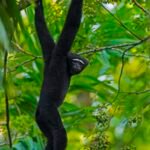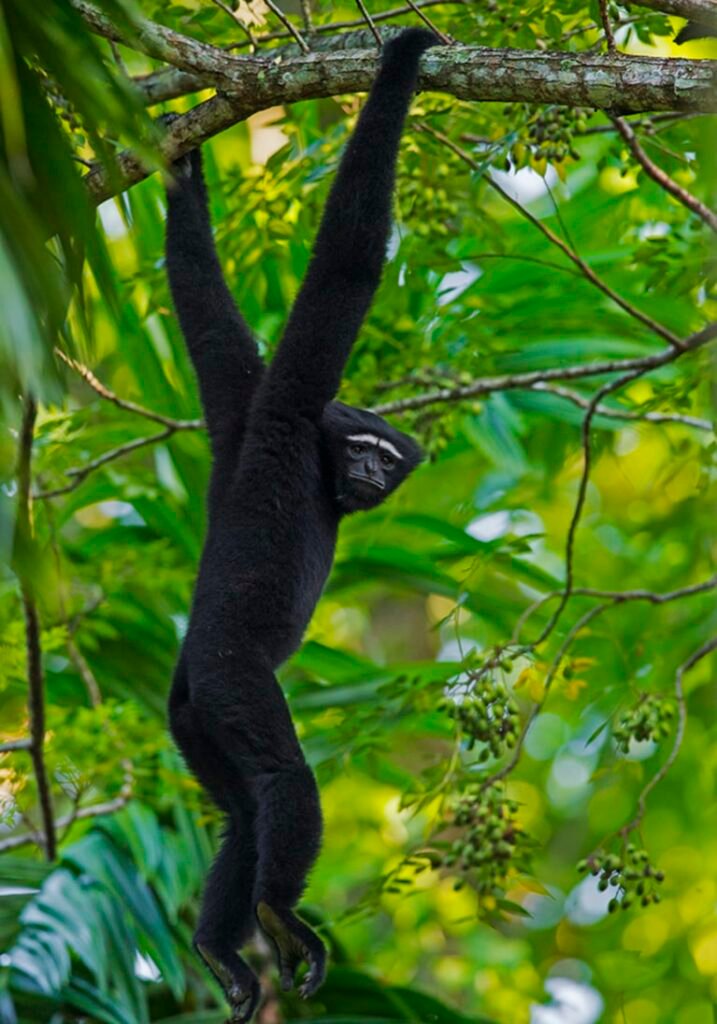
Forest personnel from Assam, Meghalaya and Tripura have undergone training to improve protection for the endangered Western Hoolock Gibbon, India’s only ape. The week-long programme, organised by conservation organisation Aaranyak at the Hollongapar Gibbon Sanctuary in Assam, brought together 16 forest guards from the three states, aiming to equip frontline staff with scientific knowledge and field techniques for conserving the species and its habitat.
The initiative was conducted with the Assam Forest Department, particularly the Jorhat Forest Division, with support from The Habitat Trust, the IUCN Primate Specialist Group and the IUCN Section on Small Apes. Inaugurated by Range Officer Rupak Bhuyan, it was described as one of the first of its kind in Northeast India, offering focused species-specific training beyond conventional curricula.
India’s only ape under pressure
The Western Hoolock Gibbon, native to Northeast India, faces growing threats from habitat fragmentation, forest degradation and hunting. Conservation is further challenged by gaps in species-specific expertise and limited access to scientific monitoring techniques among frontline personnel. Aaranyak designed the programme to strengthen guards’ capabilities for emerging conservation challenges at the grassroots level.
What the training covered
The training covered primate ecology, gibbon population estimation, census methods, field data collection, habitat assessment and restoration, and long-term monitoring. Participants were also introduced to gibbon rescue and rehabilitation, floristic surveys, GPS applications in wildlife research and wildlife protection laws. Classroom sessions combined with field exercises gave trainees practical exposure to scientific monitoring and protection methods.
Sessions were conducted by specialists including Dr I. C. Baruah, formerly of Assam Agricultural University, Gunin Saikia of the Assam Forest Department, Dr Bhaskar Choudhury of the Wildlife Trust of India, and Dr Dilip Chetry, who heads Aaranyak’s Primate Research and Conservation Division. Dr Chetry urged participants to deepen their understanding of primate conservation and stressed the need for coordinated action and public participation to ensure the species’ survival.
Why three states together matters
The programme concluded with a convocation chaired by Dr Chetry, who underlined the value of bringing three states’ personnel together to strengthen regional cooperation. He acknowledged the support of the three forest departments and local communities, and urged trainees to turn their knowledge into practical measures — safeguarding habitats and strengthening monitoring. Trainees received manuals, books, awareness posters and certificates, and were encouraged to act as conservation ambassadors in their home ranges.
Tawang recently hosted an international tourism mart linking Northeast sellers to buyers from around the world, while Assam and Arunachal Pradesh have been working together on their boundary dispute. The gibbon programme shows a quieter form of regional cooperation: three states training one frontline workforce for a species that belongs to all of them.
#HoolockGibbon #Assam #Meghalaya #Tripura #Aaranyak #WildlifeConservation #Hollongapar