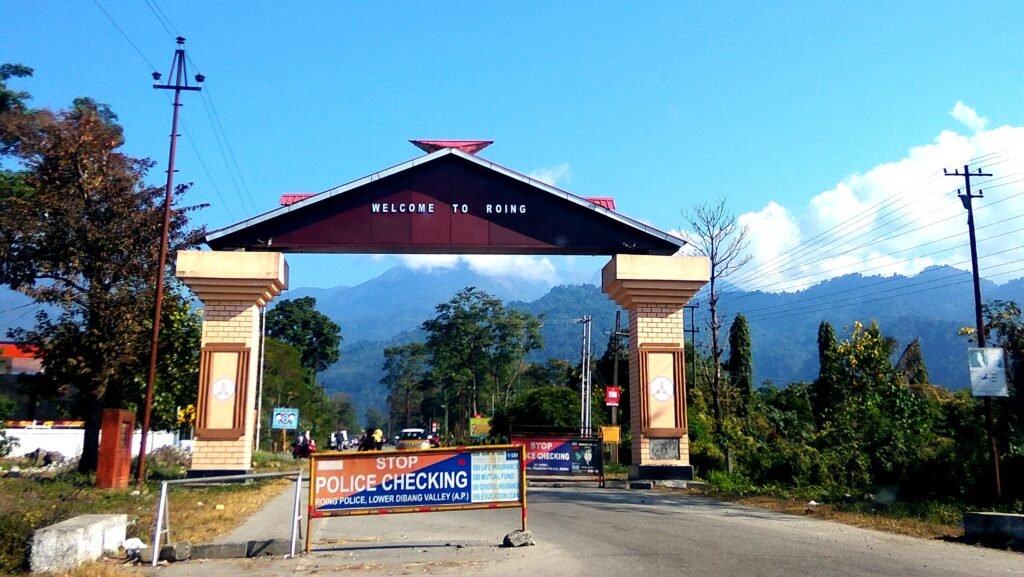
Assam and Arunachal Pradesh agree to form a joint committee to address a long-running boundary dispute between Tinsukia district in Assam and Lower Dibang Valley district in Arunachal Pradesh, following regional committee talks in Roing. The talks, which run for hours, bring together ministers, legislators and district officials from both states.
Assam Agriculture Minister Atul Bora leads his state’s regional committee, accompanied by Minister Rameswar Teli, MLA Bolin Chetia, Tinsukia Deputy Commissioner Sumit Sattawan and Superintendent of Police Anchal Chouhan, along with a Border Protection and Development Department consultant and local circle officers. Minister Ojing Tasing heads the Arunachal Pradesh contingent, which includes Dambuk MLA Puinnyo Apum, Roing MLA Mutuchu Mithi, Lower Dibang Valley Deputy Commissioner Fwwrman Brahma and the district Superintendent of Police.
A committee that must visit the ground
The newly formed joint committee will comprise residents from the affected zones, administrative officials and elected representatives. Its first task is to visit the contested sites and assess the situation on the ground before any final settlement is considered.
Officials say the on-site assessment is intended to pave the way for a permanent fix, rather than a settlement drawn up from maps and records alone. That emphasis matters in a dispute where villages, fields and everyday movement do not always line up neatly with administrative lines, and where local knowledge can clarify what official records leave ambiguous.
Why boundary talks remain sensitive
Inter-state boundary disputes in the Northeast touch land, livelihoods and identity, and can flare quickly when a local incident is read through a larger territorial question. Structured dialogue between regional committees is therefore the mechanism by which two state governments keep a local disagreement from becoming a wider confrontation. Whether this committee delivers a settlement will become clear only after its field visits are complete.
What happens next
The committee’s visits to disputed locations are the next step, and its findings will shape any further negotiation between the two governments. Residents in the affected areas will watch closely for a process that listens to them directly, rather than one that treats the boundary as a matter for officials alone.
Arunachal’s frontier questions remain in focus in other ways. Chief Minister Pema Khandu has sought to project calm on frontier questions facing the state, while the Centre has released a large advance tax devolution payment to eight Northeast states, including Assam and Arunachal Pradesh. The Roing talks add a practical, ground-level strand to that wider picture: two neighbours sitting down, and agreeing to walk the disputed ground together.
#Assam #ArunachalPradesh #BorderDispute #Roing #Tinsukia #LowerDibangValley #AtulBora