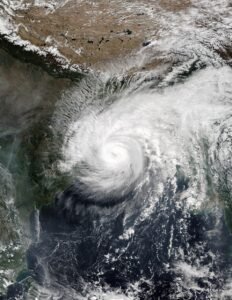
Cyclone Arnab has begun making landfall near Yanam in Puducherry and Kakinada in Andhra Pradesh, bringing very heavy rainfall and strong winds to coastal areas and forcing tens of thousands of people into shelters. The storm, classified as a very severe cyclonic storm, is crossing the coast between Bapatla and Visakhapatnam, close to Yanam.
The India Meteorological Department has reported sustained winds of 125 to 135 kilometres per hour, gusting to 150 kilometres per hour, as the storm interacts with the land surface. Earlier forecasts were slightly lower. A storm surge of one to two metres above the astronomical tide has been warned for low-lying coastal areas, highest around Kakinada and Yanam.
Shelters, evacuations and teams on standby
Andhra Pradesh has evacuated 84,396 people to around 290 shelters, according to state figures cited in reports, while Odisha has evacuated nearly 48,000 people from high-risk areas. More than 30,000 fishing boats have been brought back from the sea, and fishermen have been advised to stay ashore.
Twelve National Disaster Response Force teams and 10 State Disaster Response Force teams have been deployed in Andhra Pradesh, with the Navy and Coast Guard also on alert. Andhra Pradesh Chief Minister N. Chandrababu Naidu has said that protecting every life is the foremost priority, and the state has identified 2,199 cyclone shelters, with 2,360 pregnant women shifted to places with medical facilities.
Rain, flooding and transport disruption
Heavy to very heavy rainfall is being recorded in northern districts of Andhra Pradesh, with waterlogging in parts of Visakhapatnam, trees falling and power supply disrupted in several areas. Some coastal districts have recorded rainfall totals above 250 millimetres over a single reporting period, according to weather reports. Schools have been closed in many affected areas, and rail and air services have been disrupted, with passengers advised to check flight and train status before travelling.
Odisha, Telangana, Chhattisgarh and other inland states are also bracing for heavy rain as the storm moves inland. The Centre’s earlier review of Cyclone Arnab preparedness had put shelters, evacuation arrangements and response teams on standby before landfall, and the NDRF’s role as the nation’s first responders is again central to the response.
What residents should do
People in coastal and low-lying areas should follow official advisories, stay indoors while the cyclone crosses the coast, avoid venturing into the sea, secure loose objects, keep essential documents and medicines ready, and move to designated shelters if instructed by local authorities. Residents should rely on official weather updates rather than rumours on social media.
#CycloneArnab #BayOfBengal #IMD #NDRF #AndhraPradesh #Odisha #DisasterPreparedness