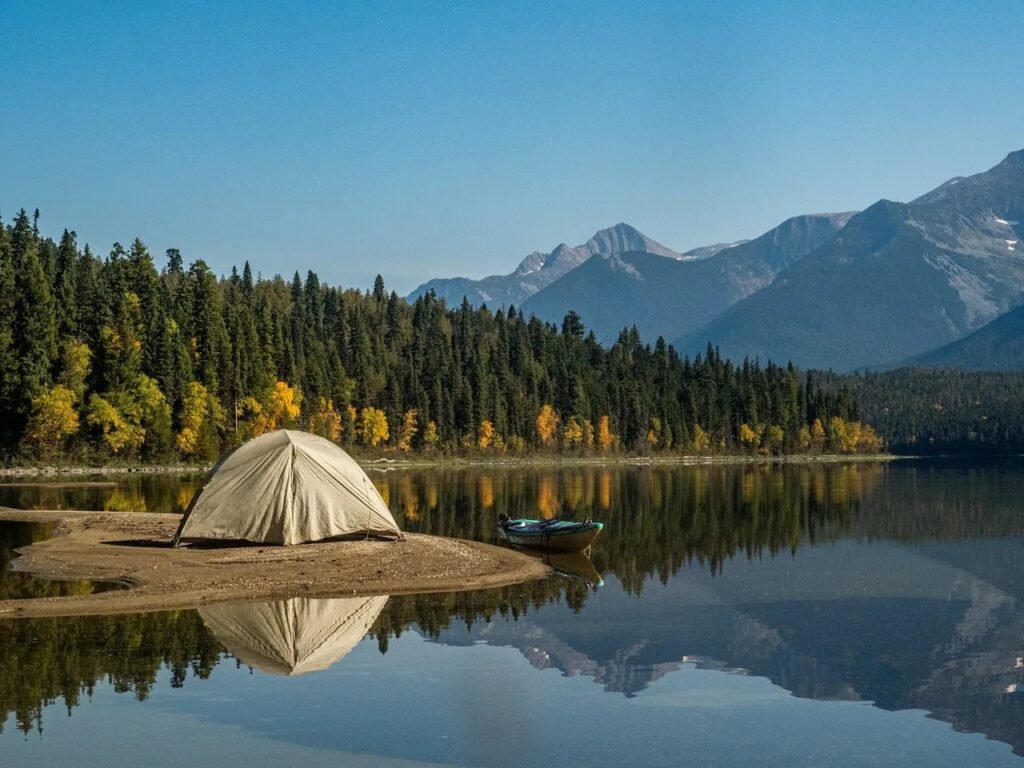
Nothing tests camping gear like a steady overnight downpour. Learning how to keep a tent dry inside during rain camping is less about owning the most expensive tent and more about choosing the right spot, pitching correctly, and managing the water that inevitably tries to get in. With the right preparation, you can wake up dry after a night of heavy rain, even in a modest tent.
Water gets into tents through five main routes: rain falling directly on a poorly pitched fly, ground water seeping up through the floor, leaks through seams and zippers, drips when doors are opened, and condensation forming on the inside walls. A dry night means blocking all five. The good news is that each one has a simple, proven fix, and most of them cost nothing.
Choose Your Campsite Like Water Matters
Site selection is the highest-leverage decision you will make. Water flows downhill and pools in low spots, so never pitch in a depression, a dry creek bed, or at the bottom of a slope, no matter how flat and inviting it looks. Choose slightly elevated, well-drained ground, and look for natural shelter from wind, such as a tree line, without pitching directly under dead branches.
Check the ground itself. Sandy or gravelly soil drains far better than clay, which turns into a puddle. Press the ground with your foot: if it feels spongy or already damp, move on. Avoid areas where the grass is flattened in a ring, which suggests water pools there regularly. A good site does half the waterproofing work before you even unpack the tent.
Also think about the direction of the rain. Pitch the tent’s door away from the prevailing wind and rain so that opening the door does not invite a gust of wet air inside. If you are unsure of the wind direction, watch the trees or check a weather app before you pitch.
Pitch the Rainfly Correctly
The rainfly is your tent’s roof, and most rainfly failures are pitching failures, not product failures. The fly must be taut, with no sagging pockets where water can collect. Stake out all guy lines, not just the corners, and tension them evenly. A sagging fly touches the inner tent, and wherever the two layers touch, water wicks straight through.
Keep a gap between the fly and the inner tent everywhere. That air gap is what keeps you dry: rain runs down the outside of the fly while the inner tent stays untouched. After pitching, walk around the tent and check for contact points, especially at the roof and walls. Adjust the guy lines until the fly stands clear.
Make sure the fly extends close to the ground on the windward side to block wind-driven rain, but leave a small ventilation gap on the sheltered side. A fly staked flat to the ground all the way around traps humid air inside, which leads to condensation, the topic of the next sections.
Seal Seams and Protect the Floor
Even good tents develop seam leaks over time. Factory seam tape peels, and needle holes in stitched seams slowly open up. Seam sealer, a liquid applied along the inside seams of the fly and floor, is cheap insurance. Apply it at home before your trip, let it dry completely for 24 hours, and reapply once a season or after heavy use.
Protect the floor with a footprint, a groundsheet cut slightly smaller than the tent floor. The key detail is “slightly smaller”: a groundsheet that sticks out beyond the tent walls catches rain and channels it underneath you. Tuck all edges under the tent. Inside, keep gear off the floor in stuff sacks or on a small mat, so that even a little seepage does not soak your sleeping bag.
Never dig trenches around your tent. Trenching damages campsites, is banned in many campgrounds, and is unnecessary with a proper footprint and site choice. Modern tent floors, combined with a good footprint, handle ground water well on their own.
Manage Doors, Vestibules, and Wet Gear
Every door opening is a chance for rain to enter. Use the vestibule, the covered porch area created by the rainfly, as an airlock: keep wet boots, rain jackets, and packs there, not inside the tent. Shake off rain gear before bringing anything in, and keep a small towel or pack towel just inside the door for drips.
When entering in heavy rain, open the door only as far as needed, step in quickly, and close it behind you. Keep the door’s zipper fully closed at all times when you are inside; a half-open door invites wind-driven rain and insects. If your tent has two doors, use the leeward one in storms.
Store wet items in waterproof stuff sacks or plastic bags inside the tent. A single wet jacket draped over a sleeping bag can undo an otherwise dry night. Keep a dedicated dry bag for electronics, documents, and anything that must stay dry no matter what.
Beat Condensation: The Hidden Source of Wetness
Many campers blame leaks for wetness that is actually condensation. Each sleeper releases a surprising amount of moisture overnight through breathing and sweat. In a sealed tent, that moisture condenses on the cold inner fly and drips down, leaving everything damp by morning. The fix is ventilation, even in rain.
Keep at least two vents open on opposite sides of the tent to create airflow. Top vents work best, since warm moist air rises. If your tent has adjustable roof vents, open them fully and accept a little cool air in exchange for a dry interior. Avoid cooking inside the tent, which adds huge amounts of moisture and is also a carbon monoxide risk with fuel stoves.
Wipe down condensation in the morning with a pack towel before packing up, and air the tent out at the first dry spell. Packing a wet tent repeatedly grows mildew, which damages waterproof coatings and creates a permanent musty smell.
Prepare Before the Trip
Waterproofing starts at home. Set up the tent in your yard and spray it with a hose to find leaks before they find you on a trip. Check seam tape, zippers, and guy lines, and replace any frayed cord. Reapply durable water repellent spray to the rainfly if water no longer beads on it. A fly that soaks through, rather than shedding water, needs treatment.
Pack a small repair kit: seam sealer, a patch kit, extra guy line, and duct tape for emergency field repairs. A torn fly in a storm can be patched temporarily with duct tape on the dry side, buying you a dry night until a proper repair is possible.
Check the weather forecast and pack accordingly. If heavy rain is certain, bring an extra tarp. A tarp strung over the tent, high enough to allow airflow, adds a second roof and a dry communal area for cooking and sitting out the storm. Comfort on a wet trip is as much about morale as gear, and a dry place to sit outside the tent changes everything.
Physical comfort matters too on any outdoor trip. A pack that fits badly turns a rainy hike into a miserable one, so it is worth reading advice on how to stop a backpack hurting your shoulders on long walks before you load up. And if your trip mixes camping with car travel, these tips to sleep comfortably in a car on a road trip help you rest well on the nights you are not in the tent.
Emergency Fixes in a Storm
If water starts coming in during a storm, stay calm and work through the causes. First, check for fly-to-tent contact and re-tension the guy lines. Second, look for an open vent or zipper letting in wind-driven rain. Third, check whether the groundsheet is sticking out and channeling water underneath, and tuck it in.
For a dripping seam, press a towel against it temporarily and mark the spot for seam sealer later. For a pooling fly, push the pooled water off gently from inside with a pole or your hand, then tighten the guy line that allowed the sag. Avoid touching the inner tent walls during rain, since pressure on the fabric can push water through.
If the situation becomes genuinely unsafe, with lightning, flash flooding, or rising water, abandon the tent and move to high ground or your vehicle. No camping trip is worth risking safety for dry gear.
Mistakes That Guarantee a Wet Night
The most common mistakes are pitching in a hollow, leaving the fly loose, using an oversized groundsheet, sealing every vent shut, and touching the tent walls during rain. Another is packing up a wet tent and storing it wet at home, which ruins waterproof coatings over time. Always dry your tent fully after a trip, even if that means setting it up in a garage or living room.
Finally, do not assume a new tent is fully waterproof. Factory seam tape and coatings vary, and a quick hose test at home reveals problems while they are still easy to fix. A single afternoon of preparation prevents the worst night of your trip.
Frequently Asked Questions
Do I need an expensive tent to stay dry in rain?
No. A mid-range tent pitched correctly, with sealed seams and a good footprint, stays dry in heavy rain. Site choice and fly tension matter more than price.
Should I close all vents when it rains?
No. Closing all vents traps moisture and causes condensation, which wets everything from the inside. Keep roof vents and at least one sheltered vent open for airflow.
How often should I reseal tent seams?
Inspect seams once a season and reseal whenever the tape peels or a hose test shows a drip. Heavy users should reseal annually; occasional campers can go longer.
Can I use a tarp instead of a rainfly?
A tarp can supplement a rainfly but rarely replaces it well, since tarps leave gaps for wind-driven rain. Use a tarp over the tent as extra protection, not instead of the fly.
What should I do if my sleeping bag gets wet?
Wring it gently, air it at the first dry spell, and use a dry bag for it in future. A wet down bag loses most of its insulation, so keep it in a waterproof stuff sack from the start.
Is it safe to cook inside a tent vestibule in rain?
Cooking inside a tent or vestibule with a fuel stove is dangerous because of carbon monoxide and fire risk. Cook outside under a separate tarp, away from tent fabric.