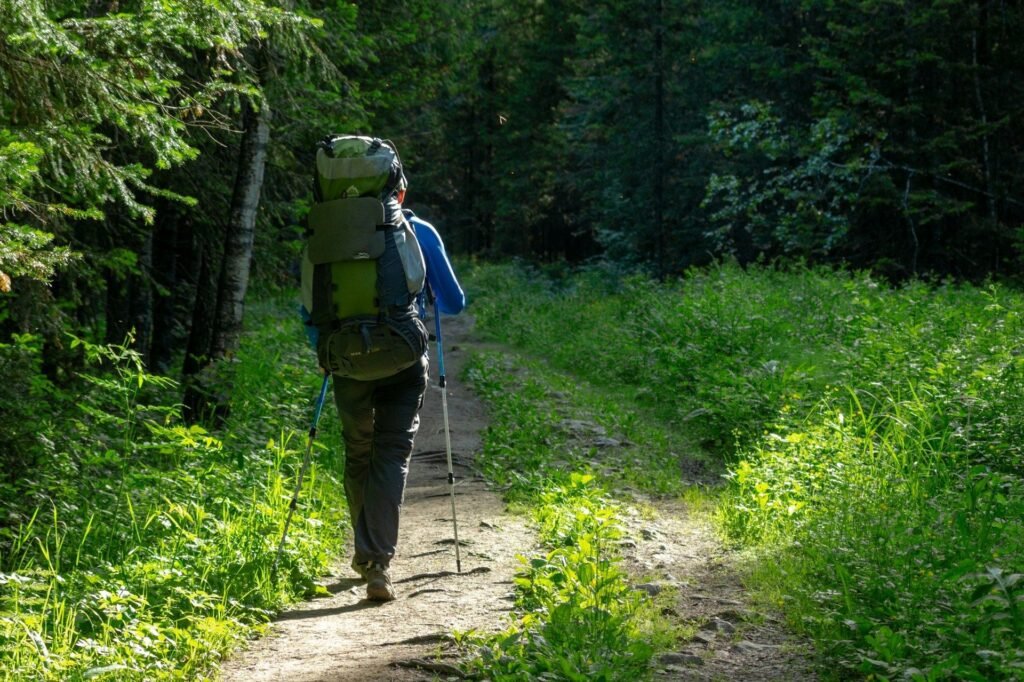
Learning how to stop a backpack hurting your shoulders on long walks can transform a tiring hike or a long day of travel into a comfortable one. Shoulder pain from a backpack is rarely about toughness or endurance. It is usually about fit, weight, and balance. A pack that hangs too low, pulls backward, or carries too much weight on the shoulders will hurt, no matter how strong you are. A well-fitted pack, by contrast, transfers most of the weight to your hips and legs, leaving your shoulders to do only a small share of the work.
This guide explains how to fit a backpack properly, how to pack it so the weight sits in the right place, how much weight is reasonable, and how to adjust straps on the trail when discomfort starts. Whether you are hiking, walking through a city, or traveling with a single bag, these principles will help you walk farther with less pain.
Why Backpacks Hurt Shoulders in the First Place
Your shoulders are not designed to carry heavy loads for hours. They are mobile joints built for reaching and lifting, not for bearing sustained weight. When a backpack hangs from your shoulders alone, the straps dig into the muscles and nerves around the collarbone and upper back, reducing circulation and causing soreness, numbness, and tingling in the arms.
The most common cause is a pack that is too heavy for its design, or too heavy overall. A second cause is poor fit: straps that are too loose let the pack swing and pull backward, while straps that are too tight cut into the shoulders. A third cause is poor packing: heavy items placed far from your back or high in the pack create leverage that drags you backward, forcing your shoulders to fight the pull with every step.
Posture matters, too. A heavy pack encourages leaning forward, rounding the shoulders, and shortening your stride, all of which increase strain. The solution is not to endure the pain, but to fix the fit and the load so your body can walk naturally.
Fit the Backpack to Your Torso, Not Just Your Height
Backpack fit starts with torso length, the distance from the top of your hip bones to the bony bump at the base of your neck. Two people of the same height can have very different torso lengths, and a pack sized for the wrong torso will never sit comfortably. Many hiking packs come in sizes, and many allow you to adjust the shoulder harness up or down to match your torso.
To check fit, load the pack with a realistic weight, put it on, and tighten the hip belt first. The hip belt should sit centered over your hip bones, not on your waist or below your hips. It should feel snug but not painful, and it should stay in place when you walk. Next, tighten the shoulder straps just enough to bring the pack close to your back, without pulling all the weight onto your shoulders. The straps should follow the curve of your shoulders without gaps or digging.
Finally, adjust the load lifter straps, the small straps that run from the top of the shoulder straps to the top of the pack. They should angle upward at about forty-five degrees, pulling the top of the pack toward your body. If they lie flat, the pack is too long for your torso, or the harness needs adjusting. A good fit feels balanced: the pack moves with you, rather than pulling you backward or bouncing with each step.
Let the Hip Belt Carry the Weight
The single most important idea in backpack comfort is this: your hips should carry most of the weight, not your shoulders. The hip belt is designed to transfer load to your hips and legs, which are far stronger and more stable than your shoulders. For a well-fitted hiking pack, the hip belt should carry roughly seventy to eighty percent of the weight, leaving only a small share on the shoulders.
Many people wear the hip belt too loosely, or skip it entirely on a travel pack, and then wonder why their shoulders hurt. Tighten the hip belt firmly before you tighten the shoulder straps, and re-tighten it after a few minutes of walking, because the belt settles as you move. If the hip belt slides up to your waist, it is too loose or the pack is too long. If it digs painfully into your hips, padding or a different size may help.
For travel backpacks without a serious hip belt, the same principle applies in miniature: keep the pack close to your body, keep the weight reasonable, and use a chest strap to stop the shoulder straps from sliding outward. A chest strap, worn at about armpit height, stabilizes the pack and prevents the straps from slipping off your shoulders, which is a common cause of uneven pain.
Pack Heavy Items Close to Your Back
Packing order changes how a backpack feels, even at the same total weight. Place heavy items close to your back and centered between your shoulder blades and hips. This keeps the center of gravity near your body, so the pack does not pull you backward. Place medium-weight items around the heavy core, and light, bulky items, such as a jacket or a sleeping bag, at the bottom or in the outer pockets.
Avoid placing heavy items at the top of the pack or far from your back, because that creates leverage. Imagine holding a heavy book close to your chest versus at arm’s length: the same weight feels much heavier at a distance. A backpack works the same way. Heavy items at the top also make the pack top-heavy and unstable on uneven ground.
Use compression straps to keep the load tight and close to your body. A loose, shifting load swings with each step and forces your shoulders to correct constantly, which is exhausting over a long walk. Tighten the side compression straps after packing, and check them again after the first few minutes, because contents settle. Packing light helps even more: the less you carry, the less any packing mistake matters, as shown in how to pack light for a week-long trip with one carry-on, where choosing fewer, versatile items is the foundation of comfortable travel.
Keep the Total Weight Reasonable
A useful guideline is to keep your pack under twenty percent of your body weight for a comfortable long walk, and under fifteen percent if you can manage it. For many adults, that means roughly ten to fifteen kilograms for a day hike, less for a city walk. A pack heavier than that is possible for short distances, but over hours, the extra weight will show up as shoulder, back, and foot pain.
Weigh your pack before a long walk, using a bathroom scale. Weigh yourself, then weigh yourself holding the pack, and subtract. The result often surprises people, because small items add up quickly: a water bottle, a book, a charger, and a jacket together can add several kilograms. Remove anything you will not actually use, and choose lighter versions of items you need.
Water deserves special attention. It is heavy, about one kilogram per liter, and essential. Carry what you need for the distance to the next refill, not a full day supply if refills are available. Distribute water evenly, with bottles on both sides if possible, so the pack stays balanced rather than pulling to one side.
Adjust Straps on the Trail When Pain Starts
Even a well-fitted pack needs adjustment during a long walk, because your body changes as you tire and the load settles. When your shoulders start to ache, stop and adjust before the pain grows. Loosen the shoulder straps slightly and re-tighten the hip belt, shifting weight back to your hips. Then re-tighten the shoulder straps just enough to stabilize the pack.
Alternate the load occasionally by loosening the shoulder straps for a few minutes, letting the hip belt take more weight, then tightening them again. This changes which muscles work and gives sore shoulders a break without stopping. Adjust the chest strap if the shoulder straps are sliding outward, and check the load lifters if the top of the pack is pulling away from your back.
Take regular breaks, and take the pack off during longer rests. Even five minutes without the pack restores circulation to the shoulders and lets you stretch. During a break, roll your shoulders, stretch your arms overhead, and gently stretch your neck from side to side. Small stretches during breaks prevent stiffness from building into real pain later in the walk.
Choose the Right Backpack for Long Walks
Not every backpack suits a long walk. A fashion backpack with thin, unpadded straps and no hip belt is fine for a short commute, but it will hurt on a long hike. For walks of several hours, look for padded, contoured shoulder straps, a real hip belt, a chest strap, load lifter straps, and a frame or stiff back panel that keeps the pack shape and transfers weight properly.
Ventilation matters, too. A back panel with airflow channels reduces sweating and keeps you cooler, which matters on a warm day. Try the pack on with weight before buying, if possible, and walk around the store for several minutes. A pack that feels fine empty can feel very different loaded, and a pack that pinches empty will only get worse with weight.
For everyday walking, a pack that fits your torso and has a supportive hip belt is worth more than extra pockets or a fashionable look. The same posture habits that protect your shoulders also protect your back at a desk, as explained in how to ease lower back pain from sitting at a desk all day.
Mistakes That Make Shoulder Pain Worse
The most common mistake is wearing the hip belt loosely or not at all, which dumps all the weight onto the shoulders. Another is overloading the pack with items you might need, rather than items you will need. A third is packing heavy items far from the back, which creates leverage and pulls you backward with every step.
Wearing only one shoulder strap, a habit many people have with school or city bags, is especially harmful, because it twists the spine and loads one shoulder entirely. Always wear both straps, even for a short walk. Ignoring early soreness is another mistake: pain is a signal to adjust, not a badge of endurance. Stop, adjust, and lighten the load if you can.
Finally, do not buy a pack that is too big for your needs and then fill it simply because the space is there. A smaller pack forces you to choose carefully, and a lighter, well-fitted pack will always feel better than a large, half-empty one that swings and shifts.
FAQ
Why do my shoulders hurt even with a light backpack?
Fit and balance matter as much as weight. A pack with loose straps, no hip belt, or heavy items packed far from your back will hurt even when light, because it pulls unevenly on your shoulders. Fit the pack to your torso and let the hip belt carry the load.
Should the hip belt or the shoulder straps be tightened first?
Tighten the hip belt first, so it sits snugly over your hip bones and takes most of the weight. Then tighten the shoulder straps just enough to bring the pack close to your back, without pulling the weight off your hips.
How heavy should a backpack be for a long walk?
Aim for under twenty percent of your body weight, and under fifteen percent if possible. Weigh your loaded pack before you go, and remove anything you will not actually use on that walk.
Does a chest strap really help with shoulder pain?
Yes. A chest strap stops the shoulder straps from sliding outward and off your shoulders, which keeps the load even and prevents one shoulder from taking more weight than the other.
What should I do if my arms go numb while walking with a backpack?
Stop, take the pack off, and stretch. Numbness usually means straps are cutting off circulation. Loosen the shoulder straps, re-tighten the hip belt, and adjust the chest strap. If numbness persists after adjusting, or happens without a pack, talk to a healthcare professional.
Is a bigger backpack more comfortable for long walks?
Not necessarily. A bigger pack tempts you to carry more, and a half-empty large pack shifts and swings. Choose the smallest pack that fits your gear, fits your torso, and has a supportive hip belt and padded straps.