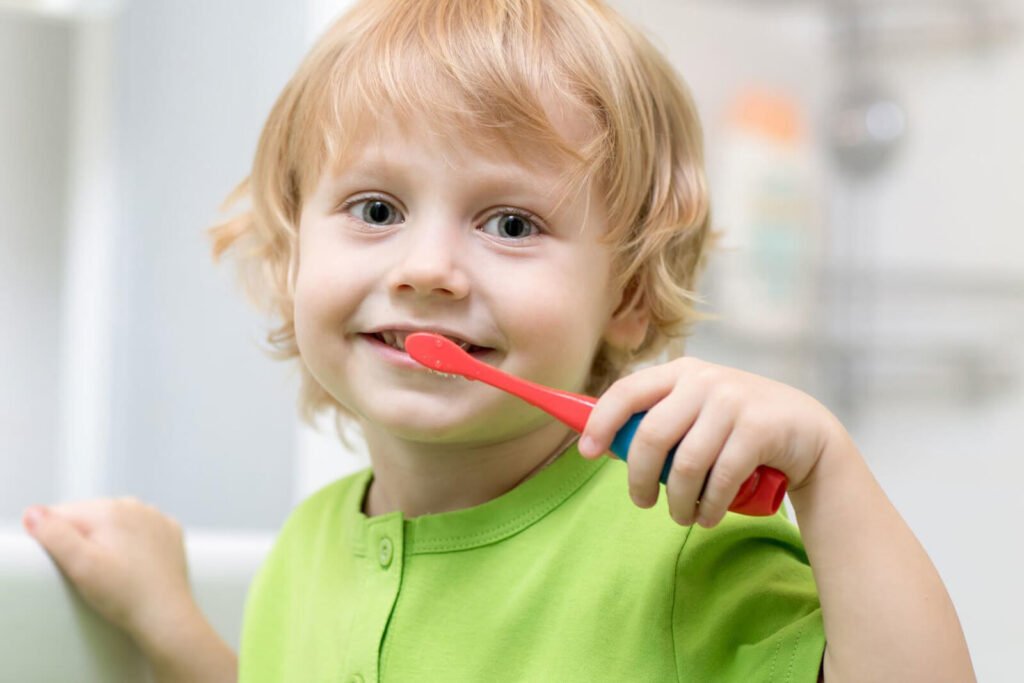
If bedtime at your house includes a wrestling match over the toothbrush, you are not alone. Learning how to get your child to brush teeth without a fight every night is one of the most common parenting struggles, and the good news is that it is solvable without yelling, bribing, or giving up. Most brushing battles are not about teeth at all. They are about tiredness, control, and routine. Fix those three things and the toothbrush usually stops being the enemy. This guide walks you through exactly what to do, step by step, with practical games, scripts, and backup plans for the nights when nothing seems to work.
Why Brushing Turns Into a Battle Every Night
Before changing tactics, it helps to understand what you are really dealing with. Bedtime brushing almost always happens at the worst possible moment: your child is tired, overstimulated, and running low on the emotional reserves they need to cooperate. Add a foreign object in the mouth, a strong minty taste they did not choose, and a parent looming over them with instructions, and resistance is a completely normal response.
Most fights also come down to control. Young children control almost nothing about their day. What they eat, when they sleep, where they go, and what they wear are all decided for them. Refusing to brush is one of the few ways they can say, “I get a vote.” That is why force usually backfires. The harder you push, the more the toothbrush becomes a symbol of the power struggle rather than a simple habit.
The third factor is inconsistency. When brushing sometimes happens at 7:30, sometimes at 9, sometimes skipped entirely, and sometimes enforced with threats, your child never learns that it is simply what happens after dinner. Habits form through repetition in a predictable order, not through lectures about cavities.
The 7-Step Calm Brushing Routine
This routine is designed to remove the three triggers above. Follow the same order every night, and most families see a dramatic improvement within one to two weeks.
- Start brushing 30 minutes before the bedtime you actually want. A child who is already exhausted cannot cooperate with anything. Move the entire routine earlier so brushing happens when your child still has some patience left. This single change ends more brushing battles than any game or song.
- Announce, do not ask. Replace “Do you want to brush your teeth?” with “It is brushing time.” Asking invites a no. Announcing makes it a fact of the evening, like putting on pajamas. Keep your tone warm and matter-of-fact, not stern.
- Offer two choices you control. Instead of debating whether brushing happens, let your child choose how it happens. “Do you want the blue brush or the green brush?” “Should we brush in the bathroom or on the couch?” Choice restores the sense of control that reduces resistance.
- Brush together, side by side. Children imitate far more than they obey. Stand next to your child and brush your own teeth at the same time. It normalizes the activity, fills the two minutes naturally, and turns a command into a shared ritual.
- Let them start, then you finish. Give your child the toothbrush first so they get the feeling of doing it themselves. After about 30 seconds, say, “Great job! Now it is my turn to get the tricky spots.” Most dentists recommend parents do the final thorough pass until a child is around 7 or 8 years old.
- Count, sing, or time it. Pick one consistent timing method and stick with it. Counting to ten per section of the mouth, singing a favorite two-minute song, or using a sand timer all work. The point is not entertainment; it is giving the two minutes a predictable structure.
- End with praise and the next step. Close with something specific: “You got all the back teeth tonight.” Then move straight into the next predictable bedtime step, such as a story or lights out. A smooth transition prevents the “just one more thing” stalling that can undo a good brushing session. If the rest of bedtime is still a struggle, these gentle ways to get a toddler to sleep without rocking pair well with a calm brushing routine.
Give Choices, Not Commands
The choice technique deserves special attention because it is the fastest way to end nightly arguments. The rule is simple: offer two options, and both options lead to brushing. The child feels powerful, and you get exactly what you wanted.
Some choice pairs that work well:
- “Do you want strawberry or bubblegum toothpaste tonight?”
- “Should Mommy brush first or should you brush first?”
- “Do you want to brush the top teeth or the bottom teeth first?”
- “Should we sing the dinosaur song or the counting song while we brush?”
- “Do you want to stand on the step stool or sit on my lap?”
Notice what you never offer: the option to skip. If your child says “Neither!” or “I don’t want to,” stay calm and pick for them: “Okay, I will choose tonight. We are doing the blue brush in the bathroom.” Then proceed. The boundary holds, and the child learns that protesting does not change the outcome, it only removes their choice.
Make Brushing Fun: 8 Dentist-Approved Games
Fun does not replace structure, but it lowers the emotional temperature. Rotate a few of these so none of them get stale.
1. Sugar Bug Hunt
Tell your child there are “sugar bugs” hiding on the teeth and the toothbrush is the hunter. Narrate the search: “I see one behind the front teeth! Got him!” Children who resist brushing often cooperate fully when the job becomes a mission.
2. The Toothbrush Mirror Game
Stand in front of the mirror and make brushing faces at each other. Wide smiles, silly faces between sections. The mirror also helps older preschoolers see what they are doing, which builds skill.
3. Counting Countdown
Count together to ten for each of the four sections of the mouth: top left, top right, bottom left, bottom right. The structure tells the child exactly when it ends, which removes the anxiety of “how long is this going to last?”
4. Stuffed Animal Dentist
Before brushing your child’s teeth, let them “brush” their stuffed animal’s teeth. Playing dentist first gives them the sense of mastery and makes being the patient feel normal.
5. The Mystery Song
Pick a song that lasts roughly two minutes. The rule: brushing ends when the song ends. Knowing the endpoint in advance makes cooperation much easier for young children.
6. Electric Toothbrush Upgrade
A kid-sized electric toothbrush with a built-in timer changes the dynamic completely. The brush does the moving, the timer does the counting, and the novelty alone can end months of resistance.
7. Brushing Chart With Stickers
A simple weekly chart on the bathroom mirror with a sticker for each successful brushing works well for children ages 3 to 6. Keep it positive: stickers mark success, and there is no punishment for a missed night. The chart tracks the habit, not obedience.
8. Story Continuation
Tell a short ongoing story that only continues while brushing is happening. “Yesterday the dragon reached the castle. Tonight we find out what is inside, but the story only moves while the toothbrush is moving.” One cliffhanger a night is a powerful motivator.
What to Do When They Still Refuse
Some nights the games fail, the choices fail, and your child clamps their mouth shut. This is where most parents either give up or force the issue. Neither is ideal. Here is the middle path.
First, check for real causes. A sore throat, a loose tooth, mouth pain, or an overly strong toothpaste flavor are legitimate reasons a child resists. Rule those out before assuming it is behavioral. Switching to a milder, fruit-flavored fluoride toothpaste resolves a surprising number of “behavioral” brushing battles.
If it is behavioral, stay boring. Sit calmly, keep the toothbrush ready, and say, “I am going to wait until you are ready.” Give it one minute. Most children, faced with a parent who is neither angry nor giving in, will open up. The absence of a reaction is powerful because refusal only works as a strategy when it produces a reaction.
When refusal escalates into a full meltdown, remember that a tantrum is communication, not defiance. The same calm, non-reactive approach that helps you handle a toddler tantrum without yelling works at the bathroom sink. Lower your voice, get on their level, and name the feeling: “You are really angry about brushing. I understand. We still need to do it.”
If you must brush a truly unwilling child’s teeth, do it quickly, gently, and without anger, then move on. One forced brushing does not ruin your relationship. A nightly pattern of force does. After a rough night, reset the next day with extra choices and extra fun, not with punishment or lectures.
And on the nights when it simply does not happen, do not panic. One skipped night will not cause cavities. Wipe the teeth with a damp washcloth if your child allows it, and keep the routine normal the next night. Consistency over months matters far more than perfection every single night.
Common Approaches Compared: Pros and Cons
Not every strategy is equal. Here is an honest look at the methods parents try most.
Forcing or physically restraining: The pro is that teeth get brushed tonight. The cons are significant: it teaches your child that brushing is scary and painful, increases resistance over time, and damages trust. Use only as a rare last resort for genuine refusal, never as the default method.
Bribery and rewards: The pro is quick cooperation. The con is that the reward becomes the price of brushing, and children quickly raise their rates. External rewards also fail to build the internal habit you actually want. If you use a sticker chart, frame it as celebrating the streak, not paying for compliance.
Playful cooperation (games, choices, routine): The pro is that it builds a genuine, lasting habit with zero damage to your relationship. The con is that it takes one to two weeks of consistency to fully work, and tired parents may find it hard to stay playful on difficult nights. This is the approach dentists and child psychologists recommend most often, and it is the foundation of everything in this guide.
7 Mistakes That Make Brushing Battles Worse
- Waiting until the child is overtired. Brushing as the very last step before lights-out, when patience is gone, guarantees resistance. Move it earlier in the routine.
- Asking instead of telling. “Can you brush your teeth please?” is a request your child is allowed to decline. “It is brushing time” is a routine.
- Turning it into a lecture about cavities. Young children cannot picture future consequences. Talks about dentists, cavities, and rotten teeth create fear, not motivation. Keep it simple and present-focused.
- Using brushing as a punishment or threat. “If you do not behave, I am brushing your teeth myself” teaches your child that brushing is something bad that happens to them. It poisons the habit.
- Inconsistent rules. Brushing firmly every night for a week, then skipping it all weekend, teaches your child that resistance and timing can change the outcome. Predictability is what turns a battle into a habit.
- Too much toothpaste or the wrong flavor. A pea-sized amount of fluoride toothpaste is all that is needed for children ages 3 and up; a rice-grain smear is enough for younger toddlers. An overpowering mint flavor is one of the most common hidden causes of refusal.
- Brushing too hard or too fast. An adult rushing through a child’s mouth with firm strokes hurts. Use gentle, small circles. If your child winces, slow down and soften your touch immediately.
Many of these mistakes share a root cause with other power struggles at home. If mealtimes are also a nightly negotiation, the same no-fight principles in our guide on getting kids to eat vegetables without a fight apply directly to the toothbrush battle.
Frequently Asked Questions
At what age should my child brush independently?
Most children can brush on their own around age 7 or 8, when they have the manual dexterity to reach every surface. A common guideline: if your child cannot tie their own shoes neatly, they probably cannot brush thoroughly yet. Until then, let them practice first, then do a finishing pass yourself.
What if my child hates the taste of toothpaste?
Switch flavors before assuming the problem is behavioral. Fruit, bubblegum, and mild berry fluoride toothpastes are widely available for kids. Let your child pick the flavor at the store. The sense of ownership alone often ends the resistance.
How long should kids actually brush?
Two minutes, twice a day, is the standard recommendation. For very young children, aim for the full two minutes at night and do the best you can in the morning. A consistent one-minute brush beats a nightly war over two minutes.
Should I use fluoride toothpaste for my toddler?
Yes, fluoride toothpaste is recommended as soon as the first tooth appears. The key is the amount: a smear the size of a grain of rice for children under 3, and a pea-sized amount for ages 3 to 6. Supervise so they learn to spit rather than swallow.
What do I do if my child only wants to chew the toothbrush?
Chewing is normal exploration for toddlers. Give them a separate brush to chew on during play, and keep the “working” toothbrush for actual brushing. Say, “This one is for chewing, this one is for brushing.” Most children outgrow the chewing phase within a few months.
Is it okay to skip brushing once in a while?
An occasional skipped night will not cause cavities on its own. What matters is the long-term pattern. If skipping becomes frequent, the habit unravels and the battles return. When a night goes badly, do a quick wipe with a damp cloth and return to the normal routine the next evening without guilt.
The Bottom Line
Figuring out how to get your child to brush teeth without a fight every night comes down to three changes: brush earlier before exhaustion sets in, replace commands with controlled choices, and make the two minutes predictable and playful. Expect the first week to feel awkward as the new routine takes hold. By the second week, most families find that the toothbrush stops being a battleground and starts being just another boring, normal part of the evening. That is exactly the goal: not a perfect brushing performance, but a calm habit that protects your child’s teeth for years without costing either of you your evening.