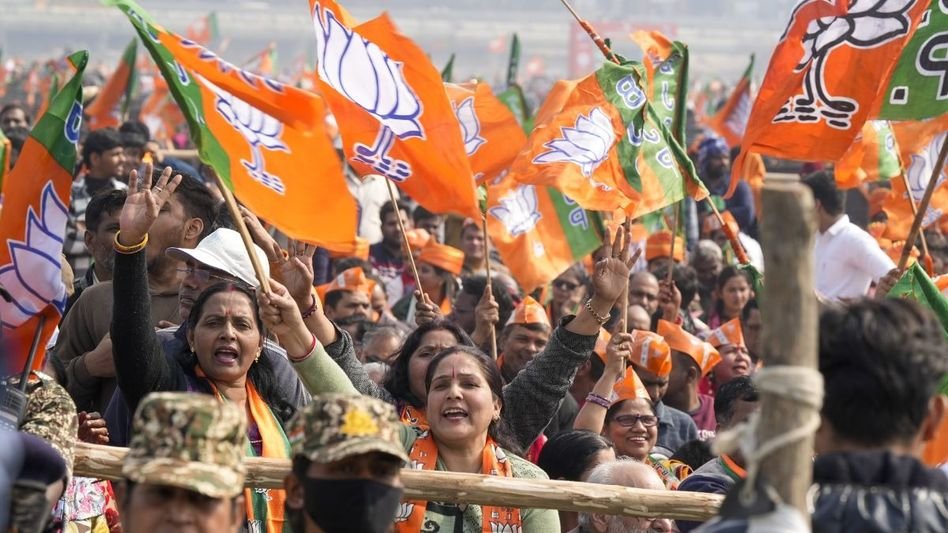
Bharatiya Janata Party leaders in Arunachal Pradesh have strongly criticised All India Students’ Association (AISA) national president Neha Bora over her remarks praising the student-led Gen Z movement in Bangladesh. The state BJP accused her of endorsing a model of regime change that, they claimed, could undermine democratic institutions in India.
What the BJP leaders said
Tobom Dai, spokesperson for the BJP’s Arunachal Pradesh unit, condemned Bora’s remarks in which she extended a “red salute” to the youth of Bangladesh and said their movement for democratic and voting rights had “shown us the way”.
Tame Siyang Tarh, state president of the BJP’s youth wing, the Bharatiya Janata Yuva Morcha (BJYM), went further. Tarh described Bora as a “poster girl” of Congress leader Rahul Gandhi and accused her of advocating a Bangladesh-style regime change in India. He alleged that the opposition’s actions risked promoting political instability in the country.
The BJP maintained that the opposition’s objective went beyond legitimate political protest, alleging that its actions were aimed at weakening India’s democratic institutions.
The wider protest backdrop
The controversy intensified after advocate Prashant Bhushan called for “regime change” during a joint press conference attended by Bora and Cockroach Janta Party (CJP) leader Abhijeet Dipke. The BJP has treated those comments as evidence of an anti-institutional agenda.
The remarks come amid ongoing demonstrations in New Delhi by student and opposition groups against Chief Election Commissioner Gyanesh Kumar. The protesters have also demanded action over alleged irregularities in the Special Intensive Revision (SIR) of electoral rolls. Reports from the capital also said Bora was among student and opposition figures detained ahead of a protest march in New Delhi.
Competing visions of protest
The dispute has sharpened competing positions over electoral transparency, democratic rights and the nature of political protest. BJP leaders question the intent behind the opposition’s references to Bangladesh’s student-led movement, while student groups maintain their agitation is rooted in demands for electoral accountability. The exchange is set to keep Arunachal’s political discourse heated, as the state unit continues its assertive outreach and mobilisation drives, even as Chief Minister Pema Khandu’s development roadmap for frontier livelihoods dominates the state’s policy conversation.
#ArunachalPradesh #BJP #NehaBora #AISA #Bangladesh #Politics