Seven days, one bag, no checked luggage. Learning how to pack light for a week long trip with one carry on is the single highest-leverage travel skill you can build: you skip baggage claim, you never lose a suitcase, you move through airports and train stations twice as fast, and you stop paying checked-bag fees forever. Here is the complete system, step by step.
The secret is not a special bag or magic folding trick. It is a formula: a small capsule wardrobe where everything matches everything, laundry once mid-trip, and a ruthless edit before you zip the bag. Follow this guide and you will fit a full week of travel into a standard carry-on with room to spare.
Start With the Right Bag (and Know Its Limits)
Before you pack anything, check your airline’s carry-on size limits. Most US domestic carriers allow roughly 22 x 14 x 9 inches, but budget airlines can be stricter, and international flights often cap carry-ons at 15–20 pounds. Measure your bag — do not guess.
You do not need an expensive bag. Any structured carry-on in the 35–45 liter range with a clamshell (suitcase-style) opening works. Avoid duffels and top-loading backpacks for this system, because the method below relies on packing flat in layers, which is far easier with a clamshell opening.
The 5-4-3-2-1 Capsule Wardrobe
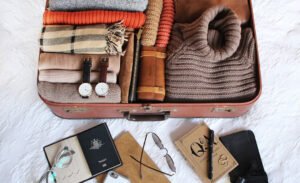
The heart of week-long carry-on packing is the 5-4-3-2-1 rule: 5 tops, 4 bottoms, 3 pairs of shoes (wear the bulkiest), 2 layers, 1 hat or accessory set. With a coordinated color palette, those pieces produce 20+ outfits — more than enough for a week.
Pick a two-color palette
Choose one neutral (black, navy, gray, or khaki) and one accent color, plus white. Every top must match every bottom. This is what multiplies your outfits: five tops times four bottoms is twenty combinations, and you only need seven. If a piece does not match at least three other pieces, it stays home.
Plan to do laundry once
You are not packing seven days of clothes. You are packing four days of clothes and washing once mid-week. Most hotels have laundry service, many Airbnbs have a washer, and a travel clothesline plus a sink works in a pinch with a small packet of detergent sheets. One laundry session turns four outfits into eight — the entire week, covered.
The exact packing list
- 5 tops: 3 t-shirts or casual shirts, 1 nicer shirt or blouse for dinners, 1 athletic top that doubles as a casual layer
- 4 bottoms: 2 pairs of pants or jeans, 1 pair of shorts or a skirt, 1 pair of leggings or joggers (also doubles as sleepwear)
- 3 pairs of shoes: wear the bulkiest pair (sneakers or boots); pack 1 versatile flat or dress shoe and 1 pair of sandals or flip-flops
- 2 layers: 1 lightweight jacket or sweater, 1 packable rain shell or fleece
- Underwear and socks: 4–5 sets (enough for the laundry cycle, not the whole week)
- Sleepwear: 1 set — the leggings and an athletic top can cover this
- Accessories: 1 hat or cap, 1 scarf or bandana (doubles as a blanket, headrest cover, or beach towel in a pinch)
Notice what is missing: “just in case” outfits, the third pair of jeans, the heavy sweater you might need. Every item earns its place by being worn at least twice. If you want a deeper breakdown of stretching a bag even further, see this guide to packing a carry on for two weeks without checking a bag.
The Packing Method: Layer by Layer
1. Roll, don’t fold (mostly)
Rolling saves space and prevents hard creases. Roll t-shirts, casual pants, leggings, and underwear tightly. Fold structured items like blazers or button-downs along their seams instead — rolling a blazer ruins its shape. For maximum density, roll each item, then nest rolls snugly so there is no dead air between them. If an item wrinkles badly no matter what you do, wear it on travel day instead of packing it: body heat and movement smooth out creases far better than any packing trick.
2. Pack in layers, heaviest at the wheels
Put the heaviest items — shoes, toiletry bag, jeans — near the wheels (the bottom when the bag is upright). Weight near the wheels keeps the bag stable and easier to roll. Fill shoes with socks and small items so no space goes to waste.
3. Use packing cubes for compression and organization
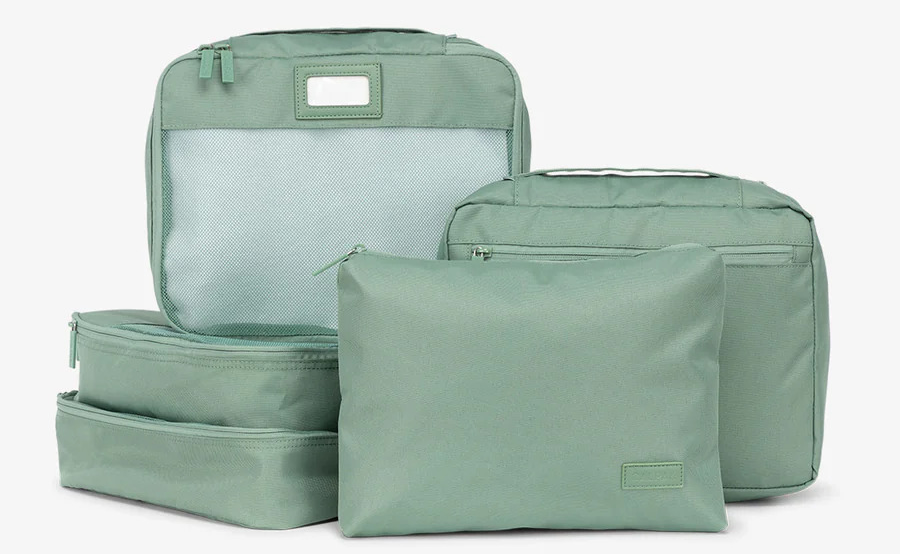
Two or three packing cubes turn a chaotic bag into drawers. One cube for tops, one for bottoms, one for underwear and socks. Cubes compress contents slightly and — more importantly — let you pull out exactly what you need without unpacking everything in a hotel room. They are the single best packing purchase most travelers ever make.
4. Wear your bulkiest items on the plane
Your heaviest shoes, your jacket, your jeans — wear them. This frees up pounds and cubic inches inside the bag. Dress in layers for the flight: you stay comfortable in an over-air-conditioned cabin and your bag stays light.
Toiletries and Liquids: The TSA-Proof Kit
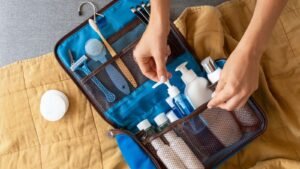
The 3-1-1 rule still applies on US flights: containers of 3.4 ounces or less, all fitting in one quart-size bag, one bag per passenger. Build a permanent travel toiletry kit so you never repack from scratch:
- Decant shampoo, conditioner, and body wash into small reusable bottles — hotel bottles cover the rest
- Solid alternatives (shampoo bars, solid deodorant) skip the liquid limit entirely
- Contact solution, medications, and sunscreen in travel sizes
- A hanging toiletry bag keeps everything visible and off dirty hotel counters
Keep the liquids bag at the top of your carry-on or in an outside pocket so security screening takes seconds. For a full leak-proof system, read how to pack toiletries for international travel leak-free — the same tricks prevent shampoo explosions on any trip.
Tech, Documents, and the Personal Item
Your personal item (backpack or tote) is bonus space — use it strategically:
- Laptop or tablet, chargers, and a small power bank
- Passport or ID, travel documents, and a pen
- Snacks and an empty water bottle (fill after security)
- Anything you need mid-flight: headphones, book, neck pillow
- One change of essentials — a toothbrush, underwear, medication — in case your carry-on is gate-checked on a full flight
That last point matters. On packed regional flights your carry-on may be gate-checked. Keep valuables, medications, and one day’s essentials on your person in the personal item, always.
Mistakes That Wreck a One-Bag Trip
Packing for your fears instead of your itinerary
The number one cause of overpacking is “what if” thinking: what if it rains, what if there is a fancy dinner, what if I spill something. Pack for the trip you actually planned, not the ten alternate trips your brain invents. Almost anything you genuinely forget can be bought at your destination — and you will not need it.
Ignoring the laundry option
Travelers who refuse to do laundry pack double the clothes they need. A 20-minute laundry stop (or a sink wash) mid-week is the entire trick that makes one carry-on possible for seven days. Build it into your itinerary like any other activity.
Bringing full-size anything
Full-size shampoo, full-size sunscreen, a hardcover book, a laptop plus a tablet plus a Kindle. Duplicates and full-size versions eat space fast. Travel sizes exist for everything — use them.
Packing shoes you have not broken in
Never travel with brand-new shoes. Blisters on day two will ruin a trip faster than a forgotten toothbrush. Break new shoes in with at least a week of regular wear before the trip, and throw a small blister kit (a few adhesive bandages and a travel-size anti-friction balm) in your personal item as insurance. And limit yourself to three pairs maximum — shoes are the bulkiest items in any bag. Cold-weather trips need special care here; if you are headed somewhere chilly, check how to pack light for a cold destination without a bulky coat.
Packing the night before in a rush
Packing under time pressure guarantees overpacking. Lay everything out on the bed the day before, apply the 5-4-3-2-1 check, then remove three items. You will not miss them.
The 10-Minute Pre-Zip Checklist
Before you close the bag, run through this:
- Every top matches at least three bottoms (palette check)
- Bulkiest shoes and jacket are on your body, not in the bag
- Liquids bag is accessible at the top
- Medications, ID, and chargers are in the personal item
- Empty water bottle and snacks packed
- Laundry plan decided (hotel, Airbnb, or sink wash — day 3 or 4)
- Remove three items you are on the fence about
- Bag closes without force — if you have to sit on it, repack
That last rule is non-negotiable. If the bag will not close easily, you have overpacked, and the trip will punish you for it at every airport, staircase, and overhead bin. A good final test: lift the packed bag with one hand. If it feels manageable, you are ready to roll.
Frequently Asked Questions
Can you really fit a week of clothes in one carry-on?
Yes. The 5-4-3-2-1 capsule wardrobe gives you 20+ outfit combinations in a 35–45 liter bag, and one mid-week laundry session covers the full seven days. The system works for business and leisure trips alike as long as every piece matches your color palette.
What is the 5-4-3-2-1 packing rule?
Five tops, four bottoms, three pairs of shoes, two layers, one hat or accessory set. It is a simple formula for a coordinated capsule wardrobe that fits in a carry-on and produces enough outfit combinations for a week or more of travel.
How do you do laundry while traveling with one bag?
Use the hotel laundry service, an Airbnb washer, a local laundromat, or hand-wash in the sink with detergent sheets and hang items on a travel clothesline. Plan the wash for day 3 or 4. Quick-dry fabrics like merino wool and synthetics dry overnight.
What size carry-on is best for a week-long trip?
A 35–45 liter clamshell carry-on (roughly 22 x 14 x 9 inches) fits the 5-4-3-2-1 system comfortably for most US domestic airlines. Always verify your specific airline’s size and weight limits before you pack, especially on budget or international carriers.
Should I use packing cubes or just roll my clothes?
Do both: roll the clothes, then put the rolls in packing cubes. Rolling maximizes space per item; cubes add compression, keep categories separated, and let you unpack like drawers in a hotel room without exploding the whole bag.
What should go in my personal item vs the carry-on?
Valuables, medications, documents, electronics, chargers, and one day of essentials (toothbrush, underwear, change of shirt) go in the personal item in case your carry-on gets gate-checked. Everything else lives in the carry-on.