A week in a cold city with just a carry-on sounds impossible until you see someone do it — gliding past the baggage carousel while everyone else wrestles with oversized suitcases. Learning how to pack light for a cold destination without bulky coats is mostly about strategy, not sacrifice. The secret is layering: several thin, warm layers outperform one giant parka, take up a fraction of the space, and adapt to heated museums, chilly streets, and everything in between.
The Layering Formula: Your Warmth Without the Bulk
Outdoor professionals use a three-layer system, and it works just as well for city travel:
- Base layer — moisture management. A thin merino wool or synthetic thermal top and leggings. This layer sits against your skin and wicks away sweat so you do not get chilled. Merino wool is the gold standard: warm, odor-resistant, and wearable multiple days between washes.
- Mid layer — insulation. A lightweight fleece, thin down sweater, or wool sweater. This is the layer that traps warm air. A packable down vest or jacket compresses to the size of a water bottle and adds serious warmth.
- Outer layer — wind and water protection. A slim, packable rain shell or softshell jacket. It blocks wind (the real cold multiplier) and sheds rain or snow. Worn over the first two layers, this trio handles temperatures well below freezing.
The beauty of the system: indoors, you strip to the base or mid layer and look perfectly normal. Outdoors, all three together rival any bulky coat — at a third of the packed volume.
Fabric Choices That Save Space
What your clothes are made of matters more than how many you bring:
- Merino wool: Warm for its weight, naturally odor-resistant (rewear tops two to three times), and thin. The single best fabric for cold-weather travel.
- Down or synthetic insulation: A packable down jacket or vest is the highest warmth-to-volume item you can own. Synthetic insulation performs better if you expect real rain.
- Avoid cotton as an outer layer: Cotton absorbs moisture and loses its insulating power when damp. Fine for a casual indoor tee, terrible as your warmth strategy.
- Fleece: Cheap, warm, and light — but bulky compared to down. One thin fleece as a mid layer is plenty.
The 5-Day Cold-Weather Capsule Wardrobe
Here is a complete packing list for five days in a cold destination, all fitting in a carry-on:
- 1 packable down jacket or vest (your main insulation)
- 1 slim waterproof/windproof shell jacket
- 2 thermal base-layer tops (merino)
- 1 pair thermal leggings (wear under pants on the coldest days)
- 2 mid-layer tops: one sweater, one fleece or heavy shirt
- 2–3 everyday tops for layering underneath
- 2 pairs of pants (dark jeans or travel pants — rewear freely)
- 1 pair warm, waterproof boots (wear on the plane)
- 1 pair comfortable walking shoes (optional second pair; skip if space is tight)
- 4–5 pairs of warm socks (wool blend)
- Underwear for each day (small, light — bring enough)
- 1 warm hat, 1 pair of gloves, 1 scarf or neck gaiter
- 1 set of sleepwear
Notice what is missing: the giant coat, the “just in case” outfits, the third pair of shoes. Every item layers with every other item, in a coordinated color palette (navy, gray, black) so everything matches. If you are already good at traveling light in warm weather, the same discipline applies — this guide to packing a carry-on for two weeks with no checked bag covers the foundational system this cold-weather version builds on.
Packing Techniques That Shrink Everything
Use compression packing cubes
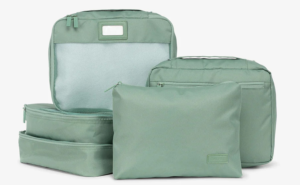
Packing cubes with a compression zipper squeeze the air out of bulky knits and insulated layers, cutting their volume nearly in half. Organize by category — tops in one, bottoms in another — so you are not exploding the whole bag to find socks.
Roll, don’t fold
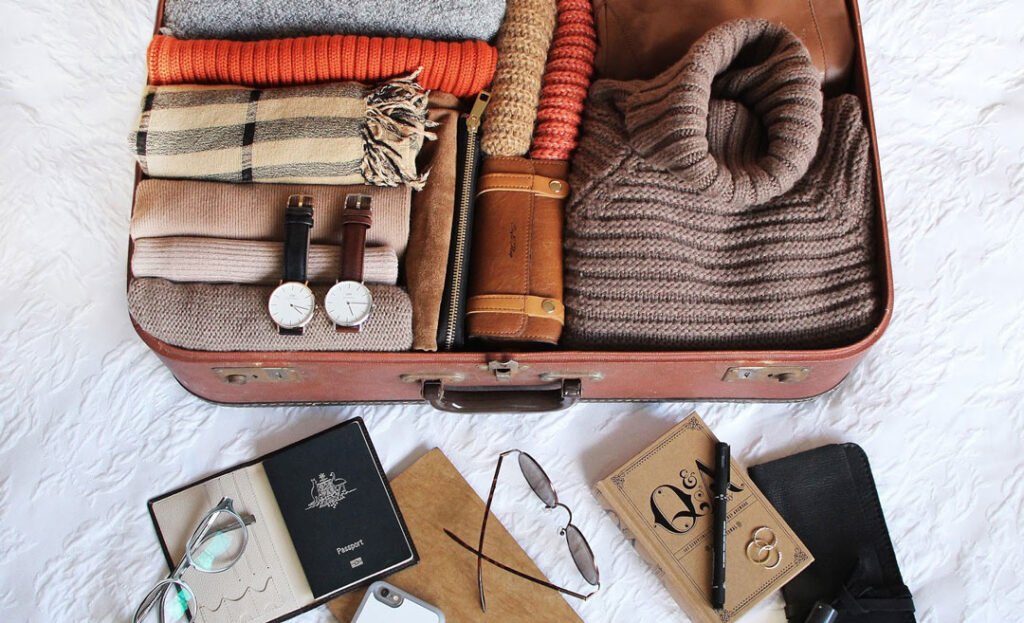
Rolling soft items (thermals, sweaters, scarves) saves space and reduces wrinkles versus folding. For structured items like the shell jacket, fold loosely along its seams.
Wear the bulkiest items on the plane
This is the oldest travel trick in the book and still the most effective. Wear your boots, your heaviest pants, and layer the down jacket plus shell over your base layer for the flight. Planes are cold anyway — you will be comfortable, and your bag stays light. Stuff hat, gloves, and scarf in the jacket pockets.
Fill dead space
Stuff socks and underwear inside shoes. Tuck gloves inside your hat. Every empty pocket of space in the bag is wasted volume.
Footwear: The Make-or-Break Decision
Shoes eat bag space, so limit yourself to two pairs max — ideally the boots on your feet and one backup:
- Waterproof boots with good tread: Non-negotiable for snow, slush, or icy sidewalks. Ankle boots with a lug sole handle most city winters. Make sure they are broken in before the trip.
- Second pair (optional): Lightweight sneakers or flats for indoor-heavy days. Skip them entirely on short trips.
- Wool-blend socks: Warm socks matter more than extra shoes. They cushion, insulate, and resist odor.
Accessories: Small Items, Huge Warmth Payoff
A hat, gloves, and scarf weigh almost nothing and add the equivalent warmth of an entire extra layer. Most body heat escapes from exposed skin — covering your head, neck, and hands transforms how the same outfit feels at the same temperature. Pack:
- A warm beanie that covers your ears
- Touchscreen-compatible gloves (so you are not exposing your hands for maps and photos)
- A scarf or neck gaiter — a gaiter packs smaller and never comes undone
- Optional: thin glove liners for bitter days, hand warmers for long outdoor stretches
Toiletries and Cold-Weather Extras
Cold air is brutally drying, so adjust your kit: a good moisturizer, lip balm, and hand cream earn their space. Travel-size everything, and keep liquids in a sealed pouch — leaks ruin trips, which is why a leak-free toiletry packing method is worth adopting before you fly. Other small additions: sunglasses (snow glare is real), a reusable water bottle (cold air dehydrates you quietly), and a small daypack or tote that folds flat for daily sightseeing.
6 Mistakes That Bloat Your Cold-Weather Bag
- Bringing the giant parka “just in case.” The layering system covers the same temperature range at a fraction of the volume. Trust the layers.
- Packing cotton sweaters. Three cotton sweaters take up the space of six merino layers and perform worse. One quality wool sweater beats three cotton ones.
- “Just in case” outfits. Every item must earn its place by working in at least two outfits. If you cannot name the two outfits, it stays home.
- Three pairs of shoes. Boots on your feet, one backup pair max. Shoes are the fastest way to fill a carry-on.
- Full-size toiletries. Cold destinations have stores. Bring travel sizes and buy more if you run out.
- Forgetting laundry options. Merino base layers can be reworn for days; most hotels and rentals offer laundry. Packing for five days and washing once beats packing for ten.
Smart packing also pays off mid-journey — if your itinerary includes a long connection, knowing how to survive a long layover without lounge access keeps the travel day comfortable when you are layered up and living out of one bag.
FAQ
How do you pack light for a cold destination without a bulky coat?
Use a three-layer system instead of one heavy coat: a merino wool base layer, a packable down or fleece mid layer, and a slim windproof/waterproof shell. Together they match a bulky coat’s warmth at a fraction of the packed volume, and you can adjust layers as temperatures change.
What is the warmest jacket that packs small?
A packable down jacket offers the best warmth-to-volume ratio — most compress to about the size of a water bottle. For wet climates, choose synthetic insulation, which keeps insulating even when damp.
How many layers do I need for below-freezing weather?
Three layers handle most below-freezing city conditions: thermal base layer, insulating mid layer (down or fleece), and a windproof shell. Add the thermal leggings under pants and full accessories (hat, gloves, scarf) on the coldest days.
Can you really do a week in a cold place with only a carry-on?
Yes. A coordinated capsule wardrobe of layerable pieces, compression packing cubes, wearing your bulkiest items on the plane, and planning one laundry stop easily fits a week of cold-weather outfits in a carry-on.
What should I wear on the plane to a cold destination?
Wear your bulkiest items: boots, heaviest pants, base layer plus mid layer, with the down jacket and shell as your outer layers. Planes run cold, so you will be comfortable — and your bag stays light.
Are packing cubes worth it for winter travel?
Absolutely — compression packing cubes are most valuable exactly when clothes are bulkiest. They can cut the volume of sweaters and insulated layers nearly in half and keep a small bag organized.