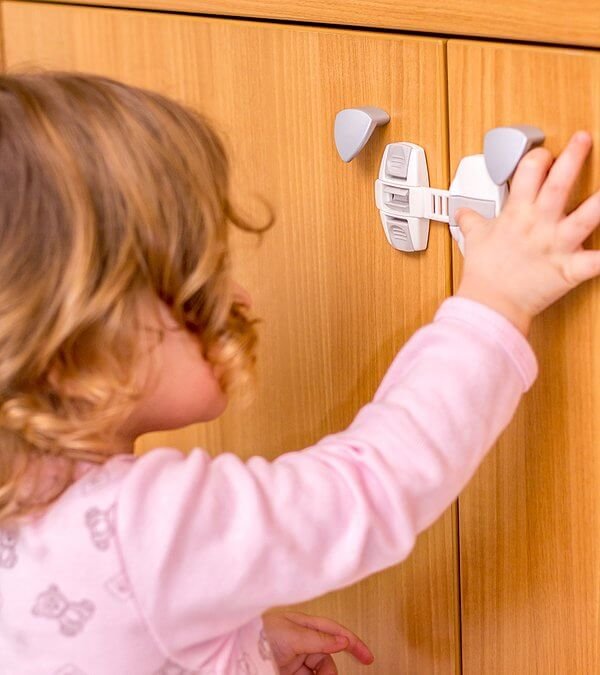
Learning how to baby proof your kitchen without expensive gadgets is one of the smartest things new parents can do — and you do not need a cart full of pricey safety products to do it well. Most kitchen hazards can be handled with rearrangement, simple household items, and a few cheap fixes. This guide walks you through a room-by-room safety walkthrough, 12 low-cost strategies, how to build a kid-safe “yes space,” and the mistakes to avoid. Note: no product replaces watchful adult supervision. These are practical, general tips to reduce everyday risks; for specific safety concerns, check with your pediatrician or a certified child safety professional.
Start With a Floor-Level Safety Walkthrough
Before you buy or move anything, get down to your child’s eye level — literally kneel or sit on the kitchen floor. From there, the kitchen looks completely different: low cabinets become treasure chests, stove knobs become irresistible dials, dangling cords become grab targets, and the pet’s water bowl looks like a splash zone. Spend ten minutes crawling around the kitchen and note everything a curious toddler could reach, pull, open, climb, or mouth. This walkthrough tells you exactly where to focus, so you fix real risks instead of guessing.
Pay attention to three danger zones in particular: low storage (under-sink and lower cabinets, low drawers), heat and sharp objects (stove, oven, knives, toaster), and grab-and-pull hazards (cords, tablecloths, trash cans, cleaning products).
12 Low-Cost Ways to Baby Proof Your Kitchen
1. Move Dangerous Items Up, Not Just Locked Away
The cheapest childproofing move is also the most effective: relocate. Knives, cleaning chemicals, medications, sharp tools, and plastic bags belong in high cabinets, not low ones. A lock on a low cabinet is good, but moving the danger out of reach is better — and it costs nothing.
2. Lock Cabinets With What You Already Own
For cabinets with two adjacent knobs or handles, loop a sturdy hair tie, thick rubber band, or a short piece of rope around both — it keeps little hands from pulling the doors apart. For single-handle doors, a simple adhesive hook mounted sideways can hold the door shut against a pull. These are not as strong as commercial locks, so reserve them for cabinets holding non-dangerous items, and combine them with tip #1.
3. Give Your Child Their Own “Safe” Cabinet
Toddlers are explorers. If every cabinet says “no,” they will fight you all day. Instead, designate one low cabinet or drawer as the YES cabinet: fill it with plastic containers, wooden spoons, measuring cups, and silicone lids. When your child heads for the kitchen, redirect them to their cabinet. A child who has something allowed to explore is far less motivated to break into the forbidden ones.
4. Make the Stove a No-Touch Zone
Cook on the back burners whenever possible and turn all pot and pan handles toward the back of the stove so nothing dangles within grabbing range. If your stove knobs pull off easily, remove them during the toddler years and store them in a high drawer — many stoves are designed so knobs lift right off. For ovens, a low-cost adhesive oven lock strap works well, or simply keep the oven door closed and teach an early “hot means stay back” rule with calm, consistent repetition. Never leave a hot stove unattended with a toddler in the kitchen.
5. Relocate Knives and Sharp Tools
Knife blocks on the counter are an invitation. Move knives to a high drawer or a magnetic strip mounted well above counter level and out of a climber’s reach. Do the same for scissors, peelers, graters, and skewers. Dishwasher safety matters too: always load knives point-down, and unload sharp items first, putting them away immediately rather than leaving them in the dish rack.
6. Pad Sharp Corners Cheaply
Pool noodles from a discount store cost very little and make excellent corner guards: slit one lengthwise and press it onto the edge of a kitchen island or low table. Rolled-up towels taped around a table corner work in a pinch. Focus on corners at your child’s head height — that is where bumps actually happen.
7. Secure the Refrigerator
Move heavy glass jars and bottles away from the fridge door shelves where a toddler could pull them down. Keep alcohol, raw meat, and anything you would not want a child tasting on high shelves. If your child keeps opening the fridge, a simple bungee cord or strap around the handles is a cheap deterrent — just make sure adults can still open it easily in a hurry.
8. Clear Out the Under-Sink Cabinet
The cabinet under the sink is usually the most dangerous spot in the kitchen: cleaning products, dishwasher pods, and trash. Move all chemicals to a high cabinet. If anything must stay under the sink, use the hair-tie trick from tip #2 as a basic deterrent and keep the cabinet as empty as possible. Consider swapping to simpler cleaners like baking soda and vinegar for daily wipe-downs, stored up high regardless.
9. Ditch the Tablecloth
Babies and toddlers pull. A tablecloth becomes a sail that brings everything on the table — hot drinks, heavy dishes, glassware — down with it. Switch to placemats or a bare table until the pulling phase passes. The same logic applies to placemats with cords: keep slow cookers, kettles, and toasters pushed to the back of the counter with cords tied up and out of reach.
10. Tame Cords and Small Appliances
Unplug small appliances when not in use and push them to the back of the counter. Coil long cords with a twist tie so nothing dangles over the edge. A dangling mixer cord is both a strangulation and a pull-down hazard. If counter space allows, store rarely used appliances inside a high cabinet instead of on the counter.
11. Put the Trash Out of Reach
Trash cans hold food scraps, sharp can lids, and choking hazards. Move the bin inside a latched cabinet, get a can with a locking lid, or place it behind a closed pantry door. If the bin must stay out, empty it often so there is nothing interesting inside.
12. Rethink Water Hazards
Never leave standing water in the sink, a bucket, or a large bowl when a toddler is around — even a few inches of water can be dangerous for a small child who topples in headfirst. Drain the sink after dishwashing, empty mop buckets immediately, and keep toilet lids closed (a simple habit that costs nothing). Water safety is one area where constant supervision truly cannot be skipped.
Create a “Yes Space” in the Kitchen
You cannot watch a toddler every second, so design a small zone where everything is safe to touch. A playpen or a gated corner near the kitchen with a few toys lets your child be near you while you cook. Add their special cabinet (tip #3) and you have a setup where “no” becomes rare — and rare “no”s are much more effective. Parents juggling work and kids at home often find that a dedicated play corner also helps them focus while working from home with kids around, since the child has a defined, safe place to be.
Teach Kitchen Rules as Your Child Grows
Physical barriers work for babies; toddlers and preschoolers also need simple, repeated lessons. Two or three short rules are enough: “Hot — we stay back,” “Sharp — only grown-ups touch,” and “Ask before you taste.” Keep the language identical every time so the rule becomes automatic. Praise the safe behavior you want to see (“You stayed back from the stove — great job!”) rather than only correcting mistakes. Consistent, calm repetition beats dramatic warnings.
It also helps to reduce competing chaos: a calmer home makes rules easier to follow. If screens are a constant battle, these tips on getting kids off screens without taking devices away can lower the overall noise level so safety rules actually sink in.
Common Mistakes to Avoid
- Assuming supervision alone is enough. You will blink, answer the door, or stir the pot. Layers of protection — rearrangement, simple locks, and habits — cover the moments supervision slips.
- Buying gadgets before rearranging. The most powerful safety tool is free: moving dangerous items up high. Do the walkthrough and the rearrangement first, then buy only what is still missing.
- Childproofing once and forgetting. Children grow fast. The cabinet lock that worked at 12 months may fail at 20 months when your toddler learns to defeat it. Re-do the floor-level walkthrough every few months.
- Forgetting visitors’ bags and purses. Grandma’s purse on the kitchen chair can contain medications, coins, or lighters. Make a habit of hanging visitor bags up high.
- Leaving the kitchen “just for a second.” If the stove is on or the dishwasher is open, take the child with you or secure them in their yes space first.
- Using harsh chemicals where kids play. Store cleaners up high and out of sight, and wipe down surfaces well. If you are also dealing with pests, try getting rid of ants in the kitchen without harsh chemicals to keep the space safer overall.
Frequently Asked Questions
At what age should I start baby proofing the kitchen?
Start before your baby becomes mobile — around the time they begin rolling or scooting. Crawling babies reach the kitchen faster than parents expect, and it is much easier to set up protections calmly ahead of time than in a panic after the first grabbed knife handle.
Do I really need to buy expensive baby proofing kits?
No. Rearranging items to high shelves, using hair ties or cord on cabinet handles, designating a safe cabinet, and building simple habits cover the majority of kitchen risks. Buy commercial locks only for the few spots where rearrangement and simple fixes are not enough — like the under-sink cabinet if you cannot move its contents.
How do I keep my toddler out of the kitchen while I cook?
Create a yes space nearby — a playpen, gated corner, or high chair with a snack — so your child can see you without being underfoot. Cook on back burners, turn handles inward, and keep a consistent “kitchen is hot” boundary. Many parents find that involving toddlers with safe tasks (washing plastic cups in a bowl of water at the table) satisfies their curiosity.
What is the most dangerous thing in the kitchen for a toddler?
The most serious risks are heat (stove, oven, hot liquids), sharp objects (knives), chemicals (cleaners, pods), and choking hazards (small lids, plastic bags, trash). Focus your energy on these four categories first — they account for the vast majority of kitchen injuries in small children.
How often should I re-check my baby proofing?
Every few months, or whenever your child learns a new skill — pulling up, climbing, opening doors, or using tools like chairs as step stools. Each new ability opens new hazards, so repeat the floor-level walkthrough from your child’s new height and reach.
Are homemade fixes like rubber bands on cabinets actually safe?
Simple deterrents like hair ties, cord, or hook latches are fine as a first layer for cabinets holding non-dangerous items, but they are not as strong as commercial child locks. For cabinets containing anything hazardous, the safest low-cost move is to relocate the hazardous items to a high cabinet entirely. When in doubt, move it up rather than locking it down.