
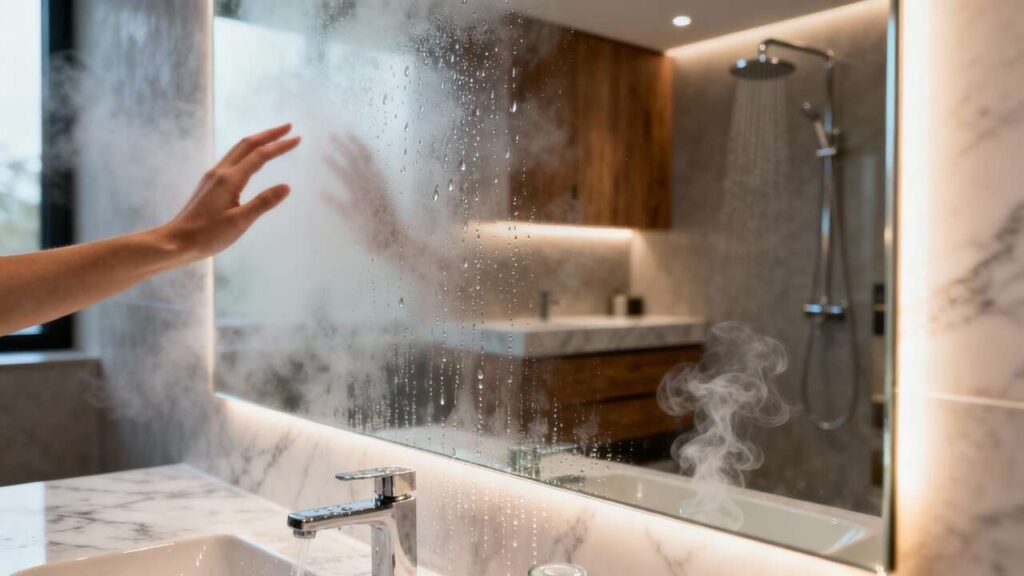
You step out of a hot shower, reach for the mirror to shave or do your makeup, and find nothing but a white wall of fog staring back. Everyone who has ever wiped a mirror with a towel — only to smear the fog into streaks — knows this frustration. The good news is that learning how to keep a bathroom mirror from fogging up after a shower is easy, cheap, and takes less than five minutes. A few household items you already own can keep your mirror clear for days or even weeks at a time.
Why Bathroom Mirrors Fog Up in the First Place
Fog is condensation, and it follows simple physics. A hot shower fills the bathroom air with water vapor. The mirror is usually the coldest hard surface in the room, so when the warm, moist air hits the cool glass, the vapor condenses into thousands of microscopic droplets. Each droplet bends light in a different direction, which is why a fogged mirror looks white and opaque instead of simply wet.
There are only three ways to stop it: keep the glass warm, keep the air dry, or change the mirror’s surface so water cannot bead up on it. Every method below uses one of these three principles.
Method 1: Shaving Cream — the Classic Hotel Trick
This is the method hotels and housekeepers have used for decades, and it works remarkably well:
- Start with a clean, dry mirror. Wipe off dust and old residue first.
- Squeeze a pea-sized dab of plain white shaving cream (the foamy kind, not gel) onto a soft cloth or paper towel.
- Rub it over the entire mirror surface in overlapping circles.
- Buff with a clean, dry microfiber cloth until the glass looks perfectly clear with no haze.
The thin film left behind acts as a surfactant: instead of beading into fog, moisture spreads into a transparent sheet you can see through. One application typically keeps the mirror clear for one to three weeks. Reapply when fog starts returning.
Tip: Less is more. Using too much shaving cream leaves a visible film. If the mirror looks cloudy after buffing, you used too much — wipe it down and redo with a smaller dab.
Method 2: Bar Soap Film
No shaving cream in the house? A simple bar of soap does the same job:
- Before your shower, lightly run a dry bar of soap across the mirror so it covers the surface with the faintest film.
- Buff gently with a soft cloth until the soap is invisible.
- Shower as normal and enjoy a clear mirror afterward.
This is the fastest method of all — under a minute — and it lasts several days. It is ideal for guest bathrooms or mornings when you are in a hurry.
Method 3: Dish Soap and Water Spray
For a method you can batch-make and keep under the sink:
- Mix a few drops of mild dish soap into a spray bottle of warm water and shake gently.
- Lightly mist the mirror — you want a fine coating, not drips.
- Wipe with a microfiber cloth until dry and streak-free.
The surfactant film works exactly like the shaving cream method. Reapply every few days, or whenever fog starts creeping back. Avoid the abrasive side of any sponge; a soft cloth is all you need.
Method 4: White Vinegar Solution
Vinegar is a bathroom multitasker. Mix equal parts white vinegar and water in a spray bottle, add a drop or two of dish soap, spray onto the mirror, and wipe clean with a microfiber cloth. The vinegar cuts through existing soap scum and mineral film while the soap leaves a light anti-fog layer behind. This method both cleans and protects in one step, which makes it perfect for mirrors that are already a bit grimy.
If your bathroom glass suffers from hard-water spots as well as fog, the same vinegar approach works on shower doors — this guide to removing hard water stains from glass shower doors walks through the full process for heavier buildup.
Method 5: Improve Ventilation
All the surface tricks in the world work better when there is less moisture in the air to fight:
- Run the exhaust fan during the shower and for at least 15 to 20 minutes afterward. Most people turn it off too soon — the fan needs time to pull the humid air out.
- Crack a window or door if you have one. Even a small gap lets steam escape instead of settling on every surface.
- Leave the bathroom door open after showering so the remaining humidity disperses into the larger space instead of concentrating on the mirror.
- Check your fan’s power: if the mirror in your bathroom fogs badly while other bathrooms stay clear, the exhaust fan may be undersized or clogged with dust. Cleaning the fan cover alone often makes a noticeable difference.
Method 6: Warm the Mirror Surface
Remember the physics: fog forms because the glass is colder than the humid air. Warm the glass and condensation cannot form:
- Hot water rinse: Run hot water over the mirror for 30 seconds before your shower (a handheld showerhead makes this easy). The warmed glass resists fogging for the duration of your shower.
- Hair dryer blast: Already fogged? A hair dryer on low heat, held at arm’s length and moved steadily across the glass, clears fog in under a minute. Keep it moving to avoid overheating any one spot.
- Heated mirror pads: For a permanent fix, adhesive defogger pads stick to the back of the mirror and gently warm the glass whenever the bathroom light is on. They wire into the existing light circuit and eliminate fogging entirely.
Method 7: Commercial Anti-Fog Sprays and Wipes
Dedicated anti-fog products — the same kind used for eyeglasses, ski goggles, and car mirrors — work on bathroom mirrors too. Spray a light coat, spread until dry, and buff with microfiber. They typically last longer than DIY films (several weeks) and are formulated not to streak. They cost more than a dab of shaving cream, but if you want a set-and-forget solution, they are the most durable option short of a heated mirror.
Which Method Should You Choose?
- Fastest: Bar soap film — under a minute, lasts several days.
- Cheapest: Dish soap spray — pennies per application.
- Longest-lasting DIY: Shaving cream — up to three weeks per application.
- Best for dirty mirrors: Vinegar solution — cleans and protects in one step.
- Best permanent fix: Heated mirror pad — zero maintenance after installation.
- Best for renters: Ventilation plus shaving cream — no modifications, no cost, no landlord discussions.
Mistakes That Make Fogging Worse
- Wiping fog with a dry towel: This just smears moisture into streaks and can grind mineral deposits into the glass. Clear fog with heat or prevent it with a film instead.
- Using too much product: With shaving cream, soap, or anti-fog spray, a whisper-thin layer is the goal. Heavy applications leave haze that is worse than the fog.
- Skipping the initial clean: Anti-fog films bond poorly to dirty glass. Always start with a clean mirror for the longest-lasting results.
- Turning the fan off immediately: Humidity lingers long after the water stops. Give the fan 15 to 20 minutes of extra run time.
- Using abrasive cleaners or scouring pads: Scratches in the glass give condensation more surface to cling to and permanently dull the mirror.
Keeping It Fog-Free Long Term
Once you have a working method, maintenance is trivial. Reapply your chosen film when you notice fog returning — for most households that means a two-minute touch-up every week or two, often done during a normal bathroom cleaning routine. Combine a surface treatment with decent ventilation and you may find the mirror stays clear with almost no effort at all. The whole point is to remove one small daily friction: stepping out of the shower and actually being able to see yourself.
Frequently Asked Questions
How do I keep my bathroom mirror from fogging up after a shower?
Apply a thin surfactant film to the glass — shaving cream, bar soap, or diluted dish soap, buffed until invisible — so condensation spreads into a clear sheet instead of fog. Improve ventilation by running the exhaust fan during and after showers for the best results.
How long does the shaving cream trick last on a mirror?
Typically one to three weeks, depending on how steamy your showers are and how often the mirror gets wiped. Reapply when you notice fog starting to return.
Will dish soap damage my bathroom mirror?
No. A few drops of mild dish soap diluted in water is gentle on glass. Avoid soaking the mirror’s edges and backing, and never use the abrasive side of a sponge, to protect the reflective coating.
Can I use anti-fog spray made for glasses on a bathroom mirror?
Yes. Lens anti-fog sprays use the same surfactant principle and work well on mirrors. Apply a light coat, spread until dry, and buff with microfiber. They usually last longer than DIY methods.
Why does my mirror fog but my shower door does not?
The mirror is often the coldest surface in the room, and its smooth, vertical face is ideal for condensation. Shower doors get warmed by direct water contact during the shower, which is why they often stay clearer.
Are heated mirrors worth it?
If you are renovating anyway, yes — adhesive defogger pads or built-in heated mirrors eliminate fogging permanently with no ongoing effort. For everyone else, the DIY film methods achieve nearly the same daily result for essentially zero cost.











1 thought on “How to Keep a Bathroom Mirror From Fogging Up After a Shower”
Comments are closed.