
One of the most ambitious infrastructure projects in India’s northeast just got a fresh push — and the Arunachal Pradesh government is making clear it wants no excuses for delays.
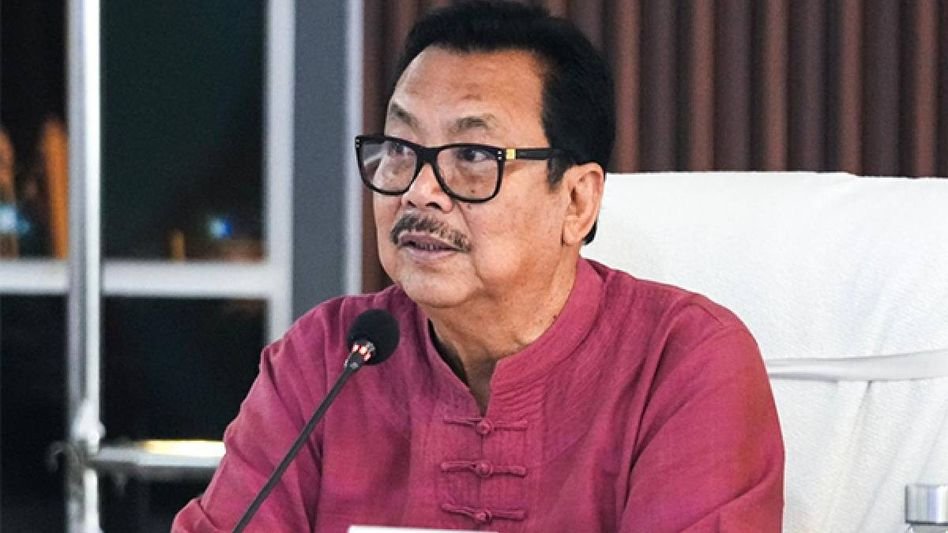
Deputy Chief Minister Chowna Mein on Saturday met senior officials of NHPC Limited, including project executive director Narender Kumar, to take stock of the challenges threatening to slow down the 2,880-MW Dibang Multipurpose Project in Lower Dibang Valley district. The message from Mein was direct: the state stands fully behind this project, and it expects things to move.
The meeting wasn’t just a courtesy call. Real issues were on the table — land acquisition, rehabilitation and resettlement of affected communities, mobile connectivity in remote project areas, local security concerns, infrastructure bottlenecks, and power supply requirements for the construction phase itself. Anyone who has watched large dam projects stumble in this part of the world knows these are exactly the kinds of problems that can quietly eat years off a timeline if not handled head-on.
Mein didn’t shy away from the gravity of the situation. “I assured Narender Kumar of the full cooperation and support of the Arunachal Pradesh government in addressing the issues involved and facilitating seamless coordination among all stakeholders for the successful and timely completion of the project,” he wrote in a social media post after the meeting.
That’s a significant commitment from a state government — one that knows how much is riding on this.
The Dibang project is no ordinary hydropower venture. Being developed by NHPC Limited at a cost of Rs 31,875 crore, it involves the construction of a 278-metre-high concrete gravity dam across the Dibang River. When complete, it will not only be India’s highest dam, but also the world’s highest roller-compacted concrete dam. That’s a record India has never held before — and it sits right here in Arunachal.
The numbers are staggering. The project is expected to generate 11,223 million units of electricity every year. It is also designed to play a crucial role in moderating floods in downstream areas during the peak monsoon season — a benefit that goes well beyond electricity and directly protects lives and farmland across vulnerable communities in the plains below.
For Arunachal Pradesh itself, the stakes are deeply personal. Under the project’s terms, the state will receive 12 per cent of the total power generated as free power, along with an additional one per cent earmarked for the Local Area Development Fund. That’s not a small thing for a state that has long struggled with energy access and economic development in its more remote districts.
Chowna Mein has repeatedly called this project “strategically and developmentally important” for the state — and it’s hard to argue with that framing. Hydropower has always been Arunachal’s most bankable natural asset. Getting a project of this scale right, and on schedule, sends a signal to every future investor considering the region.
Of course, the road ahead is far from smooth. Land acquisition and resettlement remain among the most politically and socially sensitive challenges in any large infrastructure project in the Northeast. Connectivity in the Dibang Valley is still a serious limitation. And the sheer physical scale of the dam — the largest of its kind on the planet — leaves zero margin for complacency.
But for now, the state government has planted its flag. The Dibang project will be completed. The only question worth watching is whether the coordination between NHPC and Arunachal’s administration holds as strongly in practice as it does in press releases.
The dam that could rewrite the map of Indian power generation is being built in one of the most remote valleys in the country. Getting it right would be nothing short of historic.