
Hidden in a cold, remote lake high above the clouds in Arunachal Pradesh’s Tawang, a fish that the world barely knew existed has just made history.
Scientists have recorded Schizopygopsis waddellii — a rare Himalayan fish species — in India for the very first time. The discovery, made in a high-altitude lake in Tawang district, is being hailed as a landmark moment for India’s freshwater biodiversity. And honestly, it’s the kind of find that makes you realise how much of our own backyard we haven’t even seen yet.
The specimens were collected this past July by researchers from the ICAR-Central Institute of Coldwater Fisheries Research (ICAR-CICFR) based in Bhimtal, working alongside the Arunachal Pradesh Fisheries Department and the Shar-Tso Committee of Tawang. That kind of local-scientific partnership often goes unnoticed, but it’s exactly what makes discoveries like this possible.
Until now, this fish was largely a creature of the Tibetan Plateau. Its type locality — the place it was first formally described from — is Yamdrok Lake in Tibet. So finding it on the Indian side of the Himalayas is a big deal. It doesn’t just add a name to a list. It significantly extends the known geographical range of the species and raises serious questions about how much of this trans-Himalayan biological world quietly spills across borders.
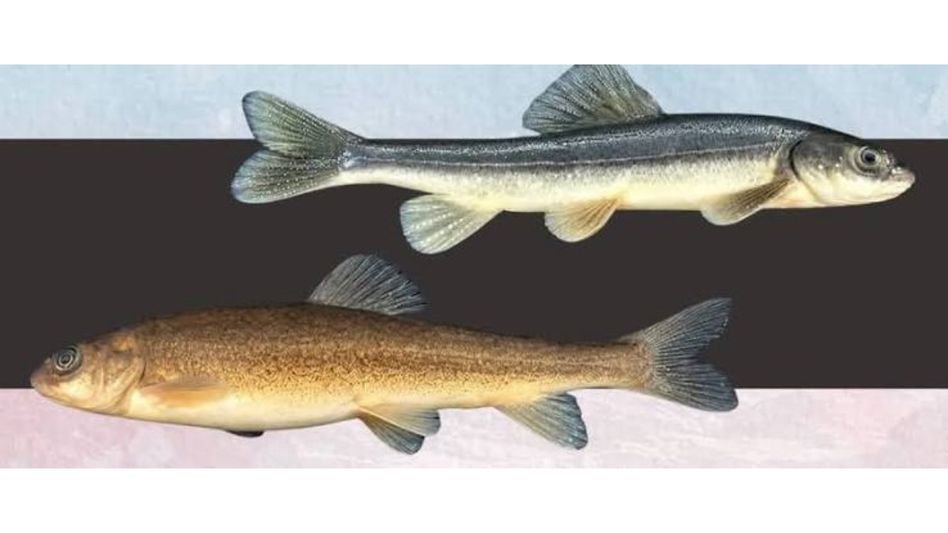
What does the fish actually look like? Picture a sleek, cylindrical body with a dark greyish to olive top and a pale silvery underside. It has a blunt snout, a deeply forked tail fin, and a distinctive hard plate-like structure around the lower lip — a tough little design, built for survival in brutally cold, high-altitude waters. Scientists confirmed the species using both detailed physical examination and mitochondrial DNA analysis, leaving no room for doubt.
The fish belongs to the Cyprinidae family, the same broad family that includes carps and minnows — though Schizopygopsis waddellii is very much its own thing, engineered for ecosystems that most fish simply couldn’t survive in.
Researchers say the find offers more than just a new species record. It points to deeper ecological connections between the Eastern Himalayas and the wider trans-Himalayan region — connections that science is only beginning to trace. Arunachal Pradesh, with its dozens of remote mountain lakes and little-explored high-altitude water bodies, may be sheltering more such surprises. The state’s aquatic biodiversity, by most accounts, remains dramatically under-studied.
This discovery, scientists hope, will serve as a baseline — a starting point for more rigorous biodiversity surveys, ecological work, and conservation planning in these fragile mountain systems.
Arunachal Pradesh Deputy Chief Minister Chowna Mein welcomed the find warmly. In a social media post, he congratulated the scientists, the Fisheries Department, and the Shar-Tso Committee, calling it a remarkable addition to India’s natural heritage. He also stressed the urgency of continued research and protection of the state’s high-altitude ecosystems. It’s refreshing, honestly, to see political leadership engage with scientific discovery rather than simply acknowledge it from a distance.
Tawang is already known for its breathtaking monasteries and dramatic Himalayan landscapes. Now it carries something else — proof that even in the most familiar-seeming places, nature still has secrets it hasn’t shared yet.
A fish from the depths of Tibetan waters, found quietly living in an Indian lake. If that doesn’t remind us how connected and how unknown this world still is, nothing will.