When the Vice-President of India walks into your legislature and calls your state a “proud guardian” of the nation, that’s not routine political speech. That’s a statement.
Vice-President CP Radhakrishnan was in Itanagar on Wednesday, September 9, to address a special session of the Arunachal Pradesh Legislative Assembly — and he didn’t hold back. Arunachal Pradesh, he said plainly, is integral to India’s unity. Not a frontier afterthought. Not just a geopolitical buffer zone. Integral.
For a state that has spent decades pushing for recognition, investment, and basic infrastructure while the rest of the country looked the other way, those words carry real weight.
Radhakrishnan described Arunachal as a culturally rich state with “boundless potential,” pointing to its rivers, biodiversity, and ecological wealth as assets of national importance — not just local pride. With around 79% of its land under forest cover, he noted, the state plays a quiet but critical role in India’s environmental security and climate resilience. Not everyone talks about that. He did.
The Vice-President was also quick to trace how Northeast India’s position in national policy has evolved over the years. He recalled that former Prime Minister Atal Bihari Vajpayee had taken the forward-thinking step of establishing the Ministry of Development of North Eastern Region — the DoNER Ministry — a decision that gave institutional weight to a region that had long been underserved.
PM Narendra Modi’s Act East policy carried that momentum further. Radhakrishnan quoted the Prime Minister’s now-familiar reference to the eight northeastern states as “Ashta-lakshmi” — eight forms of prosperity. Whether or not one agrees with the political framing, the symbolism isn’t lost on anyone in the region. And this year, the Union Budget has backed that symbolism with substance: over ₹6,800 crore has been allocated to the DoNER Ministry alone.
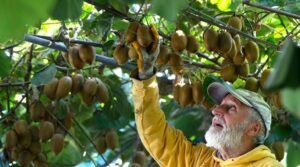
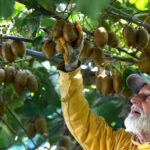
On the ground, there are signs things are genuinely shifting. Radhakrishnan pointed out that Arunachal Pradesh has become the country’s largest producer of kiwi fruit — a fact that might surprise many, but is the result of years of quiet agricultural work. More than one lakh soil health cards have been issued to farmers across the state. Road construction has been clocking in at around 1,800 km a year. And the state’s per capita income has more than doubled.
These aren’t just statistics to be rattled off. For communities that once waited years for a motorable road or a functional market, these numbers mean something real.
There’s something telling about the fact that a Vice-Presidential visit included a formal address to the state legislature rather than just a ceremonial appearance. It signals a seriousness about engagement that the Northeast deserves to see more of — not just during political seasons, but consistently.
Arunachal has always known its own worth. The Idu Mishmi, the Nyishi, the Adi, the Galo — every community here carries centuries of identity and resilience. What’s changing, slowly, is whether the rest of India is finally beginning to catch up with that understanding.
Radhakrishnan’s words in Itanagar were not new in some ways. Politicians have praised the Northeast many times before. But the budget allocations, the infrastructure push, and the growing economic indicators suggest that at least some of it is moving beyond rhetoric. The Northeast is not asking to be treated as a symbol. It’s asking to be treated as what it has always been — essential.