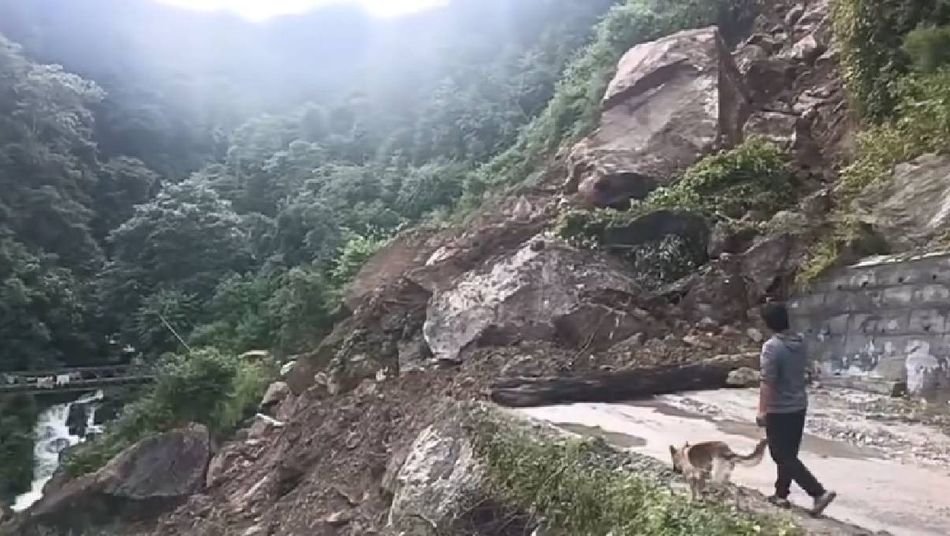
The road was there one moment. And then it wasn’t.
A massive landslide has blocked the Zemithang-Tawang road near Shakti village in Arunachal Pradesh’s Tawang district, snapping road connectivity to one of India’s most remote and strategically critical border pockets. The incident, reported on September 3, has left the region scrambling — with no immediate clarity on how long it will take to restore access.
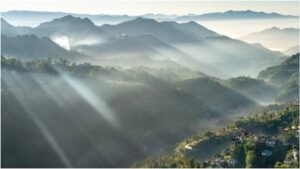
Shakti is not a name that features on most maps. It sits deep inside the Zemithang circle of Tawang district, pressed right up against the India-China border. This is a place where local communities still raise yaks on high-altitude pastures, where the wind comes hard off the Himalayas, and where a blocked road isn’t just an inconvenience — it’s a crisis. The people here don’t have the luxury of taking an alternate route or calling a cab. When the road goes, everything goes with it.
The landslide struck along the stretch connecting Zemithang to Tawang town, a road that essentially serves as the lifeline for everything in that corridor — movement of people, supplies, emergency services, and crucially, defence logistics. Officials had not yet confirmed the full scale of the blockage or how many vehicles were stranded when this report was filed. Clearance timelines also remained uncertain.
This is not the first time the rains have done this. Every monsoon season, this region of northeastern Arunachal Pradesh becomes a game of chance — landslides triggered by heavy and sustained rainfall routinely bring down sections of mountain roads, isolating villages for days or sometimes weeks. The terrain simply does not forgive. Steep slopes, loosened soil, and the sheer volume of water that the monsoon dumps on these hills make landslides almost predictable. Yet each time one happens, communities are caught waiting.
The Border Roads Organisation — the BRO — is typically the first to mobilise in situations like these, sending in teams with heavy machinery to cut through debris and restore access. Their work in regions like Tawang is extraordinary and often goes unnoticed. Without them, places like Shakti would have been unreachable for months of the year. Whether BRO teams have already been deployed to this stretch is not yet confirmed.
What makes the Shakti area particularly significant is its proximity to the frontier. The Indian Army maintains a steady presence across these border villages, conducting regular medical camps, civic action programmes, and welfare visits for residents and nomadic pastoral communities who have very little access to the outside world. That kind of outreach becomes virtually impossible when the road is down.
As of now, details on vehicular movement and the status of residents in the affected zone remain thin. It is not clear whether anyone was caught in the slide or whether any vehicles were damaged. Authorities have yet to issue a formal statement.
What is clear, though, is that the Zemithang-Tawang road is not just a strip of tar and gravel. It is the artery that keeps border communities alive. And right now, that artery is blocked.
In a region where geography has always been the ultimate authority, every landslide is a reminder — the mountains here don’t move for anyone. Restoration cannot come fast enough.