

Somewhere in the high-altitude meadows of Arunachal Pradesh, bumblebees are doing some of the most important work on the planet — and scientists have finally come to pay attention.
Mapping the Unseen Guardians
The Zoological Survey of India’s Desert Regional Centre (DRC) from Jodhpur has rolled out a comprehensive field survey roadmap across Arunachal Pradesh, targeting one of nature’s most critical but often overlooked creatures — wild bumblebees. The project, funded by the National Mission on Himalayan Studies (NMHS), carries a full title that says it all: Assessing Ecosystems for the Conservation and Management of Himalayan Wild Pollinators – Action for Long-Term Monitoring Assessments of Himalayan Bumblebees towards Biodiversity Conservation. A long name, but the work behind it is even bigger. The mission aims to evaluate the distribution, status, and critical ecological roles of wild pollinators to establish permanent, long-term monitoring networks across fragile Himalayan ecosystems — and it runs all the way until 2029.
On the Ground Across Six Districts
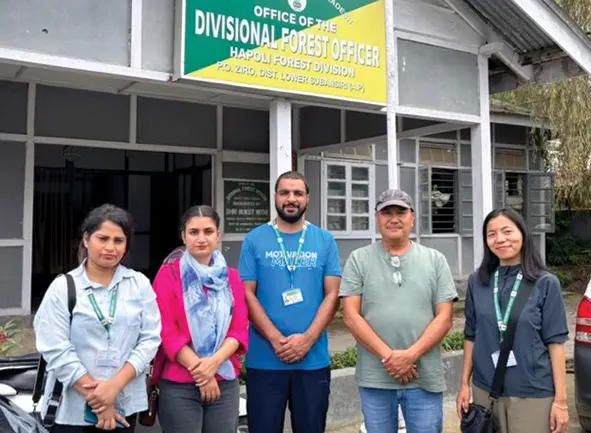
Over an intensive week-long operation, the ZSI field team held close strategic consultations with local divisional forest officers to coordinate logistics and align conservation goals. The result? Survey locations successfully identified and mapped across more than 10 key sites spanning six districts of Arunachal. That’s no small feat in terrain this rugged. The field expedition was led by research associate Dr Muzafar Riyaz, with Purnima Pathak, junior project fellow Aimen Rafiq, and project associate Habung Elsa by his side. The entire initiative runs under the scientific guidance of principal investigator Dr Rifat H Raina, Scientist-E at DRC, ZSI Jodhpur — a name that is fast becoming synonymous with Himalayan pollinator research in India.
Training the Forests’ First Defenders
Science locked away in journals changes nothing on the ground. That’s perhaps why the team put as much energy into people as they did into maps. A specialised workshop was organised at the divisional forest office in Ziro, sensitising forest personnel to sustainable forest management and pollinator-friendly ecosystem practices. Forest officers working daily in these landscapes are, in many ways, the real guardians of what the scientists are studying. Getting them on the same page isn’t just good outreach — it’s essential strategy.
Taking It to the Classroom
The team didn’t stop with forest officials. An educational awareness programme was hosted at Danyi Kunya Higher Secondary School in Ziro, Lower Subansiri district, where Dr Riyaz engaged with Class 11 and 12 biology students, introducing them to wild pollinator conservation and the ecological significance of bumblebees in maintaining Himalayan flora. There’s something quietly powerful about that — a scientist standing in a classroom at the edge of the Himalayas, telling teenagers why a bee matters. If conservation has a future, it’s sitting in those chairs.
Why This Matters Beyond Borders
Bumblebees don’t know state boundaries. The health of pollinator populations in Arunachal’s highlands is directly tied to food security, forest regeneration, and ecological balance across a much wider region. With climate change steadily pushing species up mountain slopes — and running out of altitude — building a reliable monitoring network now, before populations crash, could make all the difference. The ZSI-NMHS project isn’t just about counting bees. It’s about buying time for an ecosystem the rest of the world is only beginning to understand it cannot live without.
HASHTAGS
#ArunachalPradesh #ZSI #WildPollinators #Bumblebees #HimalayanBiodiversity #NMHS #ConservationIndia #NortheastIndia #Ziro #PollinatorConservation #BiodiversityConservation #HimalayanEcosystem #WildlifeIndia #IndiaForests #NatureConservation #ZoologicalSurveyOfIndia #EcologyMatters #SavePollinators #FieldResearch #AbotaniTV