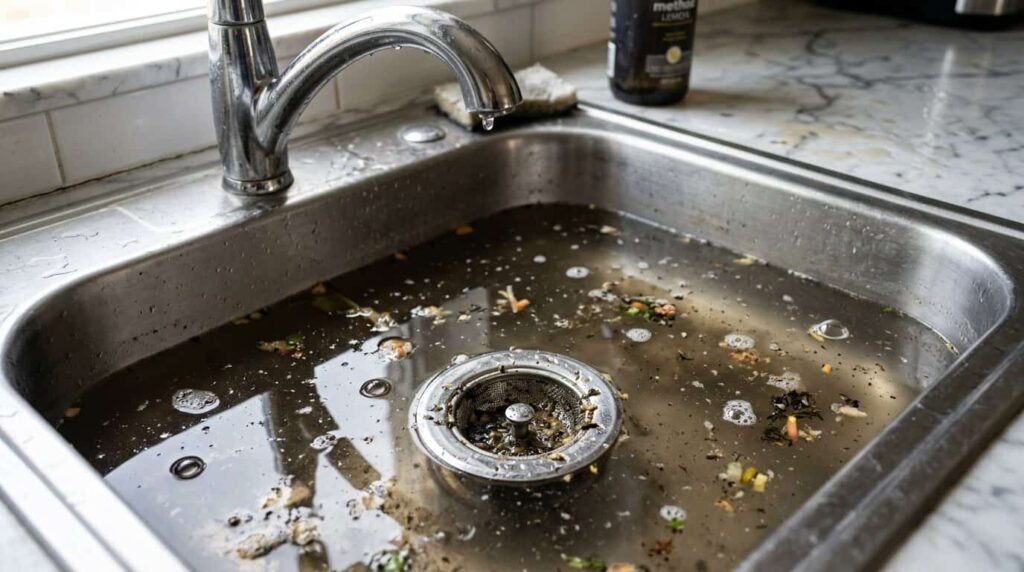
A slow or standing drain is one of the most frustrating household problems, and it always seems to happen at the worst possible moment. The good news is that learning how to unclog a drain without a plunger or drain cleaner is easier than most people think. You probably already have everything you need in your kitchen or bathroom cabinet, and the methods below work on most common clogs caused by hair, grease, soap scum, and food debris. Try these safe, inexpensive techniques in order, starting with the gentlest, and most minor clogs will clear within a few minutes.
Why Drains Clog in the First Place
Understanding what is blocking your drain helps you pick the right fix. In bathroom sinks and showers, the usual culprit is a tangle of hair mixed with soap residue. The hair catches on the drain grate or the bend in the pipe, and soap scum slowly coats it until water can barely pass. In kitchen sinks, grease is the main problem. Hot cooking fat goes down the drain as a liquid, then cools and hardens on the inside of the pipes, trapping food particles. Toilets usually clog because too much paper was used at once, or because something that should never be flushed, such as wipes or cotton pads, got stuck in the trap. Knowing the cause matters because a grease clog responds well to hot water and dish soap, while a hair clog often needs to be physically pulled out. If several drains in your home are slow at the same time, the blockage may be further down the main line, and that is a job for a professional.
Before You Start: A Few Quick Checks
Take a minute to prepare before you begin. Remove the drain stopper or strainer if you can, and pull out any visible hair or debris with gloved hands or tweezers. This alone sometimes solves the problem. If the sink is full of standing water, scoop out as much as you can into a bucket so your treatment reaches the clog instead of being diluted. Gather old towels to catch splashes, and put on rubber gloves. Check what kind of pipes you have if you know: older metal pipes handle boiling water well, while PVC pipes can soften if exposed to water that is truly boiling, so use very hot but not rolling-boiling water on plastic plumbing. Finally, work through the methods one at a time and give each one a fair chance before moving on.
Method 1: Dish Soap and Boiling Water
This is the simplest and often the most effective first step, especially for kitchen sinks and greasy clogs. Dish soap is designed to cut through grease, and hot water melts the fat that is holding the clog together.
What You Need
- A kettle or large pot of water
- A generous squirt of liquid dish soap
- A towel and rubber gloves
Step-by-Step Instructions
Start by pouring about a quarter cup of dish soap directly into the drain. Let it sit for five to ten minutes so it can work its way down and coat the grease. Meanwhile, bring a full kettle of water to a boil. Pour the hot water into the drain slowly, in two or three stages, pausing between pours. Run the tap and check whether the water drains freely. If the sink is still slow, repeat the process once more.
The soap breaks the surface tension of the grease while the heat liquefies it, allowing the clog to slide through the pipe. It is less effective on solid hair clogs, but it is still worth trying first because it takes only a few minutes.
Method 2: Baking Soda and Vinegar
The baking soda and vinegar combination is the classic home remedy for a clogged drain, and for good reason. The fizzing reaction helps loosen debris, while the vinegar dissolves soap scum and mineral buildup.
What You Need
- Half a cup of baking soda
- One cup of white vinegar
- A kettle of hot water
- A drain plug or a damp cloth to cover the drain
Step-by-Step Instructions
Pour the baking soda down the drain first, trying to get as much of it past the opening as possible. Follow it with the vinegar, then immediately cover the drain with a plug or a damp cloth to keep the fizzing action directed downward into the pipe. Leave it to work for at least thirty minutes, or overnight for a stubborn clog. When the time is up, remove the cover and flush the drain with a full kettle of hot water. Run the tap for a minute and see whether the water flows normally.
A word of honesty is in order here: this method works best on mild to moderate clogs made of soap scum and light buildup. It is not magic, and a dense hairball or a solid grease plug may need a more physical approach. Still, it is gentle on pipes, safe for septic systems, and costs almost nothing.
Method 3: Salt and Hot Water
Salt is a mild abrasive, and when combined with hot water it can scour the inside of a pipe and dissolve greasy residue. This is a useful option when you are out of baking soda or vinegar.
What You Need
- Half a cup of table salt
- A kettle of very hot water
Step-by-Step Instructions
Pour the salt directly into the drain, then follow it with the hot water, poured slowly. Let the mixture sit for fifteen to twenty minutes, then flush with more hot water from the tap. You can repeat this once if the drain is still sluggish. For a stronger version, mix half a cup of salt with half a cup of baking soda, pour the mixture in, and follow with a cup of vinegar, letting it fizz for half an hour before flushing with hot water.
Method 4: A Wire Hanger Hook
When the clog is made of hair or a solid object, no amount of fizzing will remove it. You need to reach in and pull it out, and a straightened wire coat hanger is the perfect tool for the job.
What You Need
- A wire coat hanger
- Pliers
- Rubber gloves and an old towel
Step-by-Step Instructions
Untwist the hanger and straighten it out, keeping the hook end intact. Use the pliers to bend a small hook, about a quarter inch long, at the end of the wire. Carefully feed the hooked end into the drain, rotating it gently as you push it down. When you feel resistance, wiggle the wire and pull it slowly back up. You will often bring up a clump of hair and soap residue. Repeat until the wire comes back clean, then flush the drain with hot water and a squirt of dish soap. Be gentle: forcing the wire can scratch porcelain or push the clog deeper. Never use this method if you have already poured a chemical drain cleaner into the pipe.
If you do not have a wire hanger, a plastic drain snake, sold for a few dollars at most hardware stores, works the same way and is even safer for your pipes. It is a worthwhile tool to keep under the sink for the next clog.
Method 5: A Wet-Dry Vacuum
If you own a wet-dry shop vacuum, it can be surprisingly effective on a clogged drain. The strong suction can pull a clog up and out of the pipe entirely.
How to Do It
Set the vacuum to its liquid setting and remove the filter if your model requires it. Place the nozzle tightly over the drain opening, using a rag to seal the gap around it. Turn the vacuum on for a few seconds, then switch it off and check the canister. You may find the clog sitting in the vacuum. Repeat a couple of times if needed, then flush the drain with hot water. This method works best on sink and shower drains, and it is particularly good for clogs near the surface. Never use a regular household vacuum for this job.
Method 6: A Plastic Bottle Makeshift Plunger
If you do not own a plunger, you can make a surprisingly effective one from a large plastic soda bottle. The bottle creates the same push and pull of pressure that a plunger does.
How to Do It
Take an empty two-liter plastic bottle and fill it with warm water, leaving a little air at the top. Put the bottle opening tightly over the drain, making as good a seal as you can. Squeeze the bottle firmly and release it repeatedly. The pressure changes push water into the clog and then pull it back, which often loosens the blockage. You may need to repeat the squeezing motion for a minute or two. Check the drain, and repeat if the water is moving but still slow.
Unclogging a Toilet Without a Plunger
Toilets need a slightly different approach because the trap is larger and the porcelain is fragile. Start with the dish soap method: squirt a generous amount of dish soap into the bowl and let it sit for fifteen minutes. Then pour a bucket of hot, but not boiling, water into the bowl from about waist height. The height gives the water enough force to push the clog through, while the soap lubricates the passage. Never pour boiling water into a toilet bowl, because the sudden heat can crack the porcelain. Wait a few minutes, then try a single flush. If the water level rises instead of falling, stop flushing immediately and wait for the level to drop before trying again. If the toilet is clogged by an object such as a toy or a wipe, do not keep flushing: use a gloved hand or a wire hanger hook to fish it out, or call a plumber.
What NOT to Do When Your Drain Is Clogged
Some common reactions make the problem worse or create a safety hazard. Never mix cleaning products, especially bleach and vinegar or bleach and ammonia, because the combination creates toxic fumes. Never pour a chemical drain cleaner into a drain after trying another method, and never mix two different drain cleaners together. Avoid using a garden hose to blast a clog, which can flood the room or damage joints in the pipe. Do not pour grease or coffee grounds down the drain in the future, since both contribute to the very clogs you are trying to clear.
When to Call a Plumber
Home remedies handle most everyday clogs, but some situations need a professional. Call a plumber if more than one drain is backing up at the same time, if you smell sewage, if water is coming up through another fixture when you run a tap, or if the clog returns within a day or two of clearing it. These are signs of a blockage in the main line or a damaged pipe. Also call for help if you have tried three or four of the methods above with no improvement. A plumber has professional augers and cameras that can find and remove a deep clog without tearing into walls.
How to Prevent Clogs in the Future
Prevention is easier than any unclogging method. Fit a mesh strainer over every sink and shower drain to catch hair and food particles, and empty it after each use. Wipe greasy pans with a paper towel before washing them, and never pour cooking oil down the sink. Run hot water down the kitchen drain for thirty seconds after washing greasy dishes. Once a month, flush each drain with a kettle of hot water and a squirt of dish soap to keep buildup from hardening. Small habits like these take seconds and can save you from most clogs entirely. Keeping the bathroom fresh also helps you spot problems early, so read our guide on how to keep a bathroom smelling fresh without air freshener and our tips on how to remove soap scum from a shower without bleach.
Frequently Asked Questions
Can baking soda and vinegar really unclog a drain?
Yes, for mild to moderate clogs caused by soap scum and light buildup, the fizzing action helps loosen debris. For dense hair clogs or solid grease plugs, you may also need a wire hook or the dish soap and hot water method.
Is it safe to pour boiling water down a drain?
Boiling water is safe for metal pipes, but it can soften PVC pipes and crack porcelain toilets. For PVC drains, use very hot tap water instead, and for toilets use hot water that is well below boiling.
How long should I wait after using baking soda and vinegar?
Wait at least thirty minutes for a normal clog, or leave it overnight for a stubborn one. The longer the mixture sits, the more time it has to dissolve soap scum. Always flush with hot water afterward to wash the loosened debris away.
What is the fastest way to unclog a drain without a plunger?
The dish soap and boiling water method is usually the fastest, taking about ten minutes. If the clog is hair, the wire hanger hook is faster because it physically removes the blockage. Try the soap and hot water first, then move to the hanger if the water is still slow.
Can I use a wet-dry vacuum on a toilet clog?
It is possible but messy, and a poor seal around the bowl makes it less effective. The dish soap and hot water bucket method works better for toilets. Save the wet-dry vacuum for sink, tub, and shower drains where you can get a tight seal.
Why does my drain keep clogging in the same spot?
A recurring clog usually means part of the blockage was never fully removed, or there is a damaged or misaligned section of pipe catching debris. Try a wire hook or drain snake to remove the remaining material, and if the clog returns again, call a plumber to inspect the pipe.