
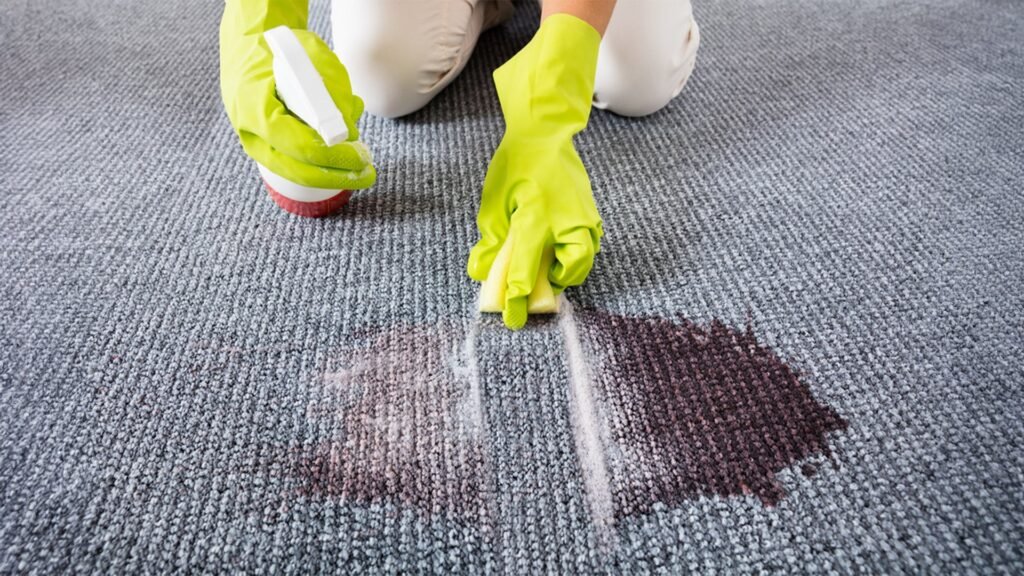
A bottle of nail polish tips over, and suddenly there is a bright pink or deep red stain spreading across your carpet. The first instinct is to reach for the acetone nail polish remover, but acetone is a strong solvent that can dissolve carpet fibers, fade the color, and leave a stiff, damaged patch. Learning how to remove nail polish from carpet without acetone is not only possible, it is often the safer choice for your carpet. The methods below use gentler solvents and simple household items, and they work on most common carpet types if you act quickly and patiently.
The key to success is speed and patience in equal measure. Wet nail polish is much easier to remove than dried polish, so the first few minutes matter most. But even a dried stain can be lifted with the right technique. The secret is to dissolve the polish slowly, lift it out a little at a time, and never rub it deeper into the fibers. Work from the outside of the stain inward, blot instead of scrubbing, and test every cleaning solution in a hidden spot first.
Step 1: Act Fast and Remove the Excess
As soon as you notice the spill, grab clean white cloths or paper towels. White is important: colored cloths can transfer dye to the carpet, which adds a second stain to the one you are trying to remove. Press the cloth gently onto the spill to absorb as much wet polish as you can. Do not rub. Rubbing pushes the polish deeper into the fibers and spreads it outward.
If the spill is large, use a spoon or a dull knife to scoop up the excess polish carefully, working from the edges toward the center. Scrape gently so you do not damage the carpet fibers. Keep blotting with fresh sections of cloth until no more polish transfers to the cloth. At this stage you are just removing the bulk of the spill, not trying to get the stain out completely.
Do not reach for hot water at this point. Heat can set the polish and make it harder to remove. Use room-temperature water only, and only in the later steps. If the polish has already dried, do not worry: the steps below work on dried polish too, they just take a little more patience.
Step 2: Test Your Cleaning Solution First
Before you put any cleaning solution on the visible stain, test it in a hidden spot, such as inside a closet or under a piece of furniture. Apply a small amount to the test spot, wait five minutes, and then blot it with a white cloth. If color transfers to the cloth, or the carpet looks faded or stiff, do not use that solution on the stain.
This step matters because carpets vary widely. Wool, silk, and some synthetic blends react differently to solvents, and a solution that is safe on one carpet can damage another. The test takes five minutes and can save you from turning a small stain into a large damaged patch. If the test spot looks fine, you can proceed with confidence.
For delicate or expensive carpets, including wool and antique rugs, it is often wiser to call a professional carpet cleaner rather than risk a home remedy. The methods in this guide are best suited to common synthetic household carpets and low-pile rugs.
Method 1: Rubbing Alcohol (Isopropyl Alcohol)
Rubbing alcohol is one of the best acetone-free options for removing nail polish from carpet. It dissolves the polish slowly without attacking most carpet fibers, and it evaporates cleanly without leaving a residue. You probably already have a bottle in your medicine cabinet.
Dampen a clean white cloth with rubbing alcohol, then press it onto the stain and hold it there for a minute. The alcohol needs time to soften the polish. Lift the cloth and check: you should see color transferring onto the cloth. Repeat with a fresh section of cloth, pressing and lifting rather than rubbing. Work from the outside edges of the stain toward the center, so you do not spread the polish outward.
Keep going, switching to clean cloth sections as they pick up color, until no more polish transfers. For a dried stain, you may need to hold the alcohol-soaked cloth on the spot for several minutes to soften the polish first. Once the stain is gone, blot the area with a cloth dampened with plain water to remove any alcohol residue, then blot dry with a clean towel. Let the carpet air dry completely.
Method 2: Non-Acetone Nail Polish Remover
Non-acetone nail polish remover is made specifically for this purpose, and it is the gentlest commercial option. It usually contains ethyl acetate instead of acetone, which dissolves polish without damaging most carpet fibers or the backing underneath.
Apply a small amount of non-acetone remover to a clean white cloth, not directly to the carpet, and blot the stain the same way you would with rubbing alcohol. Press, hold, lift, and check the cloth. Repeat with fresh sections until the stain is gone. Avoid pouring the remover directly onto the carpet, since a large amount can soak through to the padding underneath, where it is much harder to remove.
Non-acetone remover works more slowly than acetone, so be patient. A stubborn stain may take ten to fifteen minutes of repeated blotting. That slower pace is actually an advantage: it gives you control, and you are far less likely to damage the carpet. For more stain-removal ideas, see our guide on how to remove red wine stains from carpet without club soda, which uses many of the same blotting techniques.
Method 3: Hair Spray (Alcohol-Based)
Plain alcohol-based hair spray is a surprisingly effective tool for nail polish stains. The alcohol in the spray dissolves the polish, while the spray format lets you apply it precisely to the stain without soaking the carpet. This method works best on fresh or lightly dried stains.
Spray the stain lightly with hair spray, enough to dampen the polish but not soak the carpet. Wait about a minute for the alcohol to soften the polish, then blot with a clean white cloth. You should see the color lifting onto the cloth. Spray again, wait, and blot again, switching to a clean section of cloth each time.
Use a plain, unscented hair spray without oils, conditioners, or added color. Fancy hair sprays with added ingredients can leave their own residue on the carpet. After the stain is gone, blot the area with a cloth dampened with a drop of dish soap in warm water, then blot with plain water to rinse, and let it dry. If the hair spray leaves a slightly stiff feeling, a light brushing with a soft brush once the carpet is dry usually fixes it.
Method 4: Dish Soap and Hydrogen Peroxide (for Light Carpets)
For light-colored carpets, a combination of dish soap and hydrogen peroxide can lift the last traces of a stain after the main polish has been removed. This method is best used as a follow-up, not as the first step, since peroxide alone will not dissolve nail polish quickly.
Mix a few drops of clear dish soap into a cup of warm water. Blot the stained area with a cloth dampened in this solution, working gently from the outside in. Then apply a small amount of three percent hydrogen peroxide to a clean cloth and blot the stain again. The peroxide helps lift any remaining color from the fibers.
Hydrogen peroxide can lighten some carpet dyes, so this method is only safe for white or very light-colored carpets, and only after a spot test. Never use it on dark or brightly colored carpet. After treating, blot with plain water to rinse out the soap and peroxide, then blot dry. For more carpet stain techniques, see our guide on how to remove candle wax from carpet without an iron.
Method 5: Scrape and Peel Dried Polish
If the polish has dried completely into a hard crust, you can often remove a surprising amount of it mechanically before using any liquid at all. Dried polish is brittle, and it sometimes lifts off the carpet fibers in small pieces.
Use a dull butter knife or the edge of a credit card to gently scrape at the dried polish, working carefully so you do not cut or fray the fibers. Pick up the loose flakes with your fingers or a vacuum cleaner. For polish that is stuck in the fibers, try freezing it: place an ice cube in a plastic bag and hold it on the stain for ten minutes. The cold makes the polish more brittle, so it cracks and flakes off more easily when you scrape it.
Once you have removed as much as you can by scraping, follow up with one of the liquid methods above, usually rubbing alcohol or non-acetone remover, to dissolve the thin layer of polish that remains in the fibers. The combination of scraping first and dissolving second is often the most effective approach for an old, dried stain.
Method 6: White Vinegar and Dish Soap (Gentle Option)
If you prefer the gentlest possible approach, a mixture of white vinegar and dish soap can work on light stains, especially on fresh spills. It is slower than alcohol-based methods, but it is safe for almost every carpet type and uses ingredients you already have.
Mix one tablespoon of white vinegar and a few drops of clear dish soap into a cup of warm water. Dip a clean white cloth into the solution, wring it out, and blot the stain repeatedly. The vinegar helps loosen the polish while the soap lifts it away. Refresh the cloth often, and keep blotting until the color stops transferring.
This method works best on small, fresh stains and on light-colored polish. Dark red or black polish may need the stronger alcohol-based methods. After the stain is gone, blot with plain water to rinse, then blot dry. Let the carpet air dry, and vacuum once it is fully dry to restore the texture of the fibers.
What to Do After the Stain Is Gone
Once the stain is lifted, rinse the area thoroughly. Any cleaning solution left in the carpet can attract dirt over time, leaving a dull patch where the stain used to be. Blot the area several times with a cloth dampened in plain water, pressing firmly to draw the solution out of the fibers. Then blot with a dry towel to absorb as much moisture as possible.
Let the carpet air dry completely, which can take several hours. Place a fan nearby or open a window to speed up drying, and avoid walking on the damp area. Once the carpet is dry, vacuum the spot to fluff the fibers back up. If the area still looks slightly darker than the surrounding carpet, that is usually leftover moisture, and it will even out as it dries fully.
Check the area again the next day in daylight. Some faint color may reappear as the carpet dries, especially with dark polish. If that happens, repeat the alcohol blotting method once more, since a second pass usually removes the last traces.
Mistakes to Avoid
The biggest mistake is rubbing the stain instead of blotting it. Rubbing pushes polish deeper into the fibers and spreads the stain outward, making it larger and harder to remove. Always blot with a pressing and lifting motion, and always work from the outside of the stain inward.
Another common mistake is using acetone without checking. Acetone can melt synthetic carpet fibers, dissolve the adhesive that holds the carpet backing together, and bleach the color. It is especially risky on polyester and olefin carpets. If you are ever tempted to use acetone, test it first in a hidden spot, and stop immediately if the fibers feel sticky or the color transfers.
Do not pour cleaning solution directly onto the carpet. A puddle of solvent can soak through to the padding underneath, where it dissolves the polish and spreads it into a larger area that you cannot reach. Apply solution to a cloth, then blot with the cloth. And do not use hot water on a nail polish stain, since heat can set the polish and bond it to the fibers.
Finally, do not use colored towels or printed paper towels on the stain. The dyes in colored cloths can transfer to the damp carpet and create a second stain. White cloths and plain white paper towels are the only safe choice.
Frequently Asked Questions
Can I use acetone on my carpet if nothing else works?
Acetone can damage many carpet types, so it should be a last resort and only after a spot test in a hidden area. If the test shows any fiber damage or color loss, do not use it. A professional carpet cleaner is a safer option for a stain that resists every gentle method.
Does nail polish come out of carpet once it has dried?
Yes, dried nail polish can usually be removed, though it takes more patience. Scrape off the brittle flakes first, soften what remains with rubbing alcohol or non-acetone remover, and blot repeatedly. Old, dried stains may need two or three rounds of treatment.
Will rubbing alcohol damage my carpet?
Rubbing alcohol is safe for most common household carpets, including nylon and polyester. Always spot test in a hidden area first, and avoid using it on wool, silk, or antique rugs, which can react to solvents. Use it on a cloth, not poured directly on the carpet.
How do I get nail polish out of a wool carpet?
Wool is delicate and reacts badly to many solvents. Blot up the excess, then use a very small amount of non-acetone remover on a white cloth, testing first in a hidden spot. If the stain does not lift easily, call a professional cleaner who specializes in wool rugs rather than risking damage.
Can I use a carpet cleaning machine on a nail polish stain?
A carpet cleaning machine can help rinse the area after you have dissolved the polish, but it will not remove the polish on its own. Dissolve the polish first with alcohol or non-acetone remover and blot it out, then use the machine to rinse and extract the remaining solution.
What if the stain leaves a faint shadow after cleaning?
A faint shadow usually means a thin layer of polish remains deep in the fibers. Repeat the alcohol blotting method once more, holding the alcohol-soaked cloth on the spot for a few minutes before blotting. If the shadow persists after two more attempts, a professional steam cleaning may be needed.










1 thought on “How to Remove Nail Polish From Carpet Without Acetone”
Comments are closed.