
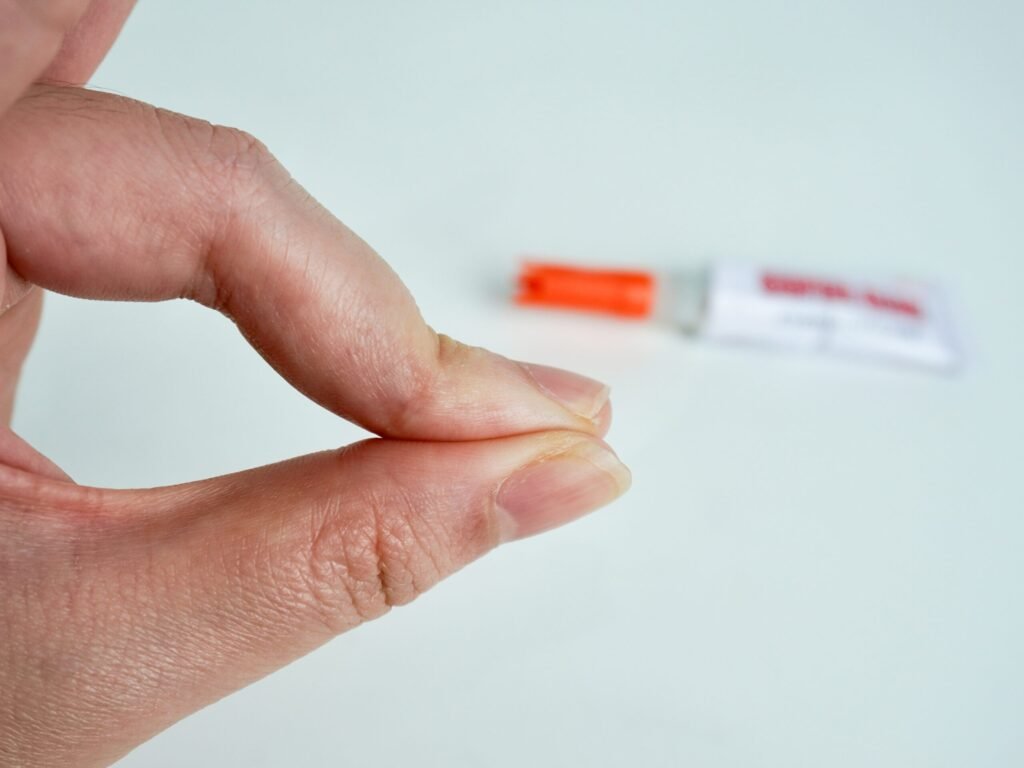
Learning how to remove super glue from skin without acetone is useful for anyone who has ever glued their fingers together during a quick repair. Super glue bonds fast, and the instinct is to pull hard or reach for nail polish remover. Both of those reactions can hurt your skin. Acetone works on glue, but it is harsh: it strips natural oils, dries the skin, and stings badly on any small cut or cracked area. The good news is that you do not need it. Warm water, soap, and ordinary kitchen oil can break the bond gently, usually within ten to twenty minutes. This guide walks through the safest methods in order, from the mildest first step to stronger options, so you can free your skin without tearing it or causing irritation.
Why Super Glue Sticks to Skin So Fast
Super glue is made from a chemical called cyanoacrylate. It stays liquid in the tube because there is almost no moisture inside, but the moment it touches skin it reacts with the tiny amount of moisture on the surface and hardens in seconds. That is why a small drop can glue two fingers together before you have time to react. The bond it forms is strong but shallow. It grips the top layer of dead skin cells rather than bonding deep into living tissue, which is why gentle methods can work: you are loosening that surface layer, not fighting a deep bond.
The glue is not soaking into your body, and it will come off on its own as the outer skin cells shed over a day or two even if you do nothing. Pulling or scrubbing tears the living skin underneath, so patience is the most important tool here.
What Not to Do First
Before trying any removal method, avoid the common mistakes that make things worse. Do not pull glued fingers apart with force. The bond is often stronger than the top layer of skin, so forceful pulling can rip skin and cause bleeding. Do not use a knife, razor, sandpaper, or a metal file to scrape the glue off. These tools cut or abrade skin easily and can cause an injury that needs far more care than the glue did.
Do not pour acetone, nail polish remover, paint thinner, gasoline, or any solvent on your skin. These products can irritate skin, cause a chemical burn on sensitive areas, and are dangerous if they get near your eyes or mouth. Avoid hot water as well. Very hot water can scald you, and it does not dissolve the glue any faster than comfortably warm water. Finally, do not try to bite the glue off if it is near your mouth, and never use your teeth to pull glued fingers apart. Keep the affected area still and work through the gentle steps below instead.
Method 1: Warm Soapy Water Soak
The warm soapy water soak is the best first step for almost every case of super glue on skin, and it works on its own for light smears and thin layers. Fill a bowl or basin with warm water, not hot, at a temperature that feels comfortable on the inside of your wrist. Add a generous squirt of liquid dish soap or hand soap and stir until the water is sudsy. Dish soap is a good choice because it is designed to cut through sticky residues, but any mild soap works.
Submerge the glued area completely and leave it in the water for ten to fifteen minutes. If the glue is on a spot you cannot easily soak, such as the back of your hand, hold a warm, soapy washcloth over it and re-wet the cloth every minute or two to keep it warm. While the skin soaks, gently flex and roll the glued area. If two fingers are stuck together, try a slow rolling motion rather than pulling them straight apart. Roll one finger against the other as if you were rolling a small ball of dough. You should feel the bond start to give after several minutes.
Once an edge lifts, keep soaking and work the edge slowly. If the glue is still firmly stuck after fifteen minutes, move on to one of the oil methods below rather than forcing it. For a thin smear, one soak is often enough; for a thick blob, expect to repeat the soak after applying oil.
Method 2: Cooking Oil or Skin Oil
Oil is the most effective acetone-free way to remove super glue from skin. Oil seeps under the edges of the hardened glue and weakens its grip on the skin. Olive oil, coconut oil, vegetable oil, sunflower oil, and baby oil all work well. Even petroleum jelly can be used the same way. Choose whichever you already have in the kitchen or bathroom.
Start by soaking the area in warm soapy water for five minutes to soften the glue and the skin around it. Pat the skin lightly so it is damp but not dripping, then pour or rub a generous amount of oil over the glued area. Massage the oil in with slow, circular movements for two to three minutes, paying attention to the edges of the glue where it meets the skin. The edges are where the oil can get underneath and break the bond.
If fingers are stuck together, work the oil into the seam between them and keep rolling them gently. Reapply oil as needed and keep massaging. Most bonds loosen within five to ten minutes of oiling. When a piece of glue lifts, peel it back slowly while continuing to rub oil underneath the lifting edge. If the glue is thick, you may need to repeat the oil massage two or three times. After the glue is gone, wash the area with warm water and soap to remove the oily residue, then pat dry and apply a plain moisturizer.
Coconut oil works the same way; it is solid at cool room temperatures and melts on contact with warm skin, which makes it easy to control. Warm a small amount between your palms until it melts, then apply it the same way.
Method 3: Salt or Sugar Scrub
A gentle salt or sugar scrub helps with thin, stubborn films of glue that remain after soaking. Mix two tablespoons of fine table salt or white sugar with one tablespoon of oil to form a thick paste.
Rub the paste over the glued area in small circles for two to three minutes, using light pressure only. Never use a scrub on broken or cut skin. Rinse with warm water and check how much glue remains. Repeat once if needed, but stop if the skin becomes red or sore. This method works best as a finishing step after a soak and an oil massage.
Method 4: Butter, Margarine, or Petroleum Jelly
If you have no liquid oil on hand, butter, margarine, and petroleum jelly work the same way. Rub a thick layer over the glued area and massage it in for several minutes. Petroleum jelly is especially useful because it stays in place and does not run.
For a thick blob, apply a generous layer of petroleum jelly, cover it loosely with plastic wrap, and leave it for fifteen to twenty minutes. Then remove the covering and try the slow rolling motion again. Wash with warm soapy water afterward.
Removing Super Glue From Fingers Stuck Together
Two fingers glued together is the most common super glue accident. Do not panic and do not yank. Soak the fingers in warm soapy water for ten minutes, rolling them gently against each other every minute or so.
Next, work oil into the seam between the fingers. Use your free hand to dribble oil along the join, then keep rolling the stuck fingers slowly. The rolling motion matters more than force: the glue bond is brittle, and a slow rolling action cracks it gradually along the seam. If the fingers are glued at the fingertips, try to lift one edge of the glue with a fingernail once the oil has had a few minutes to work, then keep adding oil under the lifting edge.
If the fingers remain stuck after twenty minutes of soaking and oiling, take a break for an hour, then try again with fresh warm water and oil. Repeated gentle attempts work better than one long, forceful session.
Super Glue on Sensitive Areas: What to Do
Most super glue accidents involve fingers, but glue can land on other places too, and those need extra care. If super glue gets on your lips, do not try to force them apart. Soak a cloth in warm water and hold it against the area, then apply oil or petroleum jelly around the edges and wait. Lips are delicate, so be patient and use only the gentlest methods.
If super glue gets in or near your eyes, do not rub them. Rinse gently with lukewarm water for at least fifteen minutes and seek medical care promptly. The same applies if a child has glue on their face, mouth, or eyes, or if anyone has swallowed super glue.
For children, use only warm soapy water and oil, and keep the child calm and still. If the glue covers a large area, or the skin underneath looks blistered or badly irritated, seek medical advice rather than experimenting further.
After the Glue Is Off: Skin Care
Once the glue is removed, your skin may feel dry, tight, or slightly tender, especially if you soaked it for a long time. Wash the area with lukewarm water and a mild soap to remove leftover oil and any small flakes of glue. Pat the skin dry gently instead of rubbing it with a towel.
Apply a plain, fragrance-free moisturizer or a thin layer of petroleum jelly to protect the skin while it recovers. Avoid perfumed lotions and alcohol-based products on the area for a day or two, since the top layer of skin will be more sensitive than usual.
Watch the area over the next day. Mild redness that fades within a few hours is normal. If you notice increasing pain, swelling, warmth, or blistering, seek medical care. A faint white film sometimes remains after the main glue is gone; it is a thin residue that wears away on its own within a day.
Similar gentle removal ideas apply to other sticky substances around the home. For example, our guide on how to remove nail polish from carpet without acetone uses the same acetone-free thinking for fabrics, and our article on removing red wine stains from carpet without club soda covers patient, step-by-step stain lifting that works on the same principle of letting the solution do the work.
Mistakes to Avoid When Removing Super Glue From Skin
The biggest mistake is impatience. Pulling glued skin apart, scrubbing hard, or switching to a harsh chemical because the gentle method is slow will almost always cause more damage than the glue itself. Very hot water risks a burn and does not speed up removal, and glue removers meant for hard surfaces often contain solvents that are not safe for skin contact.
Another mistake is ignoring a small cut under the glue. If the glued area has a cut or broken skin, keep it simple: soak in warm soapy water, use oil, and avoid scrubs and solvents. If the area becomes painful or shows signs of infection, get medical advice. Finally, do not re-glue anything while your fingers are still oily. Wash and dry your hands fully before going back to your repair project, or you will be removing glue a second time.
How to Prevent Super Glue Accidents
Wear disposable gloves when working with super glue, even for small jobs. Squeeze the tube gently and point the nozzle away from your hands and face. Keep a damp cloth nearby so you can wipe a drip off your skin immediately, before it sets. Store the tube upright with the cap on, out of reach of children.
If you use super glue often, keep a small bottle of cooking oil or petroleum jelly in your toolbox alongside the glue. Knowing that a safe remover is within reach makes the whole job calmer. Also check the tube before each use: an old or damaged tube can split and squeeze out a large amount unexpectedly, which is how most big accidents happen.
Frequently Asked Questions
How long does it take to remove super glue from skin without acetone?
Most light smears come off within ten to fifteen minutes of soaking in warm soapy water. Thicker blobs or fingers glued together usually take twenty to thirty minutes of soaking and oiling, sometimes with a repeat session after a break. The glue will also wear off on its own within a day or two as the outer skin cells shed.
Does warm soapy water really dissolve super glue?
Warm soapy water does not dissolve the glue the way a solvent would, but it softens the glue and the top layer of skin, which weakens the bond. Combined with gentle rolling and oil, it is enough for most cases. The key is time: a long soak works far better than a quick rinse.
Can I use coconut oil to remove super glue from skin?
Yes, coconut oil works well. Warm a small amount between your palms until it melts, then massage it into the glued area for several minutes. It works the same way as olive oil or vegetable oil by seeping under the glue and loosening its grip.
Is it safe to peel super glue off my skin?
Peeling is safe only after the glue has been softened by soaking and oil, and only if you peel slowly while working oil under the lifting edge. Peeling dry, hard glue off your skin can tear the top layer and cause pain and bleeding, so never force it.
What should I do if super glue gets on my lips or eyelids?
Do not force the area apart. Hold a warm, wet cloth against it, apply oil or petroleum jelly around the edges, and wait patiently. If glue is in or near the eye, rinse gently with lukewarm water for at least fifteen minutes and seek medical care promptly.
Will super glue on skin go away on its own?
Yes. Super glue bonds to the outermost layer of dead skin cells, which your body sheds naturally. Even with no treatment, the glue usually flakes off within one to two days. The methods in this guide simply speed that process up and make it more comfortable.
This article is for informational purposes only and is not medical advice. Consult a qualified professional.













2 thoughts on “How to Remove Super Glue From Skin Without Acetone Safely”
Comments are closed.