
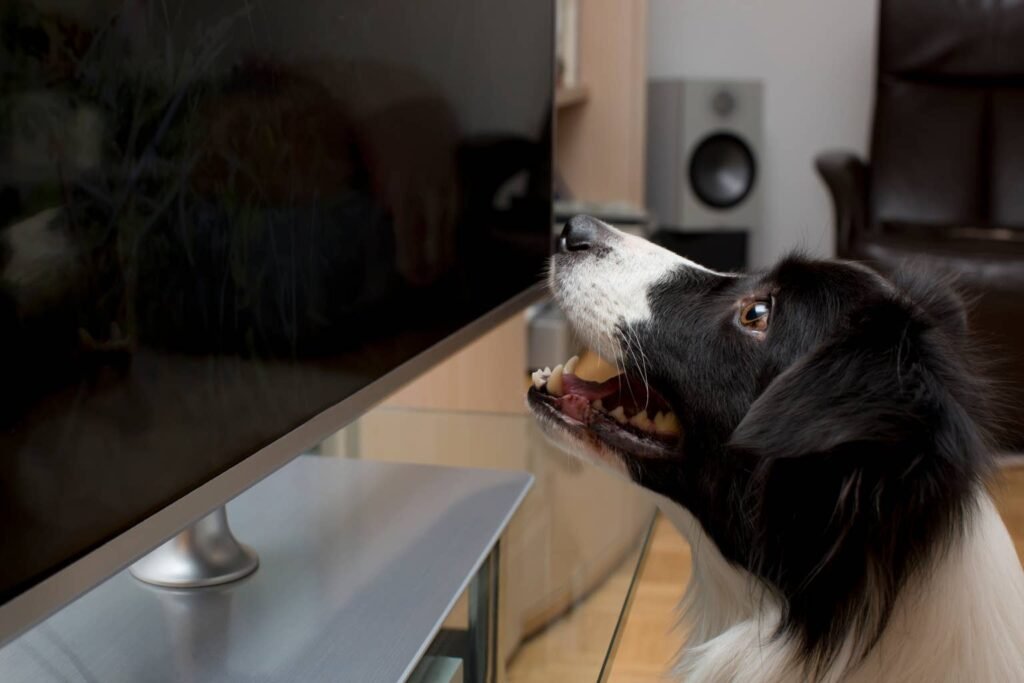
If your dog erupts every time a doorbell rings on screen, a dog trots across a commercial, or a siren wails in a movie, you are not alone. Learning how to stop a dog from barking at the tv without punishment is less about silencing your dog and more about teaching your dog that the television is boring, safe, and not worth reacting to. Dogs do not bark at the screen to be difficult. They bark because movement, sound, and excitement trigger their instincts to alert, chase, herd, or protect. With patience, consistency, and reward-based training, most dogs can learn to watch quietly, glance at the screen and look away, or settle on a bed while the family watches a show.
This guide explains why dogs bark at the television, how to set up calm training sessions, and how to build lasting quiet behavior step by step. You need treats your dog loves, short practice sessions, and a plan that rewards calm choices instead of punishing loud ones.
Why Dogs Bark at the TV
To train effectively, it helps to understand what your dog is reacting to. Television is a strange mix of stimuli for a dog. The screen shows moving shapes, animals, people, and vehicles, while the speakers produce voices, music, doorbells, barking, sirens, and sudden loud noises. Your dog may not understand that these images are flat and harmless. To many dogs, a dog on screen looks and sounds enough like a real dog to trigger a social response.
Common triggers include other dogs and animals, doorbells, sirens, fast movement such as sports or car chases, and raised voices. Notice your dog’s pattern for a few days before formal training: note what was on screen and how intense the reaction was. That pattern tells you where to start.
Barking at the TV usually falls into one of four categories. Alert barking happens when your dog thinks something new or suspicious has appeared and wants to warn you. Excitement barking happens during fast, fun, or noisy scenes and looks playful, with a wagging tail, bouncing, and spinning. Frustration barking happens when your dog wants to reach the animal on screen but cannot, so the barking sounds urgent and the body leans forward. Fearful barking happens when a sound or image startles your dog, and the body language looks tense, with ears back, tail tucked, or retreat behind furniture. The training approach is similar for all four, but fearful dogs need extra gentleness, more distance, and slower progress.
Why Punishment Makes TV Barking Worse
Shouting, scolding, spraying water, shaking a can of coins, or using a bark collar may stop barking for a moment, but these methods rarely solve the problem. In many cases, they make it worse. When you shout over barking, your dog may think you are barking along, which raises excitement. When you scold a fearful dog, the dog learns that television time predicts scary sounds plus an upset owner, which increases anxiety. When you punish an excited dog, the dog may become frustrated and bark more, or may start to hide the warning signs and react more suddenly.
Reward-based training works differently. Instead of suppressing the bark, you teach a replacement behavior: look at the screen, stay calm, look at you, and earn a reward. Over time, calm becomes the habit because calm pays off. Your dog still notices the television, but no longer feels the need to react loudly. That change lasts because it is built on learning, not fear.
Set Up for Success Before You Train
Good training starts with good management. You cannot teach calm during a loud action movie if your dog is already overexcited, tired, or full of unspent energy. Set up the environment so your dog can succeed.
Exercise and settle first
Give your dog a walk, a play session, or a sniffing game before television time. A dog that has moved, sniffed, and played is far more able to settle than a dog that has been resting indoors all day and suddenly faces a burst of screen excitement. Aim for physical exercise plus mental enrichment, such as a food puzzle or a short training game, rather than only a long run that leaves your dog wired.
Give your dog a comfortable spot
Choose a bed, mat, or blanket near you but not directly facing the television. Teach your dog that this spot is a great place to be by rewarding calm settling there during quiet moments, before you add television triggers. If your dog already has a favorite spot, use it. Comfort matters: a soft bed, a chew toy, and a little space from the speakers help your dog relax.
Control volume and distance
During early training, keep the volume lower than normal and sit farther from the screen if possible. Distance and volume are your two easiest dials for difficulty. Lower volume and greater distance make triggers easier to ignore. As your dog improves, you can gradually raise the volume and move closer to a normal viewing setup.
Stock high-value treats
Use small, soft treats your dog truly loves, cut into pea-sized pieces. For many dogs, bits of cooked chicken, cheese, or a favorite commercial training treat work better than dry kibble during exciting training. Keep treats in a pouch or bowl beside you so you can reward within one or two seconds of calm behavior. Timing matters more than treat size.
A Step-by-Step Training Plan
Work in short sessions of five to ten minutes, once or twice a day. Short, successful sessions beat long, frustrating ones. End each session while your dog is still succeeding, not after barking has taken over. Progress may feel slow at first, and then suddenly click as your dog learns the pattern.
Step 1: Teach a calm cue
Before you tackle the television, teach a simple cue your dog can use during screen time, such as “settle” or “place.” Lure your dog onto the bed with a treat, say the cue once, and reward as soon as all four paws are on the bed. Repeat until your dog goes to the bed happily on cue. Then reward calm behavior on the bed: lying down, sighing, resting the head, or looking at you softly. You are building a strong habit of settling that you can call on later.
Step 2: Introduce television at low intensity
Start with a calm program at low volume, such as a nature documentary with slow movement or a talk show with steady voices. Sit with your dog on the bed. Every few seconds of quiet watching, calmly deliver a treat. If your dog looks at the screen and then looks back at you, reward that check-in generously. That look-back is gold: it means your dog noticed the trigger and chose you instead of barking.
If your dog stays quiet for a full minute, give a longer-lasting reward, such as a chew or a stuffed food toy, so settling feels rewarding over time. If barking starts, do not scold. Calmly pause the program or mute the sound, wait for a brief pause in barking, and then redirect your dog to the bed with a treat. Lower the difficulty next time by reducing volume or choosing a calmer scene.
Step 3: Practice desensitization with recorded triggers
Desensitization means exposing your dog to a trigger at such a low level that it does not cause barking, then gradually increasing the level as your dog stays calm. Find short video clips of your dog’s main triggers, such as dogs barking, doorbells, or sirens. Play a clip at very low volume, far from your dog, and reward calm behavior. Over many sessions, slowly raise the volume in small steps. Only move to the next step when your dog is relaxed at the current level for several sessions in a row.
For example, if doorbells trigger barking, start with a doorbell sound so quiet you can barely hear it, paired with treats. Raise the volume in small steps only when your dog stays calm. If barking returns, go back one step and rebuild.
Step 4: Add real television scenes gradually
Once recorded clips are easy, move to real programs, but choose them carefully. Start with shows that contain brief, mild triggers, then work toward shows with stronger triggers. During a show, keep rewarding quiet moments, especially in the first few seconds after a trigger appears. That timing teaches your dog that the appearance of a trigger predicts treats for staying calm, rather than a reason to bark.
A helpful pattern is the “trigger, then treat” game. When a dog appears on screen, calmly say “yes” or use a clicker, then give a treat before your dog barks. Repeat this many times. Soon your dog may hear or see the trigger and turn to you automatically, expecting a treat. That automatic turn is the new habit replacing barking.
Step 5: Build duration and real-life viewing
Gradually stretch the time between treats. Instead of treating every few seconds, treat after ten seconds of quiet, then thirty seconds, then a minute, then several minutes. Mix in occasional surprise treats so your dog keeps checking in. Practice during normal family viewing, not only during formal sessions, but keep sessions manageable. If a particularly exciting show is on, it is fair to give your dog a chew, a food puzzle, or a break in another room while you build skills. Management is not failure; it prevents rehearsal of barking while training catches up.
Practical Management Tips for Busy Households
Training takes time, and you still need to watch television in the meantime. These management strategies reduce barking while training progresses, without punishment.
Keep the volume steady to soften sudden loud sounds, angle the bed to the side of the screen to reduce visual intensity, and give your dog a chew or stuffed food toy during shows. Avoid reinforcing barking by accident: stay calm, wait for quiet, and then give attention.
Children and guests can help by following the same rules. Ask visitors not to laugh at barking, imitate barking sounds, or encourage the dog to “talk back” to the screen. Consistency across the household speeds learning dramatically. One person rewarding calm while another person laughs at barking sends mixed messages that confuse your dog.
Common Mistakes to Avoid
One common mistake is starting too hard. Jumping straight into a loud action film and expecting quiet sets your dog up to fail. Start easy and build up. Another mistake is training only when barking is already intense. Once your dog is over threshold, barking loudly and unable to focus, learning stops. Pause, create distance, and try again at a lower level later.
A third mistake is inconsistent timing. If you sometimes reward barking by talking to your dog during barking, and sometimes ignore it, barking becomes harder to reduce because it sometimes pays off. Decide on a calm response, such as pausing the show and waiting for quiet, and use it consistently. A fourth mistake is expecting perfection too soon. Some dogs improve in a week, others need several weeks, especially if barking has been rehearsed for a long time. Senior dogs, rescue dogs with unknown histories, and highly reactive breeds may need extra patience.
When Barking Signals Something More
Most television barking is normal behavior that responds to training. Seek extra help if barking is sudden and new in an older dog, if it comes with pacing, panting, hiding, trembling, or loss of appetite, if your dog seems in pain, or if barking is paired with aggression toward people or animals in the home. Hearing changes, vision changes, pain, anxiety, and compulsive behavior can all increase reactivity. A veterinarian can check for medical causes, and a certified trainer or behavior professional can design a plan for complex cases. If your dog also struggles with nighttime barking, you may find related calm-training ideas in Stop a Dog From Barking at Night Without a Bark Collar, which uses the same reward-based approach for a different trigger.
FAQs
Why does my dog only bark at dogs on TV, not people?
Many dogs react most strongly to other dogs because dogs are social animals and a dog on screen looks and sounds enough like a real dog to trigger greeting, play, alarm, or frustration. People on screen are less socially relevant to most dogs, so they cause less reaction. Training with dog clips specifically will help most.
Should I let my dog watch TV to get used to it?
Passive exposure alone rarely helps if your dog practices barking every time. Structured exposure works better: low volume, short sessions, and rewards for calm behavior. Without rewards for quiet, your dog may simply rehearse barking and become more practiced at it.
Will my dog ever be able to watch TV calmly without treats?
Yes, for most dogs. Treats are a teaching tool, not a permanent requirement. As calm behavior becomes a habit, you can fade treats gradually, rewarding occasionally and then mainly with praise, petting, or a chew. Keep occasional rewards for the hardest triggers so the habit stays strong.
Is it okay to mute the TV when my dog barks?
Muting or pausing is a calm management choice, not a punishment, if you do it neutrally and without scolding. It removes the trigger and gives your dog a chance to settle. Pair the pause with a redirect to the bed and a reward for quiet, rather than using silence as a threat.
How long does training usually take?
Many dogs show clear improvement within a few weeks of short, consistent sessions, but full reliability takes longer, especially if barking has been a long habit or the triggers are intense. Progress is rarely a straight line. Expect good days and setbacks, and judge success by the overall trend, not a single session.
What if my dog barks at the TV only when I am not home?
If barking happens mainly when you are away, the television may be less of a trigger than boredom, separation distress, or outside sounds that coincide with viewing. Try leaving the television off when you leave, providing enrichment, and observing with a camera if needed. A trainer can help if separation-related behavior is involved.
With calm, consistent, reward-based training, television time can become peaceful again. Start at a level your dog can handle, reward quiet choices generously, build up slowly, and celebrate small wins along the way. Your dog is not trying to ruin movie night. With your help, your dog can learn that the screen is simply background, not something worth barking about.
This article is for informational purposes only. If barking is sudden, severe, or paired with other behavior changes, consult a qualified veterinarian or certified dog trainer.














1 thought on “How to Stop a Dog From Barking at the TV Without Punishment”
Comments are closed.