Nobody blows a budget on a yacht. Budgets die quietly — a coffee here, a food delivery fee there, an app subscription you forgot about, a “just $12” gadget that shows up in a box three days later. How to stop spending money on little things that add up is one of the most useful personal finance questions you can ask, because these small leaks are the reason so many people feel broke even with a decent income.
The math is unforgiving. Five dollars a day in small purchases is $1,825 a year. Ten dollars a day is $3,650 — roughly a maxed-out IRA contribution or a solid emergency fund. This article is not about shame or extreme frugality. It is about practical, specific strategies that reduce the spending you will not miss so you can redirect that money toward things you actually care about.
This article is for informational purposes only and is not financial advice. Consult a qualified professional.
The Real Problem: Why Small Spending Feels Invisible
Large purchases trigger scrutiny. You research, compare, and think twice before spending $1,000. Small purchases skip that process entirely. They are fast, painless, and emotionally rewarding — a tiny dopamine hit with no immediate consequence. This is exactly why they are dangerous: each one is trivial, but together they are enormous.
There are two distinct types of small spending. The first is habitual spending: the daily coffee, the vending machine snack, the lunch out. The second is impulse spending: the targeted ad purchase, the clearance-rack find, the in-app upgrade. You need different strategies for each, because one is a routine and the other is a reflex.
Step 1: Find the Leaks (You Cannot Fix What You Cannot See)
Before changing anything, spend one week tracking every small purchase. Not a budget, not a plan — just observation. Use your phone’s notes app or a banking app that categorizes spending. The goal is a complete, honest list.
Most people discover two or three recurring leaks they had completely underestimated. Common culprits include:
- Daily or near-daily coffee, tea, or snacks ($4–$7 each)
- Food delivery fees, tips, and markups ($8–$15 per order on top of the food itself)
- Convenience store runs ($6–$12 each)
- Subscriptions and memberships you forgot about ($5–$20 per month each)
- In-app purchases and digital extras ($1–$10 each, frequent)
- “Just browsing” retail trips ($20–$60 each)
Add up your weekly total and multiply by 52. That annualized number is your motivation. Write it on a sticky note and put it where you will see it — it turns abstract advice into a concrete target.
Step 2: Attack Habitual Spending With Substitutions, Not Willpower
Willpower fails because habits are automatic. The winning strategy is substitution: replace the expensive habit with a cheaper version that still satisfies the underlying want.
- Coffee: A $200 coffee maker and a bag of decent beans pays for itself in under a month if you buy a $5 latte daily. Keep a thermos at your desk.
- Lunch: Meal prepping four days a week and buying lunch once saves roughly $200–$300 a month compared to daily takeout.
- Snacks: Keep a desk drawer stocked with granola bars, nuts, and fruit. A $15 weekly grocery trip to stock the drawer replaces $40+ in vending machine and snack runs.
- Bottled water and drinks: A reusable bottle and a water filter pitcher cost less than two weeks of single drinks.
The key insight: you do not have to give up coffee, lunch, or snacks. You just have to stop paying the maximum possible price for them every single time.
Step 3: Kill Impulse Spending With Friction
Impulse spending thrives on speed. Every layer of friction you add between “want” and “buy” reduces it. These are some of the most effective friction techniques:
- The 48-hour rule. Put the item in your cart or on a wish list and wait 48 hours. Most of the time, the urge fades completely.
- Delete saved payment methods. Forcing yourself to get up and type in a card number kills a surprising number of impulse buys.
- Remove shopping apps from your phone’s home screen — or delete them entirely and use the browser version instead.
- Unsubscribe from marketing emails. Every promotional email is an engineered impulse trigger. Unsubscribing from the top 10 offenders takes 15 minutes.
- Shop with a list. This works for physical stores and online carts alike. If it is not on the list, the 48-hour rule applies.
A dedicated guide to stopping impulse buying when shopping online covers additional techniques for digital carts, flash sales, and social-media-driven purchases.
Step 4: Audit and Cancel Forgotten Subscriptions
Subscriptions are the ultimate “little thing that adds up.” They charge you monthly, in the background, for services you may not have opened in months. The average American carries multiple subscriptions they rarely use — streaming, apps, boxes, memberships, cloud storage.
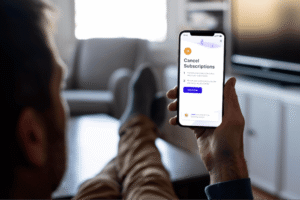
Go through your last two bank or card statements line by line and list every recurring charge. For each one, ask: did I use this in the last 30 days? If not, cancel it. You can always resubscribe. A practical walkthrough of canceling unused subscriptions you forgot you are paying for makes this audit fast and thorough.
Step 5: Give Every Dollar a Job With a Simple Budget
You do not need a complicated spreadsheet. A simple framework works:
- Pay yourself first. Set up an automatic transfer to savings on payday — even $100 a month. Money that moves automatically does not get nibbled away by small purchases.
- Set a “fun money” allowance. Give yourself a fixed weekly amount for guilt-free small spending — say $30. When it is gone, it is gone. This works better than a total ban, which usually ends in a blowout.
- Use cash for the leakiest category. Physical cash is psychologically harder to spend than tapping a card. Try a cash envelope for dining out or coffee for one month.
Step 6: Redirect the Savings Somewhere Visible
Money you save has to go somewhere, or it just becomes next month’s small spending. Open a separate high-yield savings account and nickname it something concrete — “Emergency Fund,” “Japan Trip,” “Debt Freedom.” Transfer what you save each month and watch the balance grow. Visible progress is the motivation that keeps the habits alive.
If you carry high-interest debt, redirecting small-spending savings into extra payments is one of the highest-return moves available. A simple debt payoff plan you can build without a spreadsheet turns that freed-up cash into real progress.
Mistakes to Avoid
- Trying to cut everything at once. Eliminating every small pleasure in week one leads to burnout and a rebound spending spree. Change two or three habits, then add more.
- Cutting the spending you genuinely love. If your morning latte is the highlight of your day, keep it — and cut the three subscriptions you never use instead. Sustainable beats extreme.
- Comparing your spending to someone else’s. “Little things” are personal. A gamer cutting in-game purchases and a commuter cutting coffee are solving the same problem in different clothes.
- Forgetting annual and irregular costs. Subscriptions that bill yearly, holiday gifts, car registration — these are small-spending’s bigger cousins. Budget for them monthly so they do not ambush you.
- Using savings to justify new spending. “I saved $50 on coffee this month, so I can buy these shoes” defeats the entire exercise. Saved money is saved money.
A 7-Day Action Plan to Cut Small Spending
If the list of strategies feels overwhelming, here is a day-by-day plan that turns them into one concrete task per day.
- Day 1 — The audit. Open your last two bank statements and highlight every purchase under $25 plus every recurring charge. Total them up. This number is your “leak rate.”
- Day 2 — Kill the subscriptions. Cancel every recurring charge you did not use in the last 30 days. Resubscribing later takes two minutes if you actually miss something.
- Day 3 — Build the substitutions. Buy the coffee beans, the thermos, the desk snacks, the reusable bottle. One grocery trip, roughly $30–$50, replaces hundreds in convenience spending.
- Day 4 — Add the friction. Delete saved payment methods, remove shopping apps from your home screen, and unsubscribe from the 10 marketing emails that tempt you most.
- Day 5 — Set up the budget. Create the automatic savings transfer for payday and set your weekly fun-money allowance. Put both in your calendar so you do not forget.
- Day 6 — Open the visible savings account. Set up the separate account, nickname it after a real goal, and move your first month’s estimated savings into it.
- Day 7 — Start the 48-hour rule. From today on, every non-essential purchase waits 48 hours. Put a reminder on your phone for the first week until it becomes a habit.
By the end of the week you will have plugged the biggest leaks, and from there it is just maintenance: a 10-minute monthly subscription check and keeping the friction in place.
How to Handle Social Spending Pressure
Some of the hardest small spending is social: splitting expensive dinners, buying rounds, chipping in for group gifts. Saying no feels awkward, but there are graceful ways to handle it. Suggest cheaper venues yourself — the person who proposes the restaurant sets the price range. Order what fits your budget without commentary; nobody audits your order. For group gifts, contribute a fixed amount you are comfortable with rather than whatever the organizer suggests. And remember that friends who pressure you to overspend regularly are costing you real money — it is reasonable to see them in cheaper settings.
FAQ
How much can I realistically save by cutting small purchases?
It depends on your habits, but a typical range is $150–$400 per month. Track your actual spending for a week and annualize it — most people are surprised by the total.
Should I cut out all small spending?
No. Total elimination is unsustainable and unnecessary. The goal is to cut the spending you will not miss and keep the spending that genuinely improves your life. A small weekly “fun money” allowance makes the plan sustainable.
What is the fastest way to find money leaks?
Review two full months of bank and card statements and highlight every purchase under $25. The patterns — daily coffee, weekly delivery, forgotten subscriptions — jump out immediately when you see them grouped.
Does the 48-hour rule really work?
For most people, yes. Impulse purchases are driven by momentary emotion. After 48 hours, the emotional charge fades and you can evaluate whether you actually want the item. Many shoppers report that the majority of carted items never get bought.
Is it better to save the money or pay down debt first?
Build a small emergency buffer first — even $500 to $1,000 — so an unexpected bill does not force you back into debt. After that, directing freed-up cash toward high-interest debt usually beats saving, since debt interest rates exceed savings rates. Consider speaking with a qualified financial professional about your specific situation.
How do I stay motivated long-term?
Automate the transfer of your savings into a separate, nicknamed account and review the balance monthly. Watching a concrete number grow is far more motivating than abstract budgeting discipline.