
If you spend your workday on your feet — as a nurse, retail associate, server, teacher, or warehouse worker — learning how to relieve sore feet after standing all day is not a luxury, it is basic self-care. Burning arches, aching heels, and swollen toes at the end of a shift are your body’s way of telling you it needs recovery, not more punishment. The good news is that you do not need expensive treatments or specialist gadgets to bounce back. With the right combination of soothing routines, smart stretches, and small footwear upgrades, most people can take sore feet from throbbing to comfortable in under an hour each evening.
This guide walks through ten practical remedies that are easy to do at home, explains why standing all day causes foot pain in the first place, and flags the common mistakes that keep feet sore day after day.
Why Standing All Day Makes Your Feet Sore
Your feet contain 26 bones, 33 joints, and over 100 muscles, tendons, and ligaments. They are built to carry you, but they were not designed to stand motionless on hard floors for eight to twelve hours. When you stand still, blood pools in your lower legs, your plantar fascia — the thick band of tissue running along the bottom of your foot — stays under constant tension, and the muscles in your arches fatigue from holding your weight without relief.
Several factors make the soreness worse. Flat shoes or worn-out footwear offer little arch support, so pressure concentrates on the heels and the balls of your feet. Hard surfaces like concrete, tile, and factory flooring transmit shock straight up through your foot with every step. Extra body weight, long shifts with few breaks, and a habit of standing in one spot instead of shifting position all add up. Over time, tired feet can also change how you walk, which is why people who stand all day sometimes develop knee, hip, or lower back stiffness too. If that sounds familiar, sleeping better with lower back pain without medication covers complementary recovery strategies that pair well with foot care.
The key insight: foot soreness after standing is usually a recovery problem, not a mystery illness. Give your feet the recovery routine below, and most end-of-day aching fades noticeably within a week or two.
10 Remedies for Sore Feet After Standing All Day
1. Warm Foot Soak for 15 Minutes
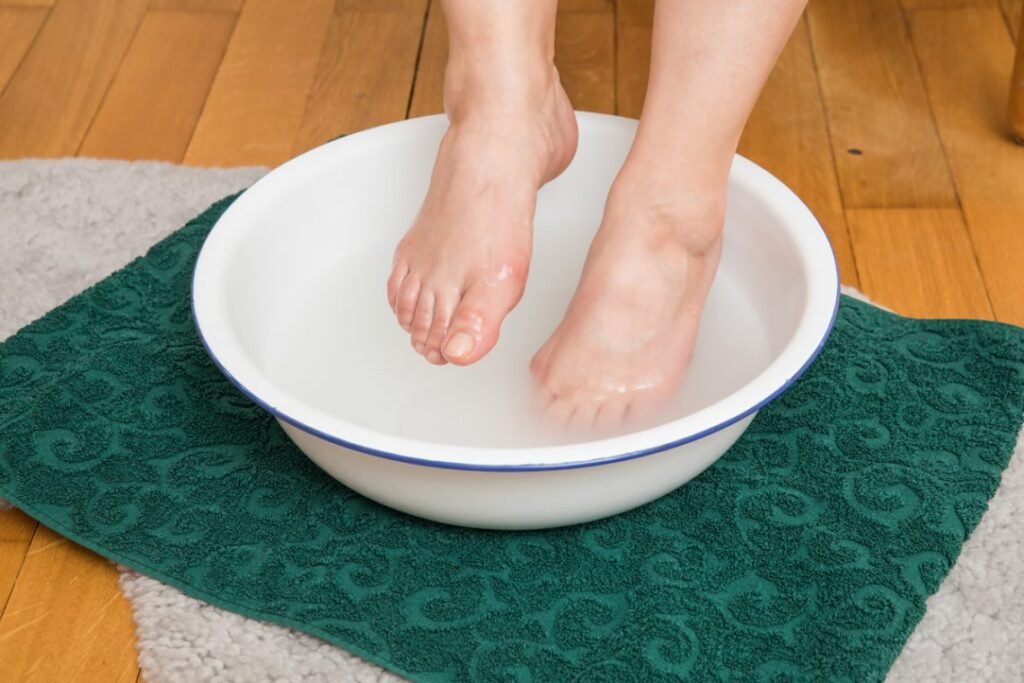
A warm foot soak is the fastest way to take the edge off tired feet. Fill a basin or bathtub with warm — not hot — water, high enough to cover your ankles, and soak for 10 to 15 minutes. The warmth relaxes tight foot muscles, increases blood flow, and softens calloused skin. For an extra boost, stir in a handful of Epsom salt, which dissolves into magnesium-rich water that many people find soothing for tired muscles. Dry your feet thoroughly afterward, paying attention between the toes, and follow with moisturizer on the heels and soles.
2. Roll Out Your Arches With a Tennis Ball
Place a tennis ball, lacrosse ball, or frozen water bottle on the floor and roll the bottom of your foot over it, pressing down gently. Spend two to three minutes per foot, focusing on the arch and the area just in front of the heel. This self-massage releases tension in the plantar fascia and the small muscles of the foot, much like a deep-tissue massage. If a spot is especially tender, hold gentle pressure there for 15 to 20 seconds instead of rolling quickly past it. A frozen water bottle does double duty: massage plus cold therapy.
3. Alternate Ice and Heat for Acute Soreness
If your feet feel inflamed — hot, puffy, or sharply painful in one spot — cold therapy helps calm things down. Roll a frozen water bottle under your foot for 10 minutes, or soak feet in cold water for the same amount of time. Some people get better results from contrast therapy: alternate three minutes of warm water with one minute of cold water, repeating the cycle three times. The temperature changes pump fresh blood through tired tissues. End contrast soaks on cold if there is noticeable swelling, or on warm if the main problem is stiffness.
4. Stretch Your Calves and Feet
Tight calves pull on the Achilles tendon, which tugs on the plantar fascia and amplifies foot pain. Do these three stretches every evening:
- Wall calf stretch: Place your hands on a wall, step one foot back, and press the back heel into the floor while keeping the knee straight. Hold 30 seconds per leg, twice each.
- Stair heel drop: Stand on a step with your heels hanging off the edge, and slowly lower your heels below the step level. Hold 10 seconds, repeat 8 to 10 times.
- Towel toe stretch: Sit with your leg straight, loop a towel around the ball of your foot, and gently pull your toes toward you for 20 seconds.
Stretching takes five minutes and pays off enormously — many people find calf stretches reduce next-day morning heel pain more than anything else.
5. Elevate Your Feet
Lie back with your feet raised above heart level for 15 to 20 minutes. Gravity does the work: fluid that pooled in your feet and ankles during the day drains away, reducing swelling and that heavy, throbbing feeling. Prop your legs on couch cushions or rest them against a wall. Combining elevation with ice packs wrapped in a towel works especially well after very long shifts. Make it a nightly habit rather than a one-time fix — consistent elevation prevents swelling from compounding day after day.
6. Do Toe Yoga and Foot Strengthening
Weak foot muscles fatigue faster, so strengthening them is one of the best long-term remedies for sore feet. Try toe yoga: while seated, press your big toe into the floor while lifting your other four toes, then reverse — press the four small toes down while lifting the big toe. Do 10 slow repetitions per foot. Another effective exercise is the towel scrunch: place a towel on the floor and use only your toes to scrunch it toward you, then push it back out. Finally, practice picking up a marble or small object with your toes. Two minutes a day of these exercises builds endurance in the small muscles that support your arches.
7. Upgrade Your Footwear and Insoles
Recovery routines help, but the single biggest long-term fix is what you wear during the day. Flat, flimsy, or worn-out shoes force your foot muscles to work overtime. Look for shoes with real arch support, a cushioned midsole, a slightly raised heel (around one inch, which reduces Achilles strain), and a wide toe box that does not pinch. Replace work shoes every 500 to 800 miles of walking — worn cushioning looks fine from the outside but stops absorbing shock. If new shoes are not in the budget, quality aftermarket insoles can transform an ordinary pair: trim-to-fit cushioned insoles with arch support cost far less than new shoes and make a dramatic difference on hard floors.
8. Use Compression Socks During Your Shift
Compression socks gently squeeze the lower leg, which helps blood circulate upward instead of pooling around the ankles. Many nurses, servers, and retail workers swear by them for reducing end-of-day swelling and heaviness. Look for graduated compression (15–20 mmHg is a good starting point for daily wear), put them on before your shift starts, and take them off in the evening. They feel tight at first, but most people stop noticing them within an hour. If your socks leave deep marks or feel painful, the compression level is too strong — size up or step down a grade.
9. Stand Smarter During the Day
How you stand matters as much as how long you stand. Shift your weight between feet every few minutes instead of locking into one position. If your job allows, keep a small footrest or box nearby and alternate resting one foot on it, which changes the angle of your hips and relieves your lower back too. Avoid locking your knees straight — keep them softly bent. When you walk, push through the whole foot rather than shuffling or stomping on your heels. And when you get a break, sit down and take your shoes off for a few minutes; even brief unweighted rest lets your foot tissues recover. Poor standing posture compounds foot strain — the same alignment principles in this guide to fixing bad posture without equipment apply to standing desks and long shifts on your feet as well.
10. Moisturize, Trim, and Inspect Your Feet Nightly
Dry, cracked heels are more than cosmetic — they catch, snag, and worsen friction pain in your shoes. Make a two-minute nightly ritual: moisturize the heels and soles (not between the toes, where moisture encourages fungus), keep toenails trimmed straight across to avoid ingrown nails, and glance over your feet for blisters, hot spots, or areas of redness. Cover developing blisters with a bandage before your next shift, and wear moisture-wicking socks to reduce friction. Healthy skin and well-kept nails remove several small but cumulative sources of daily foot pain.
Daily Habits That Prevent Sore Feet From Coming Back
Remedies treat the pain you already have; habits prevent it from returning. Rotate between two pairs of work shoes so the cushioning in each pair has a day to decompress. Stand on an anti-fatigue mat if your job keeps you at a fixed station — cashiers, baristas, and assembly workers often get these through their employer. Stay hydrated, since dehydration can worsen muscle cramping in the feet and calves. Maintain a healthy weight if you can, because every extra pound multiplies the load on your feet. And keep up the five-minute evening stretch routine even on days when your feet feel fine — prevention is far easier than recovery.
Mistakes That Make Foot Pain Worse
- Powering through sharp pain: Dull end-of-day aching is normal; sharp, stabbing pain — especially first steps in the morning — deserves attention and rest, not more miles.
- Wearing the same dead shoes: Shoes that look fine on top can have completely flattened midsoles. If your work shoes are over a year old with daily wear, they are done.
- Standing on concrete in flat shoes: This is the single harshest combination for feet. Insoles at minimum, cushioned shoes ideally.
- Skipping warm-ups and cool-downs: A minute of ankle circles and toe wiggles before a shift, plus the evening stretch routine after, bookends the day for your feet.
- Going barefoot on hard floors at home: After a long day, walking on tile or hardwood barefoot adds more impact. Wear supportive slippers instead.
This article is for informational purposes only and is not medical advice. Consult a qualified professional.
Frequently Asked Questions
How long does it take for sore feet to recover after standing all day?
For most people, routine end-of-day soreness eases within an hour or two of the recovery routine above, and feels significantly better by the next morning. If soreness lasts several days despite rest, or worsens week to week, it is worth having a professional take a look.
Are Epsom salt soaks actually effective for foot pain?
Many people find them soothing for tired muscles and general soreness. The warm water itself does most of the work by relaxing muscles and improving circulation, while the salt adds a pleasant, mildly soothing effect. They are a safe home remedy for ordinary tired feet.
What is the best type of shoe for standing all day?
Look for supportive shoes with cushioned midsoles, real arch support, a wide toe box, and a heel height around one inch. Many service workers prefer athletic-style work shoes or clogs designed for long shifts. Replace them when the cushioning compresses, roughly every year of daily use.
Do compression socks really help with sore feet?
Yes — graduated compression socks reduce swelling and the heavy feeling in the legs and feet during long standing shifts. A mild compression level of 15–20 mmHg is a good starting point. They are widely used by healthcare and hospitality workers.
Why do my feet hurt more in the morning after a long day?
Overnight rest lets the plantar fascia tighten. Your first steps then stretch that stiffened tissue suddenly, which is why morning heel pain is so common. A minute of ankle circles and calf stretches before getting out of bed usually takes the edge off.
Should I see a doctor about sore feet from standing?
Routine soreness that responds to rest is usually not a concern. Seek professional advice if you have sharp or stabbing pain, numbness, swelling that does not go down overnight, skin changes, or pain that keeps you from walking normally. These can indicate issues that home remedies alone will not fix.











1 thought on “How to Relieve Sore Feet After Standing All Day: 10 Remedies”
Comments are closed.