
Learning how to declutter a small bedroom step by step changes the way the whole room feels. In a tiny bedroom, every stray item is visible, every surface fills up fast, and clutter makes the space feel even smaller than it is. The flip side is encouraging: because the room is small, you can transform it completely in a single weekend. This guide gives you a clear, zone-by-zone method designed specifically for small bedrooms — not generic advice written for walk-in closets and spare rooms. Follow the steps in order, and you will end up with a calmer, more spacious-feeling room that is easy to keep that way.
Why Small Bedrooms Are Harder to Declutter
A small bedroom punishes clutter in ways a large room does not. There is no spare corner to absorb overflow, so everything competes for the same few surfaces: the dresser top, the nightstand, the floor beside the bed, the one chair. Visual clutter also hits harder in tight quarters — studies on home environments consistently find that crowded, disorganized spaces raise stress and make it harder to relax, which matters most in the room where you sleep.
The other challenge is storage math. A small bedroom has less built-in storage, so items that would disappear into a big closet end up living in the open. The solution is not buying more organizers first — it is owning less stuff competing for the space you have. Decluttering comes before organizing, always. Containers cannot fix too much stuff; they just hide it expensively.
What You Will Need Before You Start
- Three large bags or boxes: label them Donate, Trash/Recycle, and Relocate (things that belong in other rooms)
- A timer: work in focused 25 to 45-minute sessions with short breaks
- Cleaning supplies: all-purpose spray, microfiber cloths, a vacuum or broom — you will clean as you go
- A laundry basket: for the inevitable pile of dirty clothes you will uncover
- Snacks and water: decision fatigue is real; keep your energy up
- Music or a podcast: decluttering goes twice as fast with something enjoyable playing
Do not buy storage bins, drawer dividers, or organizers yet. Wait until the decluttering is done so you buy only what the remaining items actually need.
Step 1: Take Everything Off the Surfaces
Start with the fastest visible win. Clear every flat surface completely — nightstand, dresser top, windowsill, the chair, the top of any shelving. Put everything into one pile on the bed (you will sort it in the next step). Wipe each surface clean. Already the room will look and feel dramatically better, and that early momentum carries you through the harder decisions ahead. As you clear, toss obvious trash straight into the Trash bag without deliberation.
Step 2: Sort the Surface Pile With Three Questions
Pick up each item from the bed pile and ask three questions: Do I use this regularly? Does it belong in the bedroom? Does it earn its space? Keep only items with a clear yes. Duplicates go — you do not need four phone chargers on one nightstand. Broken items go. Things that belong elsewhere go in the Relocate box. Aim to return no more than a handful of intentional items to each surface: a lamp, a book you are actually reading, a glass of water. Empty surfaces are what make a small room feel bigger.
Step 3: Tackle the Closet
The closet is usually the biggest clutter reservoir in a small bedroom. Take everything out — yes, everything. Clean the closet floor and shelves. Then sort clothes into four groups: keep, donate, trash (worn out), and relocate (out-of-season or belongs elsewhere). Be honest with the classic test: if you have not worn it in the last year and it is not special-occasion or seasonal, let it go. Fold or hang only the keepers back in, grouped by type. Leave visible empty space on the rod and shelves — that breathing room is the visual proof the system is working, and it gives future purchases a natural limit.
Step 4: Conquer the Dresser Drawers
Pull out one drawer at a time and dump its contents on the bed. Toss stretched-out socks, stained underwear, and single earrings. Refold what remains neatly — the simple file-folding method, where items stand upright in rows, lets you see everything in a drawer at a glance and fits more in less space. Assign each drawer a single category: tops, bottoms, underwear, sleepwear. When every drawer has one job, putting laundry away takes seconds and the drawers stay organized on their own.
Step 5: Clear Under the Bed
Under-bed space in a small bedroom is prime real estate, so treat it as intentional storage, not a junk drawer. Pull everything out and sort it. Keep only flat, contained items here: out-of-season clothes in a zippered bag, spare bedding, or luggage. Everything loose, dusty, or forgotten goes. If you use this space, invest in one set of low, lidded under-bed boxes after decluttering — lids keep dust out and make the storage look deliberate instead of shoved.
Step 6: Handle Paper, Cables, and the Junk Drawer
Small bedrooms accumulate paper fast: old receipts, manuals, expired coupons, notebooks from years ago. Sort paper into keep (important documents), digitize (take a photo and recycle the original), and recycle. For cables and chargers, keep one of each type you actually use and recycle the tangled rest — most electronics stores accept e-waste. If you have a nightstand drawer that has become a junk drawer, empty it completely and allow back only true bedside essentials: a charger, lip balm, medication, a notepad. Everything else was never meant to live there.
Step 7: Deal With Sentimental Items Last
Save photos, gifts, letters, and keepsakes for the end, when your decision-making muscles are warmed up. You do not need to throw away memories — but you also do not need to keep every concert ticket stub in a shoebox under the bed. Keep a small, defined memory box: one box, and when it is full, something must go before anything new goes in. For bulky sentimental items, take a good photo of them and let the object go; the memory lives in the photo just as well and takes up zero floor space.
Smart Storage Ideas for Small Bedrooms
Now that you own less, make the remaining items fit beautifully:
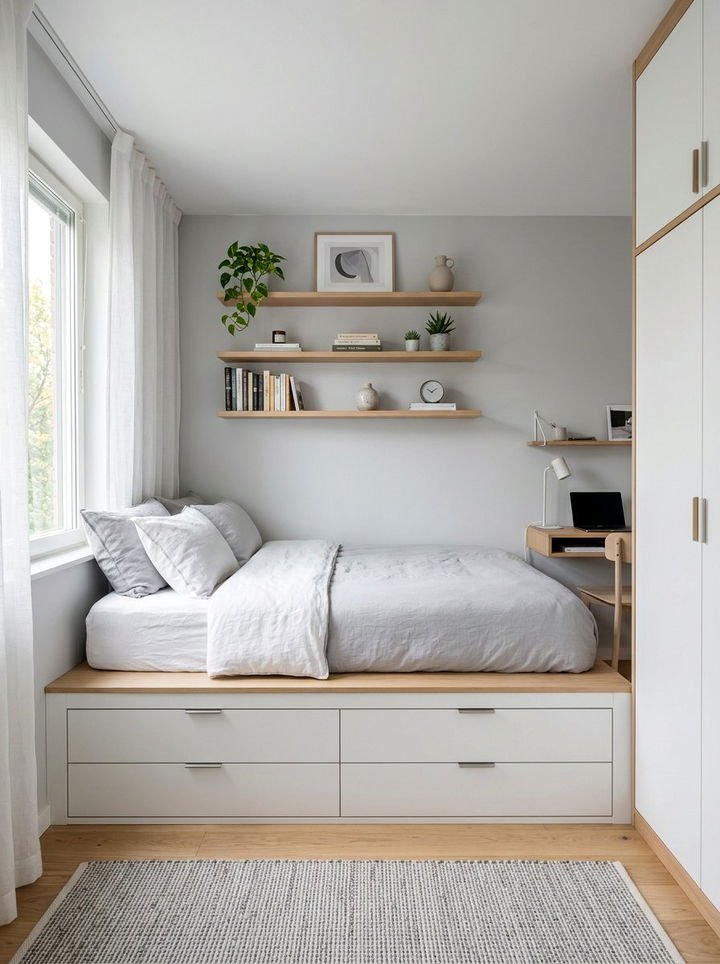
- Go vertical: Wall-mounted shelves above the bed or desk use zero floor space. A tall, narrow bookshelf beats a wide, short one.
- Use the back of the door: An over-the-door organizer holds shoes, accessories, or cleaning supplies invisibly.
- Choose double-duty furniture: A bed with drawers, a storage ottoman at the foot of the bed, or a nightstand with drawers multiplies storage without adding footprint.
- Contain the small stuff: One attractive tray on the dresser corrals jewelry, keys, and lip balm so they read as intentional rather than cluttered.
- Keep the floor clear: Nothing makes a small room feel bigger than visible floor. Aim for clear pathways and no piles anywhere.
Keeping It Clutter-Free: The Maintenance System
Decluttering once is easy; staying decluttered is the skill. Adopt the one-in-one-out rule: every new item that enters the bedroom means one similar item leaves. Do a five-minute reset every evening — return items to their homes before bed so you never wake up to chaos. Put laundry directly in the hamper, never on the chair; the chair is furniture, not storage. Once a season, do a quick 30-minute pass through the closet and drawers to catch buildup early. Small, frequent maintenance beats another massive purge every year.
Mistakes to Avoid
- Buying organizers before decluttering: Containers sized for stuff you are about to donate are wasted money. Declutter first, measure what remains, then buy.
- Shuffling instead of deciding: Moving a pile from the dresser to the closet is not decluttering. Every item needs a keep-or-go decision.
- Starting with sentimental items: Beginning with the hardest decisions drains your energy before you build momentum. Save them for last.
- Decluttering someone else’s stuff: Only declutter your own belongings. For shared items, agree on the rules together first.
- Trying to do it all in one exhausting day: Decision fatigue leads to either keeping everything or regretting hasty tosses. Work in timed sessions across a weekend.
- Keeping “maybe” piles: A maybe box with no deadline is just delayed clutter. If you must, date it — unopened after 30 days, it gets donated unopened.
Frequently Asked Questions
How long does it take to declutter a small bedroom?
Most small bedrooms take one focused weekend — roughly six to ten hours total, broken into sessions. The closet usually takes the longest. Working zone by zone in 45-minute blocks keeps the project manageable.
Where do I start when the whole room is a mess?
Start with surfaces. Clearing flat surfaces first gives you an immediate visible win and a clean workspace (the bed) for sorting the bigger zones like the closet and drawers.
What should I do with clothes I do not want?
Donate clean, wearable items to a local charity or thrift store; many offer drop-off bins or pickup. Recycle worn-out textiles through textile recycling programs rather than trashing them. Sell higher-value pieces online or at consignment shops.
How do I declutter if I am sentimental about everything?
Set a physical limit — one memory box — instead of deciding item by item in the abstract. Photograph bulky keepsakes before letting them go. And tackle sentimental items last, after you have built decision-making momentum on easier categories.
How can I make a small bedroom look bigger after decluttering?
Keep surfaces mostly clear, leave visible floor space, use vertical storage, choose light-colored bedding, and let natural light in. Visual simplicity — fewer items in sight — is what makes small rooms feel spacious.
How often should I re-declutter?
With the one-in-one-out rule and a five-minute nightly reset, a full re-declutter should rarely be needed. Do a light seasonal pass through closets and drawers — about 30 minutes, four times a year — to catch slow buildup.