
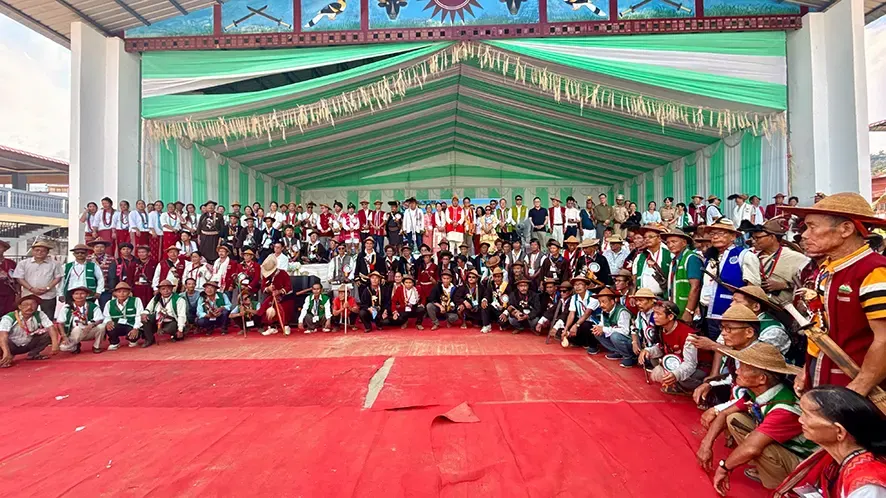
There’s something quietly urgent about a government minister standing before a gathering of traditional priests and telling them — you matter.
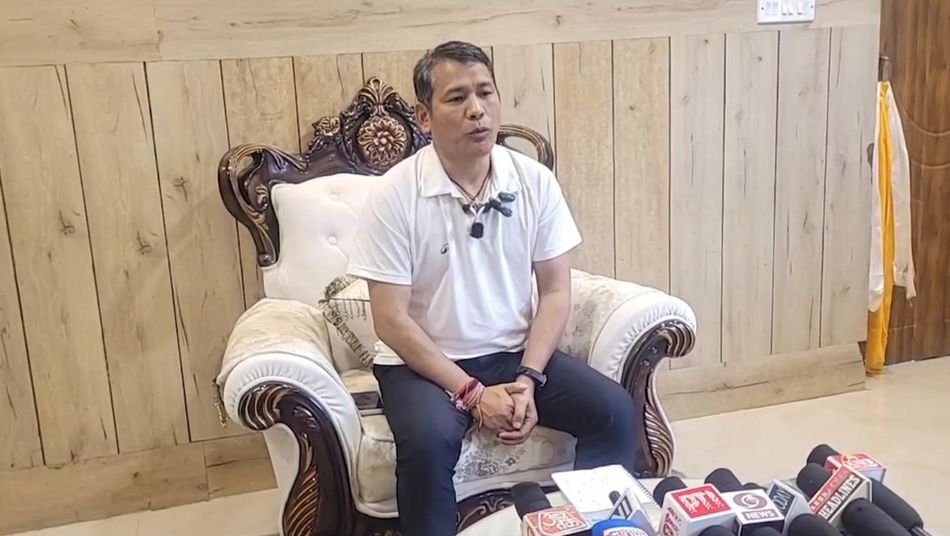
That’s exactly what happened in Daporijo on Wednesday, when Indigenous Affairs Minister Mama Natung took the stage at the 21st Foundation Day of the All Arunachal Pradesh Priest Welfare Association (AAPPWA) and made a case that many in Arunachal Pradesh’s indigenous communities have been waiting to hear from the corridors of power.
Speaking in the Upper Subansiri district headquarters, Natung didn’t mince words. He stressed the vital role of traditional priesthood in keeping the state’s cultural and spiritual identity alive — not as a relic of the past, but as a living, breathing foundation that the present generation must actively protect.
And he backed it with action. The minister announced that the honorarium for traditional priests will be enhanced, a move that recognises these custodians of ancestral wisdom as more than just ceremonial figures. In a state where indigenous faiths like Donyi-Polo hold deep spiritual meaning for thousands of people, that recognition carries real weight.
What stood out, though, was his call to the youth. Natung urged young people across the state to step up — to learn, to participate, and to carry traditional knowledge forward before it quietly slips away. It’s a concern that resonates across Arunachal. Modernisation has brought opportunity, but it has also created distance between younger generations and the practices their grandparents lived by. The minister’s appeal wasn’t nostalgic — it felt like a warning dressed in hope.
The occasion itself was steeped in ceremony. Before joining the main celebration at Si-Donyi Hilo Jaaring, where traditional prayers were offered in the way they have been for generations, Natung also inaugurated the Doring Riokdum Lingny at the IFCSAP ground. It was a full-circle moment — governance and tradition meeting on the same ground, speaking the same language.
The event was attended by MLA Taniya Soki, Indigenous Affairs Secretary Pige Ligu, Director Likha Suraj, Tagin Culture Society president Larji Rigia Dukam, and AAPPWA president Tatung Tagar, among others. The presence of senior officials alongside cultural leaders wasn’t just symbolic. It reflected something the state has been slowly building — a more formal partnership between government machinery and indigenous institutions.
There’s often a gap between policy promises and ground reality in matters of culture. But the fact that a dedicated ministry exists, that foundation days like AAPPWA’s are now marked with ministerial attendance and concrete announcements, suggests that indigenous preservation is gradually moving from the margins to the mainstream of governance in Arunachal Pradesh.
Still, announcements are only as strong as the systems that implement them. The real test will be whether the enhanced honorarium reaches priests in remote villages, whether youth engagement programmes take shape beyond speeches, and whether the state’s spiritual heritage is woven into education and public life — not just celebrated once a year.
For now, though, Wednesday in Daporijo felt like a step in the right direction. Because when a people’s priests are protected, their identity stands a chance.