
A novel born in the hills of Arunachal Pradesh is now speaking a new language. And in doing so, it’s quietly making history.
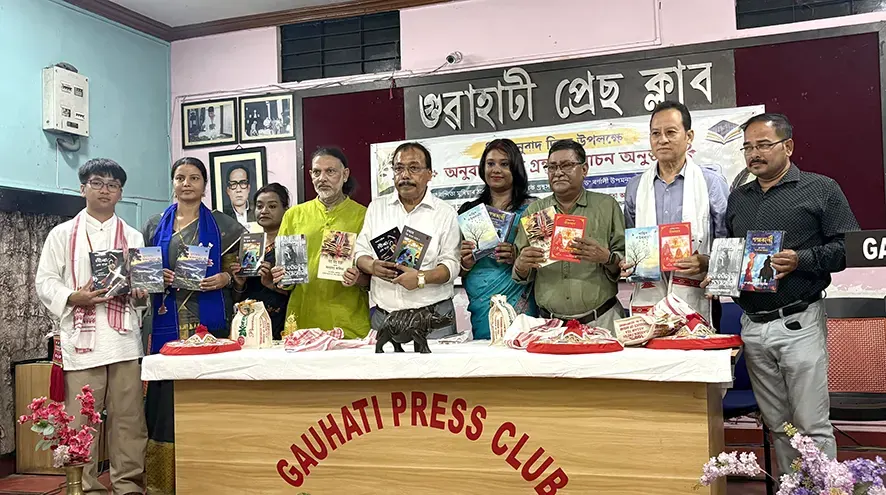
On International Translation Day — September 30 — the Guwahati Press Club became the setting for something genuinely moving. Wanggo Socia’s celebrated Hindi novel, Meera: Ek Safar, was launched in its Assamese avatar, translated by renowned writer and translator Dr. Barnali Das. Eminent writers and translators from Assam, Odisha, and several other states gathered to mark the occasion. But the significance of the event went far beyond a book launch.
This was a full-circle moment decades in the making.
For those who know the literary history of this region, the emotional weight of the evening is hard to overstate. It was the Assamese language that gave Arunachal Pradesh its first written literary voice. Legends like the late Lummer Dai and Yeshe Dorjee Thongchi — both of whom wrote in Assamese — earned national acclaim and had their works translated into Hindi, English, and beyond. Arunachal’s stories once travelled outward through Assamese. Now, an Arunachal writer has returned the favour, his Hindi words finding a home in that very language that once nurtured the state’s earliest written stories.
That’s not just literary trivia. That’s a bridge being rebuilt from both ends.
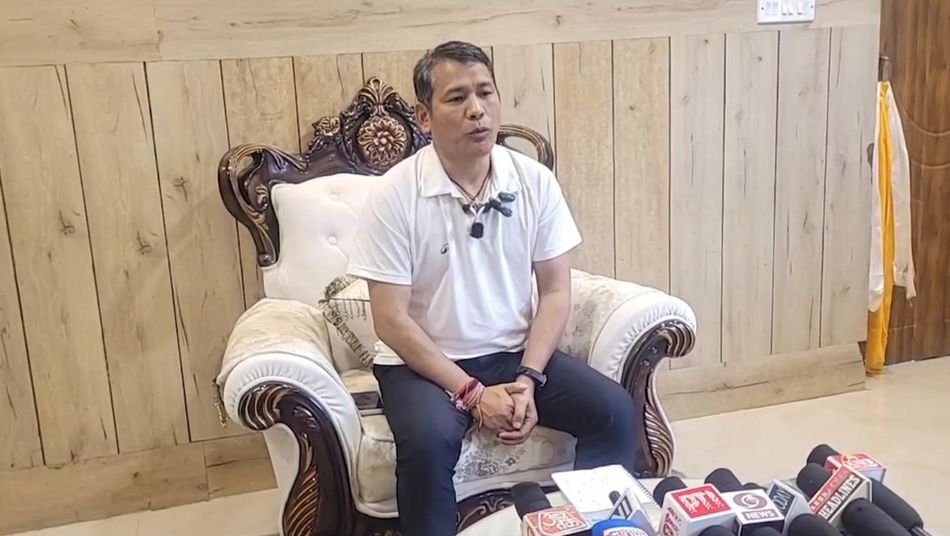
Wanggo Socia, a poet, writer, and scholar from Tirap district, teaches Hindi literature at Government Model Degree College, Kanubari, in Longding district. He writes in three languages — Nocte, Hindi, and English — and has been deeply involved with institutions like the Sahitya Akademi and the Arunachal Pradesh Literary Society. He isn’t a new name in literary circles. But this translation elevates his work to a different kind of visibility.
The novel itself has already proven its appeal. The first edition of Meera: Ek Safar — a story tracing a woman’s journey through struggle, courage, and self-discovery — sold out within a month of its release. It is now in its second edition. Readers clearly found something real in it. Something that stuck.
At the launch event, Socia spoke about his journey as a writer — how ideas take root, how a story finds its readers, how literature becomes a living conversation between cultures. He also recited a Nocte poem as a tribute to the people of Arunachal Pradesh. In that moment, three languages existed in one room, and none of them felt out of place.
Dr. Barnali Das’s contribution as translator deserves its own spotlight here. Translation is not just the act of swapping words between languages — it’s the art of preserving a story’s heartbeat while giving it an entirely new voice. That this happened on International Translation Day was perfectly fitting.
What makes this event resonate beyond the usual literary ceremony is what it says about the relationship between Arunachal Pradesh and Assam — two neighbours who have, through literature, consistently found ways to celebrate each other’s stories. That bond isn’t ceremonial. It runs deep, stretching back generations, from ink to ink, story to story.
Wanggo Socia’s novel entering the Assamese literary world isn’t just a personal milestone. It is a reminder that the hills have always had stories worth telling — and that those stories, when given the right wings, can travel anywhere.