
There is a project that is dividing Arunachal Pradesh right down the middle — and the government just made it clear it is not backing down.
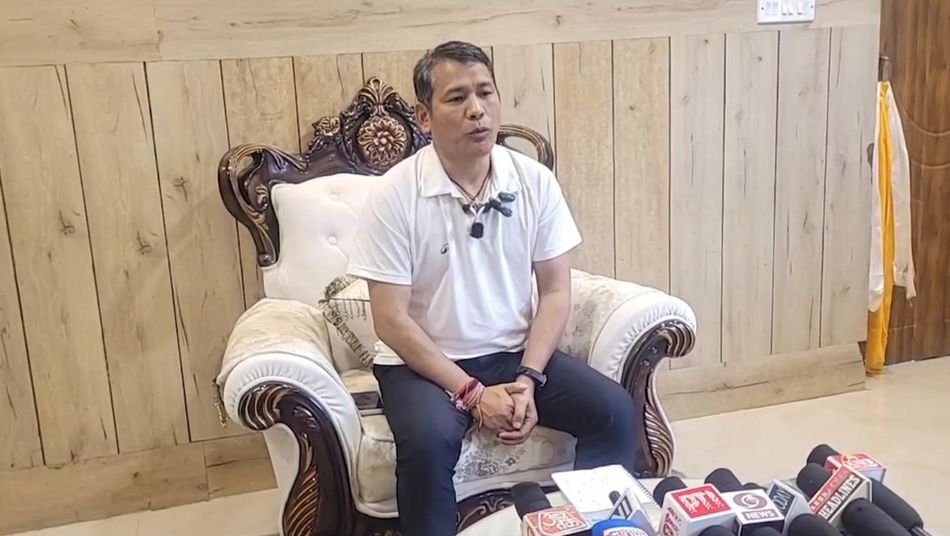
Arunachal Pradesh Minister Ojing Tasing came out swinging on Thursday in defence of the controversial Siang Upper Multipurpose Project, better known as SUMP, while simultaneously sending a stern warning to those opposing it. The message was sharp and simple: the government will talk, but it will not tolerate anyone using a protest as cover for lawlessness.
“We are open to dialogue,” Tasing said, “but violations of law and order in the name of protests will not be accepted.” That line alone tells you exactly where the government stands right now.
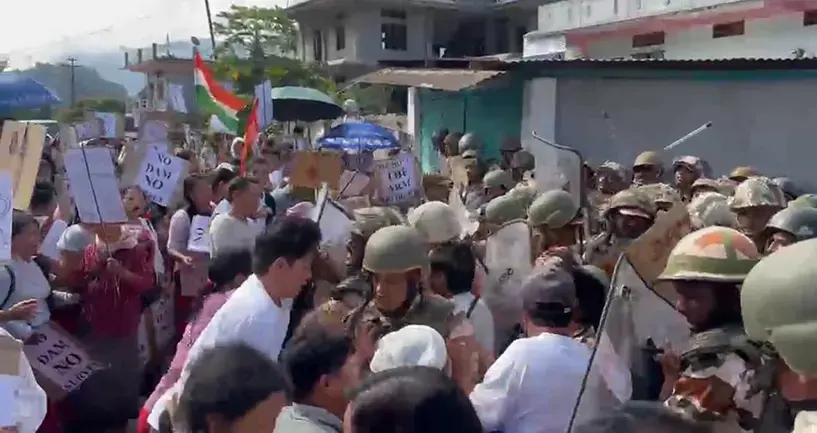
The SUMP has been a hot-button issue for a while, drawing fierce resistance from local communities in the Siang valley who fear displacement, ecological damage and loss of their ancestral land. And those fears are not unfounded — mega dam projects in the Northeast have a long and troubled history when it comes to communities bearing the cost while others reap the benefit. But Tasing is not quite ready to entertain that conversation on those terms.
He took particular aim at the Adi Baane Kebang (ABK)-United, alleging that the protests against the project were, in his words, “sponsored.” He also claimed that the ABK-United had not even sought an appointment to meet Chief Minister Pema Khandu during his recent visit to the Siang and Upper Siang districts — a visit Tasing described as a routine interaction with government officials.
Then came the harder part of his statement. A reported attack on the residence of a sitting MLA has clearly rattled the ruling establishment. Tasing condemned it without hesitation, calling it an act of hooliganism that no protest movement — however genuine its grievances — could justify. Public representatives’ homes being targeted during demonstrations, he argued, crossed a line that simply cannot be excused.
On the question of compensation for people likely to be affected if the project does go ahead, the minister struck a somewhat reassuring note. He said that those displaced would receive amounts that are “appropriate and substantial,” provided the project is allowed to move forward. It was a careful choice of words — offering a carrot while holding the stick.
What really stood out, though, was how Tasing framed SUMP in the larger national context. He described it as a national project and pointedly referenced China’s proposed mega dam constructions upstream. In that light, he said, the Siang project’s Pre-Feasibility Report — the very first step in getting the project off the ground — must be allowed to be prepared without disruption. The geopolitical undertone was hard to miss.
At its core, this is a conflict that is far bigger than one dam. It is about who gets to decide what happens to a river, a valley and the people who have lived along it for generations. The government says it has the national interest in mind. The communities say no one is really listening to them.
Tasing’s words may draw applause in the corridors of Itanagar. But in the villages along the Siang, they will land very differently.