
Nirjuli, September 30 — The future of farming may not look like farming at all.
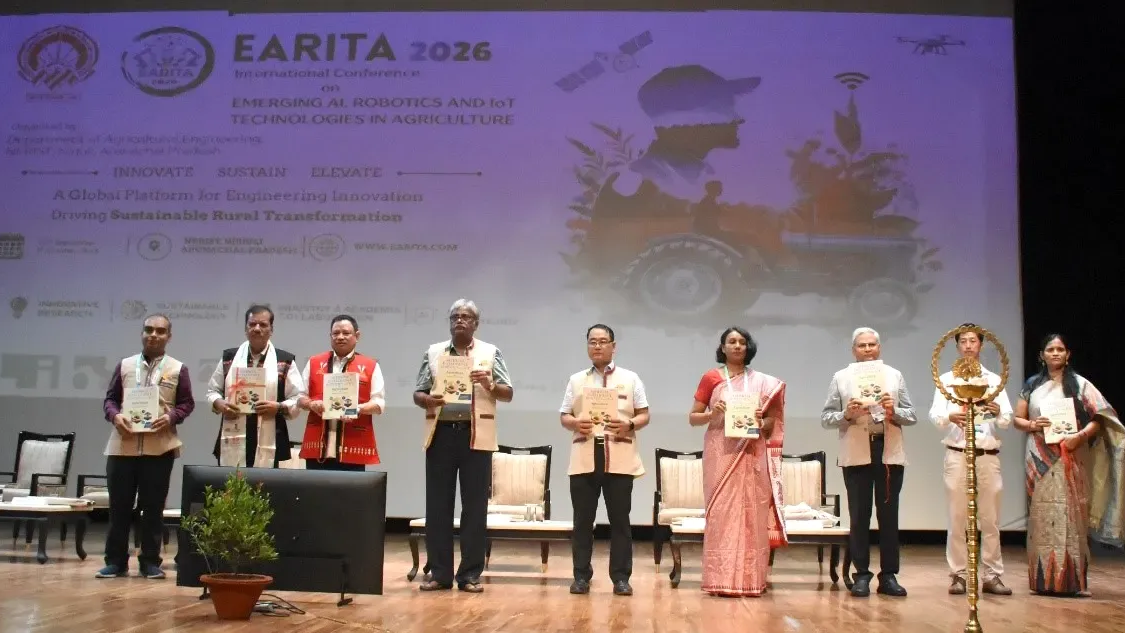
On Wednesday, the Department of Agricultural Engineering at the North Eastern Regional Institute of Science and Technology (NERIST) in Nirjuli threw open the doors to what might be one of the most forward-looking conversations this region has seen in a long time — an international conference titled “Emerging AI, Robotics, and IoT Technologies in Agriculture to Innovate, Sustain, and Elevate: Driving Sustainable Rural Transformation.”
That’s a mouthful. But what it essentially comes down to is this: the people who grow our food are being left behind by the same technology that is reshaping everything else, and NERIST wants to change that.
The conference brought together researchers, scientists, engineers, academicians, and students — B.Tech and M.Tech scholars sitting alongside experts who have spent decades studying the soil and the science behind it. That kind of mix rarely happens in one room. When it does, things tend to get interesting.
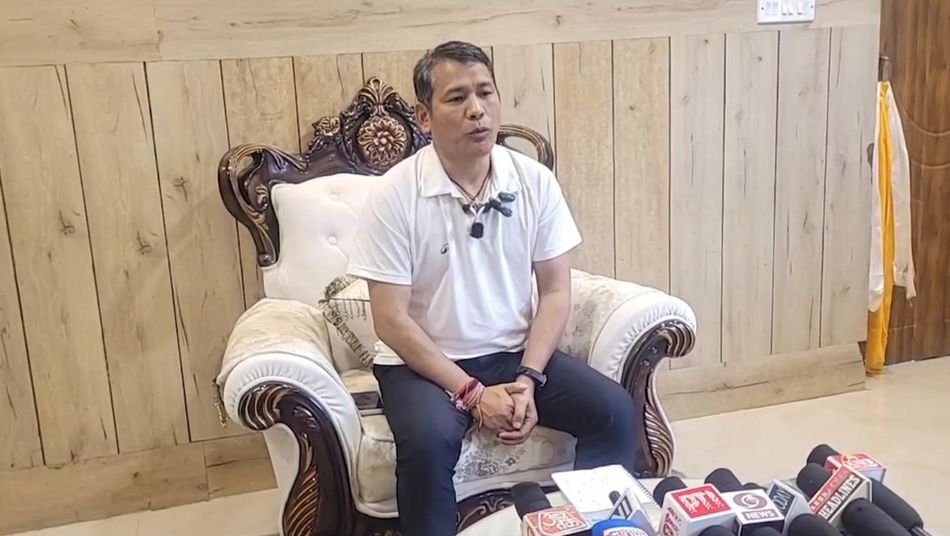
Health and Family Welfare Minister Biyuram Wahge addressed the inaugural session with a message that felt both honest and urgent. He encouraged the continued use of smart technologies in agriculture, but chose an unusual angle to make his point — drawing from the struggles faced by healthcare institutions to illustrate just how badly technology is needed when real-world problems go unsolved. It was a reminder that the challenges in agriculture and health are not so different. Both are about people’s lives, and both have been underserved by the systems meant to support them.
NERIST Director Prof. Narendranath S. took the stage with a sharper focus. He spoke about India’s significant contribution to global agriculture — a contribution that, despite its size, still relies heavily on traditional methods that haven’t changed much in generations. His call for the adoption of advanced tools was direct: if India is feeding the world, it deserves the best tools to do it. He also made a point of stressing farmers’ rights, which is not something you hear often enough in conversations dominated by data dashboards and drone specs.
Dr. S.N. Jha, President of the Indian Society of Agricultural Engineers (ISAE), brought the bigger picture into focus. He pushed for structural changes at both the state and central levels — not just technological fixes, but systemic ones. He spoke about building a food-secure agricultural system that doesn’t crack under pressure, exploring alternative methods of food production, and working toward the national vision of Viksit Bharat 2047. It’s an ambitious target. But that’s the point — ambition is what gets you there.
Academic Dean Prof. S. Gao wrapped up the inaugural remarks by commending the Agricultural Engineering department for its performance and its role within NERIST. Sometimes institutions need to hear that they’re doing something right. This conference was evidence of exactly that.
What made Wednesday’s event feel significant wasn’t just the speakers or the titles on the programme — it was the reason behind it. This part of the country, with its rugged terrain, climate sensitivity, and agrarian communities, stands to gain enormously from AI-driven precision farming, IoT soil sensors, and robotic assistance. These are not distant possibilities. They exist. The question has always been whether they will reach the people who need them most.
NERIST is asking that question out loud. And in doing so, it may have just planted a seed far more valuable than anything grown in a field.