
The Arunachal Pradesh Congress Committee has sent a fact-finding team straight into the heart of SUMP country. With paramilitary boots already on the ground there, someone needs to ask the questions that aren’t being answered.
There is something happening in the Siang region of Arunachal Pradesh that the government hasn’t fully explained. Communities are rattled. Protests have broken out. And reports of paramilitary deployment in connection with the proposed Siang Upper Multipurpose Project — better known as SUMP — continue to trickle in. Into this tense, unresolved situation, the Arunachal Pradesh Congress Committee has now stepped in, and for once, the move looks less like political posturing and more like genuine ground-level accountability.
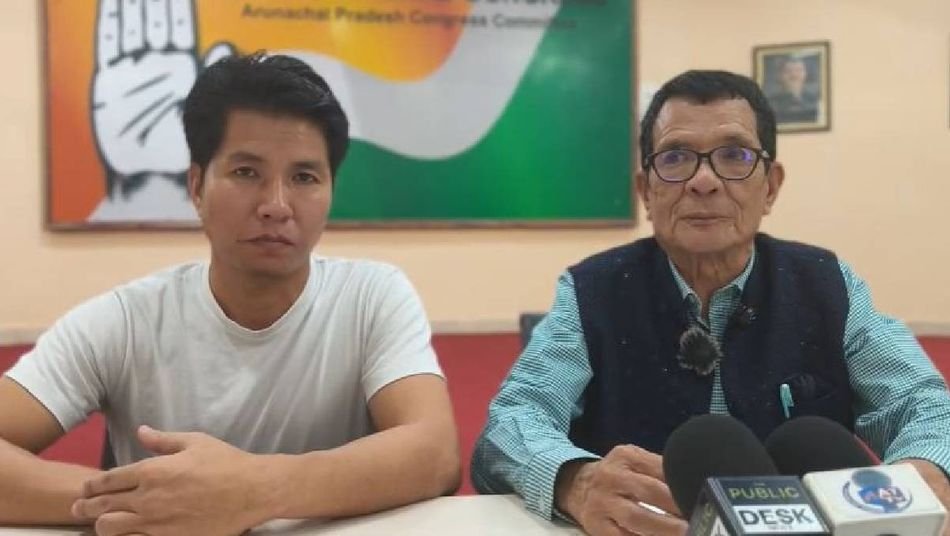
On Sunday, September 27, the APCC formally constituted a study-cum-fact-finding committee to assess the real situation in the Siang region and other areas staring down the barrel of mega hydropower development, particularly SUMP. The committee was constituted by APCC president Bosiram Siram and will be headed by working president Tanga Byaling. Takam Sanjoy comes in as vice chairman, advocate Tami Pangu takes on the role of secretary, while Daniel Gao and Johny Yangfo round out the panel as members.
The scope of this committee’s mandate is wide — and deliberately so. It’s not just about dam blueprints and megawatts. The panel is tasked with sitting down with project-affected families, village elders, community-based organisations and other stakeholders to hear what’s actually going on. It will look at potential social, environmental and livelihood impacts, dig into concerns around land acquisition and rehabilitation, and — crucially — examine the circumstances surrounding the deployment of security forces in the area. A detailed report with observations and recommendations is expected within 15 days of the committee’s notification.
At its very first meeting, the committee didn’t waste time. It constituted a nine-member sub-committee specifically for ground visits to affected areas, to be led by Tami Pangu. Village-to-village visits are already planned. That level of operational detail, announced on day one, suggests the APCC is serious about moving fast.
What makes this exercise stand out, though, is the open invitation. The APCC has called on political parties, civil society organisations, student bodies, traditional institutions, PRI representatives, women’s groups, youth organisations and representatives from affected villages to join the delegation. Each organisation has been asked to nominate at least one representative within three days. It’s a rare attempt to make something like this genuinely all-party and community-driven rather than a Congress show.
The SUMP controversy is not new. For years, local communities across the Siang belt have raised hard questions about what a project of this scale would mean for their land, their rivers, their way of life. Indigenous communities have been vocal. Fears about displacement, environmental damage and the erosion of cultural identity have not faded — they’ve deepened. And yet, the government’s narrative and the residents’ lived reality have often seemed to exist in parallel universes.
That’s precisely the gap this fact-finding committee is trying to close. Whether it succeeds will depend entirely on what it finds — and whether anyone in power chooses to listen.
The Siang has been running for centuries. The people along its banks deserve answers before the bulldozers decide their fate for them.