
Tucked away in one of India’s most remote corners, residents of Anini are fighting a quiet crisis — one where the sick have nowhere to turn and children sit in classrooms without enough teachers to teach them.
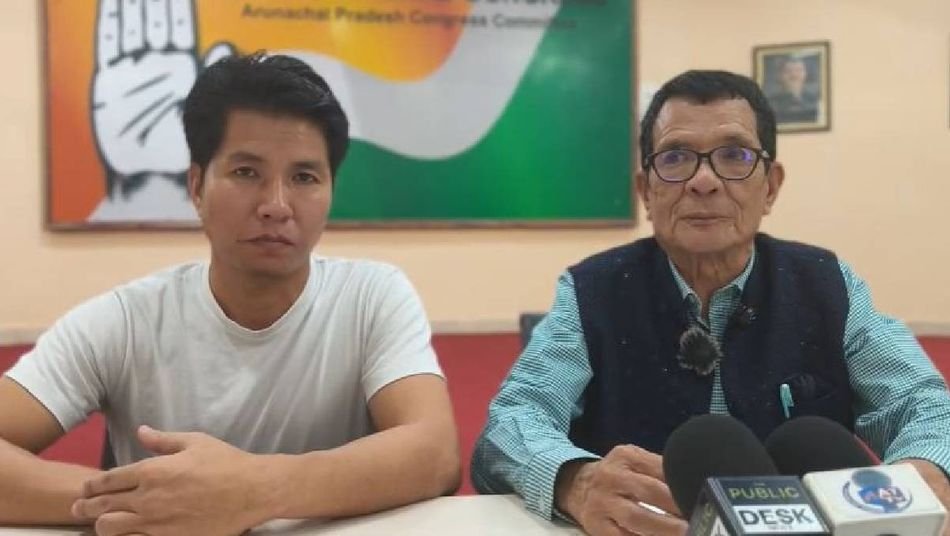
The All Arunachal Pradesh Students’ Union (AAPSU) has raised a sharp alarm after a ground-level inspection of health and education facilities in Anini, the headquarters of Dibang Valley district — a region that sits uncomfortably close to the India-China border. AAPSU president Meje Taku led the team, accompanied by All Dibang Valley District Students’ Union president Azen Mepi and general secretary Punji Apralo.
What they found wasn’t surprising to the locals. But it needed to be said out loud.
The team visited two critical institutions — the District Hospital, Anini, and Government Higher Secondary School, Anini — and returned with a grim picture. The hospital is running short on medical personnel. The school is short on teachers. Both are struggling to serve a population that has virtually no alternative. In a place as geographically isolated as Anini, these aren’t minor administrative gaps. They are failures that hit people where it hurts most.
Anini is not the easiest place to reach. It sits deep in the Dibang Valley, hemmed in by dense forests and difficult terrain, surrounded by the kind of silence that big cities never know. For the people who call this home — many of them from indigenous communities — the district hospital and the government school aren’t just public institutions. They are lifelines. When those lifelines fray, there is nothing else to fall back on.
During their visit, AAPSU was briefed directly by local representatives about the extent of the shortages. The picture painted was bleak. Patients arriving at the district hospital may not always find the medical staff they need. Students showing up to school face classrooms where entire subjects might go untaught simply because there is no one qualified to teach them. These are conditions no community should have to normalize — least of all one living in a sensitive border region where the state’s presence matters more, not less.
Taku, to his credit, didn’t leave it at rhetoric. He assured local representatives on the spot that AAPSU would escalate the teacher shortage issue to senior officials in the Education Department as soon as possible. The union also stressed that a border district like Anini — strategically important and geographically vulnerable — demands adequate staffing and infrastructure, not as a privilege, but as an absolute necessity.
And that is precisely the point that needs to land in the offices of the decision-makers sitting far away in Itanagar or Delhi. India has poured considerable energy into asserting its presence along the border, building roads and infrastructure to signal that this land is watched and cared for. But roads alone don’t build a nation. If the people living near that border cannot access a functioning hospital or a school with enough teachers, all that infrastructure is just concrete.
The students’ union has done what it can — it has gone to Anini, looked the problem in the eye, and brought it to light. The harder question now is whether the government will listen before another school year passes in half-empty classrooms and another patient is turned away with no one to help.
In Anini, the border may be with China. But right now, the real battle is for the basics.