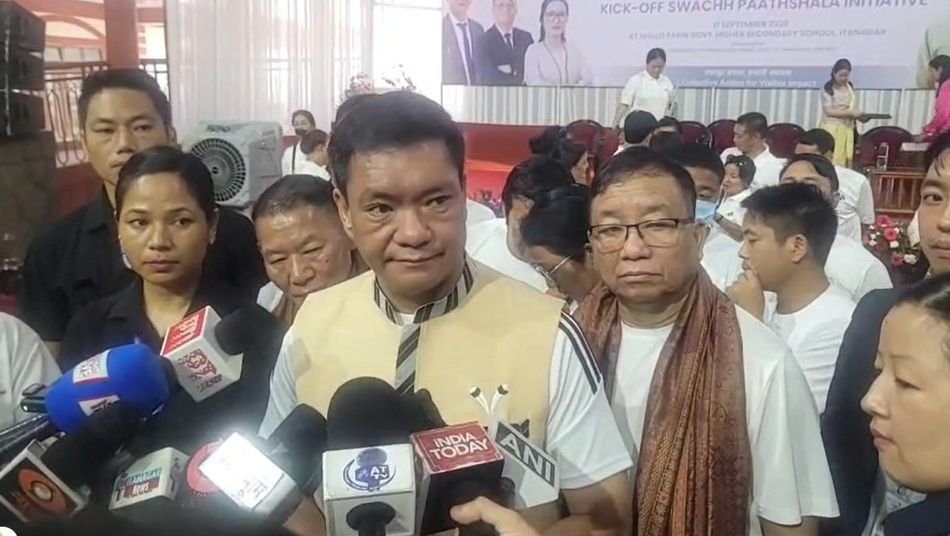

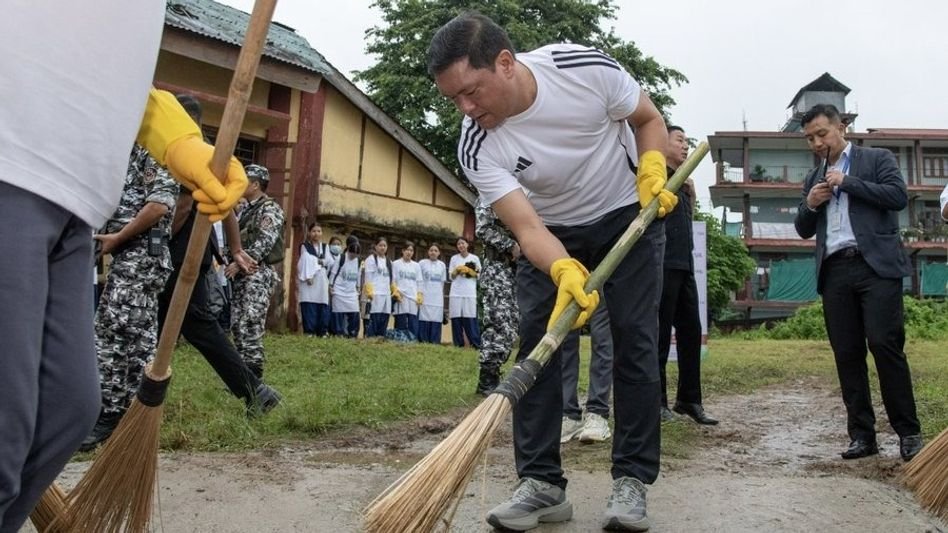
When the Chief Minister of a state walks into a government school, rolls up his sleeves, and joins students in sweeping the grounds, it is hard not to stop and take notice. That is exactly what Arunachal Pradesh Chief Minister Pema Khandu did on Wednesday, September 17, showing up at Mallo Tarin Government Higher Secondary School in Itanagar — not for a ribbon-cutting or a speech from a podium, but to actually participate in a cleanliness drive alongside students and young people.
The occasion was the state-level launch of Swachhata Hi Seva (SHS) 2026, along with the rollout of a new initiative called “Swachh Paathshala – Yuva for Swachhata.” It is that time of year again when the national cleanliness campaign kicks into gear across India, but what made Itanagar’s version stand out was the deliberate choice to put young people — school students and youth groups — right at the heart of it, not as bystanders clapping from the sidelines, but as active participants doing the actual work.
There is something genuinely refreshing about a sitting CM getting his hands dirty alongside schoolkids. It is one thing to talk about civic responsibility from a dais. It is another to demonstrate it.
Khandu used the occasion to stress the importance of collective participation in keeping communities clean and healthy. The theme driving this year’s campaign — “Swachhata Mein Sahbhag; Swachh Bharat, Viksit Bharat” — roughly translates to cleanliness through participation, and the phrase carries more weight when the person saying it is also holding a broom.
The broader vision behind Swachh Paathshala is not just about clean school campuses. The thinking is longer term. If students internalise habits of cleanliness and responsible waste management early, those habits travel home with them, spread through their neighbourhoods, and eventually build into something that looks like a genuine civic culture. Schools, in this framing, become not just places of academic learning but engines of behavioural change for the communities around them.
Arunachal Pradesh has been steadily ramping up youth engagement in governance and social campaigns over the past few years. This initiative fits that pattern. Giving young people agency — making them the face of the campaign rather than the audience — is a different approach from the top-down messaging that cleanliness drives have often relied on in the past.
There will always be some scepticism about whether events like these translate into lasting change or fade once the cameras leave. That is a fair question, and one that can only be answered over time. But the framing matters. Campaigns that lean on student ownership rather than government directives have a better shot at sticking.
A state’s cleanliness is not built in a day’s drive. It is built in the small daily choices of thousands of ordinary people. If Wednesday’s event in Itanagar inspires even a fraction of those young faces to carry that message beyond their school gate, the broom the Chief Minister picked up will have done far more work than it seemed.