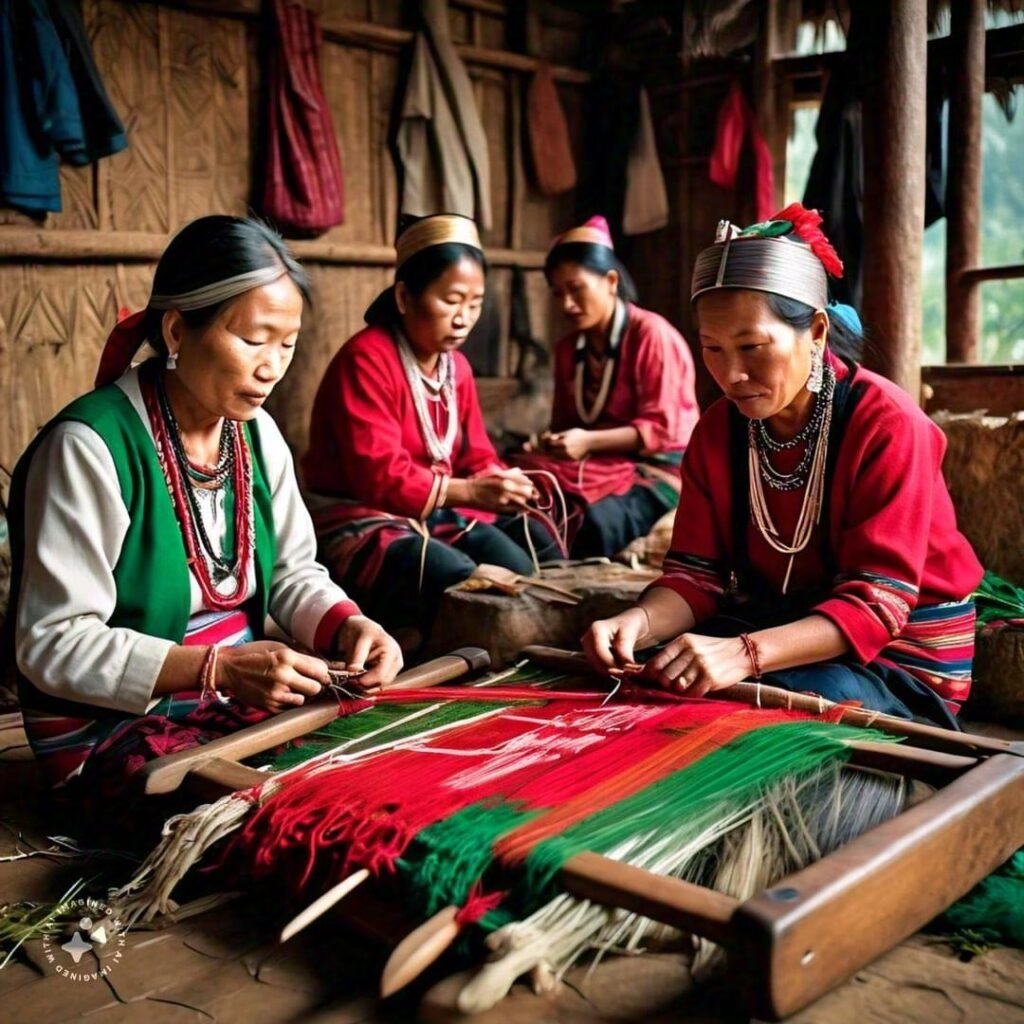
The Apatani tribe is one of the most fascinating tribes of Arunachal Pradesh. They are known for their distinctive facial tattoos, unique customs, and rich cultural heritage.
Who Are the Apatani People?
The Apatanis, also called Taniis, are a tribal community native to the Ziro Valley in Lower Subansiri district of Arunachal Pradesh. With a population of around 60,000, they are one of the most studied tribal groups of Northeast India. Unlike many neighbouring tribes that practised shifting cultivation, the Apatanis developed one of the most efficient systems of settled wet-rice agriculture in the entire Himalayan region — a remarkable achievement at an altitude of about 1,500 metres.
The tribe speaks the Apatani language, which belongs to the Tani branch of the Tibeto-Burman language family. Their villages — Hong, Hari, Bulla, Dutta and others — are among the largest and most organised tribal villages in Asia, with Hong alone housing several thousand people in neatly arranged bamboo and wooden houses.
Facial Tattoos and Nose Plugs: A Vanishing Tradition
For generations, Apatani women were recognised by two striking markers of identity: facial tattoos (called tiipe) running from the forehead to the tip of the nose and across the face, and large nose plugs (yaping hurlo) inserted into both sides of the nose. According to tribal elders, these markings were originally meant to protect Apatani women — considered the most beautiful in the region — from raiders of neighbouring tribes.
The practice was banned by the government in the 1970s, and today it survives only among elderly women. Younger Apatani women no longer wear the tattoos or nose plugs, making the last generation of tattooed faces living witnesses to a centuries-old tradition.
Masters of Sustainable Agriculture
The Apatanis are celebrated across India for their extraordinary paddy-cum-fish cultivation system. In the same flooded field, they grow rice while simultaneously rearing fish — a dual harvest from a single plot that maximises productivity without chemical fertilisers. Bamboo and wooden channels irrigate every terrace, and the community manages water distribution through a traditional council system.
This indigenous knowledge system has drawn researchers from around the world. The Apatani cultural landscape of the Ziro Valley was placed on UNESCO’s tentative list of World Heritage Sites, recognising it as an outstanding example of human interaction with the environment.
Festivals: Myoko and Dree
The two biggest festivals of the Apatani calendar are Myoko and Dree. Myoko, celebrated in March, is a month-long festival of friendship and purification in which villages take turns hosting elaborate rituals, folk dances and community feasts. Dree, observed on 5 July, is the agricultural festival — the tribe prays for a bumper harvest and protection of crops from pests and hailstorms. During Dree, traditional priests chant ancient hymns, and villagers share apong (rice beer) and local delicacies.
Preserving Culture for Future Generations
The Apatani tribe is making determined efforts to preserve its culture and traditions for future generations. Community organisations document oral histories, folk songs and rituals; weaving cooperatives keep alive the tribe’s distinctive textile designs; and the state government supports these initiatives through cultural grants and the promotion of Ziro Valley as a tourism destination — including the famous Ziro Music Festival, which brings the valley global attention every September.
Yet challenges remain. Migration of youth to cities, the decline of the Apatani language among children, and pressure on traditional farmland all threaten the old way of life. The tribe’s response — blending pride in heritage with modern education — offers a model of how indigenous communities can carry their identity into the future without being frozen in the past.