Nitesh Tiwari’s Ramayana: Part 1 has arrived in cinemas worldwide, and it is one of the most talked-about Indian films in years. Ranbir Kapoor plays Lord Ram, Sai Pallavi plays Sita, and Yash plays Ravana in a two-part adaptation of Valmiki’s epic that has been built on a scale rarely attempted in Indian cinema. The first part opened worldwide on November 5, 2026, with the second part planned for Diwali 2027.
For audiences, the appeal is simple to understand. The Ramayana is a story almost every Indian household knows, yet it has never been filmed quite like this: a pan-Indian cast drawn from Hindi, Telugu, Kannada and Tamil cinema, visual effects from an Oscar-winning studio, music by A. R. Rahman with an original score by Hans Zimmer, and a worldwide release by Sony Pictures. This guide brings together everything that matters about Part 1 — the release, the story it covers, the full cast, the team behind it, the languages and formats, and what happens next.
Ramayana Part 1 Release Date and Languages
Ramayana: Part 1, also presented as Ramayana: Rise of a Legend, was released worldwide in cinemas on November 5, 2026. The film opened in Hindi, Tamil, Telugu, Kannada and Malayalam, so audiences across India could watch it in their own language from the first day. It was also released internationally, with Sony Pictures International Releasing handling the worldwide rollout.
The release date was announced well in advance, in November 2024, when the makers confirmed both parts together: Part 1 for Diwali 2026 and Part 2 for Diwali 2027. Advance bookings opened on Dussehra, and the film was shot for IMAX, with a 3D experience also part of the plan. In the United States, the film received a PG-13 rating, with the rating noting intense action sequences, depictions of violence and graphic imagery involving blood.
The timing matters. A Diwali-season release puts the film in front of family audiences during the biggest moviegoing period of the year in India, and the story itself is closely tied to Diwali in popular tradition. The makers have treated the release as a two-part event rather than a single film, which is why Part 1 is designed to set up a much larger second chapter.
What Is Ramayana Part 1 About?
Ramayana: Part 1 adapts the ancient epic attributed to Sage Valmiki. At its centre is Rama, the prince of Ayodhya, whose acceptance of exile drives the story. Ranbir Kapoor plays Rama, and the first film follows his early life, his marriage to Sita, and the events that lead to the beginning of his 14-year exile.
That structure is deliberate. Rather than rushing through the whole epic in one film, director Nitesh Tiwari and writer Shridhar Raghavan have split it into two parts. Part 1 builds the world of Ayodhya, establishes Rama, Sita, Lakshmana and the royal family, and introduces the conflict that will shape the rest of the story. Reports point to a cliffhanger around the abduction of Sita, which would leave Hanuman’s search for Sita, the crossing to Lanka and the war with Ravana for the second film. The makers have not officially confirmed the exact point where Part 1 ends, so audiences going in should expect a complete first chapter that still leaves the biggest battle ahead.
Ranbir Kapoor has said the story is so vast that it could fill ten films, and that fitting it into two parts was very hard, especially for the writers. Tiwari has said the makers originally considered a trilogy before settling on two parts, because the emotional depth of the epic made a single film impossible while three films created their own challenges. The two parts together run for more than six hours, which gives a sense of how much story the team is trying to carry.
Ramayana Full Cast: Who Plays Who
The cast is one of the strongest reasons the film has drawn so much attention. It brings together major stars from different Indian film industries in a single ensemble, rather than casting within one language industry alone.
Ranbir Kapoor plays Rama. Sai Pallavi plays Sita, placing her at the centre of the epic alongside Rama. Yash, the Kannada star known for KGF, plays Ravana, the king of Lanka, and he is also a co-producer of the film through his company Monster Mind Creations. Sunny Deol plays Hanuman. Ravi Dubey plays Lakshmana.
The supporting cast adds further weight. Arun Govil, who played Ram in the classic television Ramayan, plays King Dashrath, Rama’s father. Lara Dutta plays Kaikeyi. Kajal Aggarwal plays Mandodari, Ravana’s wife. Rakul Preet Singh plays Surpanakha. Anupam Kher is part of the ensemble as Jatayu, the divine vulture. Other key roles include Kunal Kapoor as Indra, Vivek Oberoi, Faisal Malik, Harish Uthaman, Adinath Kothare as Bharath, Ajinkya Deo, Indira Krishnan and Sheeba Chaddha as Manthara.
The casting of Arun Govil as Dashrath has drawn particular attention from audiences who grew up watching his Ram on television. The film also brings together actors who rarely share a screen, including Hindi, Telugu and Kannada stars, which is part of why the makers describe it as a pan-Indian film rather than a Hindi film with dubbed versions.
Ranbir Kapoor as Ram: A Role He Called a Responsibility
For Ranbir Kapoor, playing Ram is the most high-profile role of his career so far. Speaking at the trailer launch in Bengaluru, he said that when Nitesh Tiwari and producer Namit Malhotra first approached him, there was excitement but also a quiet sense of fear and a deep sense of responsibility. He has described Rama’s strength as quiet restraint, rather than loud heroism, and said he learned a great deal about Indian mythology while working on the film.
Kapoor has also confirmed that he plays a dual role in the film, portraying both Lord Rama and Lord Parashurama. Shooting for Part 2 was already about half complete for his scenes before Part 1 was released, which shows how far ahead the two-part shoot was planned. His physical preparation for the role, including a leaner and more defined look for the prince and warrior, was one of the first things audiences noticed in the first posters and the trailer.
The role carries a particular weight because Ram is not only a beloved figure but a figure audiences feel protective about. Kapoor has spoken warmly about his co-stars, including Yash and Sai Pallavi, and about the bond shared by actors from different film industries working together on a single story. That collaboration is visible in the film’s promotion, where the cast has appeared together at events in Bengaluru and Los Angeles.
Yash as Ravana and Sunny Deol as Hanuman
Yash’s Ravana is the other half of the film’s central conflict. In the posters and trailer, Ravana is shown as a powerful and imposing king of Lanka, set against a battlefield and a grand palace, with the character’s strength and ego at the centre of his portrayal. Yash is not only playing the role but also producing the film, which gives him a direct stake in how the two-part epic is made and released.
Sunny Deol as Hanuman is another casting choice that has generated strong interest. Hanuman becomes central to the second part of the story, when the search for Sita begins, so his role in Part 1 is best understood as an introduction to a character whose importance grows sharply in the next film. Ravi Dubey as Lakshmana, Rama’s brother and constant companion in exile, completes the core group that carries the first film.
Director, Producer and the Team Behind Ramayana
Ramayana is directed by Nitesh Tiwari, known for Dangal and Chhichhore, films that combined large-scale emotion with careful storytelling. The screenplay is by Shridhar Raghavan. The film is produced by Namit Malhotra’s Prime Focus Studios, in collaboration with Monster Mind Creations and DNEG, the visual effects company with eight Academy Awards to its name. Malhotra is the founder of Prime Focus and the chief executive of DNEG.
The scale of the production is reflected in its reported budget. Reports have put the production budget for the two parts at around Rs 1,600 crore, with Part 1 at about Rs 900 crore and Part 2 at about Rs 700 crore, because much of the world-building and asset creation was done for the first film. Producer Namit Malhotra has put the combined cost of both films at roughly $500 million, or about Rs 4,000 crore. Yash has clarified that the larger figure covers both parts together with global release and promotion, and is not the production cost of the first film alone. No separate official figure for Part 1 alone has been given by the makers.
That makes Ramayana one of the most expensive Indian film projects ever attempted, and the makers have been open about treating it as a project of pride and long-term investment rather than a single release. The visual effects are spearheaded by DNEG, which is why the film’s world — Ayodhya, the forests of exile, and Lanka — has been a major focus of the trailers and posters.
Music by A. R. Rahman and Hans Zimmer
The music is another part of the film that sets it apart. A. R. Rahman has composed the music, and Hans Zimmer has created the original background score. It is a rare combination: one of India’s most celebrated composers working alongside one of Hollywood’s most recognised film scorers on the same epic.
For audiences, that means the film’s sound is designed to work on two levels. Rahman’s songs carry the emotional and devotional core of the story, while Zimmer’s score is built to support the scale of the visuals, the battles and the quieter moments of exile and separation. Both composers appeared with the cast at the trailer launch events, and the music has been one of the most discussed parts of the film’s promotion.
Trailers, Posters and Promotion
The film’s promotion began with a first look and an announcement teaser, followed by character posters for the main cast. The second international trailer was unveiled on October 15, 2026, at an event in Bengaluru hosted by Prime Focus Studios and Monster Mind Creations. Ranbir Kapoor, Sai Pallavi, Yash, Ravi Dubey, A. R. Rahman and Nitesh Tiwari were all present.
A high-profile promotional event and international premiere was also held in Los Angeles on October 27, 2026. At that event, Tiwari addressed questions about the use of artificial intelligence in the film, saying AI is only being used to get lip movement right so audiences can enjoy the film in their native language. The film has been made in multiple languages, and lip-sync work helps the dialogue feel natural across Hindi, Tamil, Telugu, Kannada and Malayalam versions.
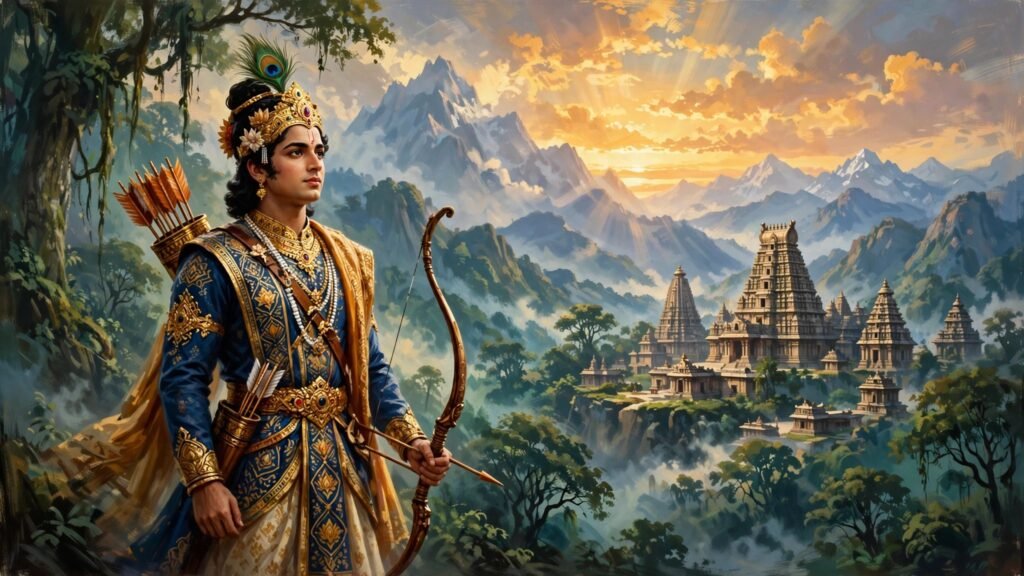
The character posters have played a large role in building anticipation. Ranbir Kapoor as Rama is shown with a bow in a forest setting, with a tagline about righteousness and sacrifice. Yash as Ravana is shown against a battlefield and palace backdrop, underlining the character’s power. Sai Pallavi as Sita, Sunny Deol as Hanuman and Ravi Dubey as Lakshman were also introduced through posters and trailer footage.
Why Ramayana Matters Beyond the Box Office
Ramayana is not only a big-budget release. It is also a test of whether Indian cinema can mount a mythological epic at a global scale and take it to audiences worldwide in the same way Hollywood takes its biggest franchises to the world. Sony’s acquisition of the film for global distribution, announced at San Diego Comic-Con, signalled that the makers and the distributor see it as a film for international audiences, not only for India.
It is also a test of the two-part model. Indian audiences have seen two-part epics succeed before, most notably Baahubali, and Ramayana is often discussed in that context. The difference here is the source material: the Ramayana is a living epic that audiences know deeply, which means expectations are higher and the margin for error is smaller. The film has to satisfy audiences who know the story by heart while also working for viewers who are meeting it for the first time.
For the cast, the film is a career-defining project. For Ranbir Kapoor, it is a chance to play a role that will define how a generation remembers him. For Yash, it is a move from a Kannada blockbuster star to a pan-Indian producer-actor. For Sai Pallavi, it is one of the most visible roles of her career. For Sunny Deol, it is a return to a mythological role at a time when his screen presence has found a new audience.
How to Watch Ramayana Part 1
Ramayana: Part 1 is playing in cinemas only. It is not available on streaming at the time of release, and the makers have positioned the theatrical experience — especially IMAX and 3D — as the intended way to watch it. Audiences can check local cinema listings for showtimes in Hindi, Tamil, Telugu, Kannada or Malayalam, and for IMAX and 3D screenings where available.
Families planning to watch together should note the PG-13 rating in the United States, which reflects intense action sequences and depictions of violence. Local certification and guidance may differ by country, so it is worth checking the rating shown by the cinema before booking for younger children.
Part 2 is planned for Diwali 2027. That means audiences who watch Part 1 will have a year to wait for the conclusion, and the first film is designed with that gap in mind. The second film will carry the search for Sita, the crossing to Lanka and the war with Ravana, which are the parts of the epic many audiences are most waiting to see on this scale.
FAQs
When was Ramayana Part 1 released?
Ramayana: Part 1 was released worldwide in cinemas on November 5, 2026. Part 2 is planned for Diwali 2027.
Who plays Ram in Ramayana?
Ranbir Kapoor plays Lord Ram. He is also reported to play a dual role as Lord Parashurama.
Who plays Sita and Ravana in Ramayana?
Sai Pallavi plays Sita and Yash plays Ravana. Sunny Deol plays Hanuman and Ravi Dubey plays Lakshmana.
Who directed Ramayana?
Ramayana is directed by Nitesh Tiwari, known for Dangal and Chhichhore. It is produced by Namit Malhotra’s Prime Focus Studios with DNEG and Yash’s Monster Mind Creations.
What is the story of Ramayana Part 1?
Part 1 covers Rama’s early life, his marriage to Sita and the start of his exile. Reports point to a cliffhanger around Sita’s abduction, with the search for Sita and the war in Lanka left for Part 2.
In which languages is Ramayana released?
The film was released in Hindi, Tamil, Telugu, Kannada and Malayalam, with a worldwide release by Sony Pictures International Releasing.
Who composed the music for Ramayana?
A. R. Rahman composed the music and Hans Zimmer created the original background score.
Is Ramayana Part 1 available on OTT?
No. Ramayana: Part 1 was released in cinemas only. No streaming release has been announced at the time of its theatrical release.