Burnt, Flooded, Rebuilt Again — Beging’s Hanging Bridge Refuses to Die
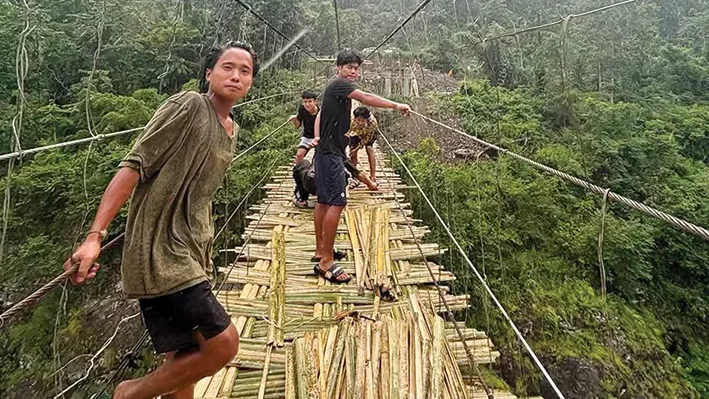
--- # Burnt, Flooded, Rebuilt Again — Beging's Hanging Bridge Refuses to Die Every time the river takes it away, the people of Beging come back and rebuild it with their own hands. That, in itself, says everything about this village. **A Bridge That Holds a Village Together** Deep in Arunachal Pradesh's Siang district, the village of Beging depends on a humble bamboo-and-rope hanging bridge called *Pebing Ie'am* to stay connected to the rest of the world. This bridge — swaying over the river, built without government contracts or heavy machinery — is the only link between Beging and Boleng, the Siang district headquarters. Students cross it to reach school. Farmers carry their produce over it. Elders make their way to hospitals on the other side. Without it, Beging is, for all practical purposes, cut off. **Six Decades of Survival** The story of Pebing Ie'am is not a short one. Village elders say the bridge was first constructed back in 1964. It stood for decades as the village's lifeline, until the floods of 2000-01 tore it away. But Beging didn't wait for a government order. The community rebuilt the bridge themselves, with support from the people of Dosing Rengo Lilleng village — a quiet, powerful act of solidarity that most official records probably never captured. That kind of resolve doesn't come from a policy paper. It comes from knowing exactly what's at stake. **Protest, Fire, and Another Setback** Then came June 2025. The bridge was reportedly burnt by protesters during an agitation against the Siang Upper Multipurpose Project (SUMP), and this happened in the presence of a magistrate and armed forces. Think about that for a moment — a bridge that generations built, reduced to ash, in full view of the authorities. Whatever the politics surrounding the SUMP agitation, what was lost that day was not just timber and rope. It was someone's route to a doctor, a child's path to school, an old man's connection to the market. **Coming Together, Again** Villagers have now come together once more to reconstruct Pebing Ie'am through their own efforts, demonstrating that same community spirit that has carried Beging through every crisis. Work is ongoing. And while there is no word yet about any government support stepping in, the people aren't waiting around. They never really have. **More Than Just a Bridge** There's something quietly remarkable about a community that rebuilds the same bridge three times across six decades — each time from scratch, each time without being asked. Pebing Ie'am is not just a structure. It is Beging's refusal to be forgotten, its insistence on staying connected, its testament that when the state looks away, a village can still look after itself. The river can break it. Fire can burn it. But it seems the people of Beging will simply build it again. --- **② ARTICLE TAGS** Beging village, Pebing Ie'am, hanging bridge, Siang district, Boleng, Arunachal Pradesh, bamboo bridge, community rebuild, SUMP protest, bridge fire, bridge reconstruction, traditional bridge, village connectivity, flood damage, 2025 protests, Siang river, remote village, community cooperation, indigenous infrastructure, North East India, rural connectivity, bridge repair, tribal community, community effort, village resilience, Arunachal news, Siang Upper Multipurpose Project, bridge destroyed, village bridge --- **④ SOCIAL MEDIA HASHTAGS** #BegingVillage #PebingIeam #ArunachalPradesh #HangingBridge #SiangDistrict #Boleng #CommunityResilience #BridgeRebuild #NorthEastIndia #ArunachalNews #SUMP #VillageConnectivity #TraditionalBridge #BambooAndRope #RuralArunachal #AbotaniTV #SiangRiver #PeoplesPower #TribalResilience #RebuildingTogether

Every time the river takes it away, the people of Beging come back and rebuild it with their own hands. That, in itself, says everything about this village. A Bridge That Holds a Village Together Deep in Arunachal Pradesh’s Siang district, the village of Beging depends on a humble bamboo-and-rope hanging bridge called Pebing Ie’am … Read more