Learning how to clean grout without bleach is the smart move for most homes. Bleach is harsh, it smells terrible, it can damage colored grout, and it is unsafe on natural stone. Yet grout still needs real cleaning power, because those narrow lines between tiles trap soap scum, hard water minerals, cooking grease, and mildew. Over time white grout turns gray or yellow, and bathroom grout can develop dark spots that make the whole room look dirty even when the tiles are spotless. The good news is that several gentler cleaners restore grout just as well, and this guide covers seven of them, with clear advice on which method fits each situation.
Grout is porous by nature. Unlike glazed tile, which wipes clean easily, grout absorbs moisture and dirt deep into its surface. That is why a quick mop never fixes dingy grout lines, and why the right technique matters more than the strongest chemical. The methods below use common household products, a little patience, and the right tools. Work in small sections, test each cleaner in a hidden spot first, and always seal your grout when you are done so it stays clean far longer.
Why Grout Gets Dirty
Understanding why grout darkens helps you pick the right fix. In bathrooms, the main culprits are soap scum, body oils, and mildew that thrives in warm, damp air. In kitchens, grease and food splashes stain floor grout near the stove and sink. In entryways and mudrooms, tracked-in dirt grinds into grout lines with every footstep. Hard water leaves mineral deposits that build up into a dull film, and in showers the constant moisture lets mold take hold in the pores of the grout.
Age matters too. Grout that was never sealed absorbs stains from the first day, while sealed grout resists them for years. If your grout has never been sealed, cleaning will help, but sealing afterward is what keeps the results. Before you start, identify the type of grout you have. White cement grout can handle most cleaners, colored grout needs gentler treatment to avoid fading, and natural stone tiles such as marble or travertine need special care because acidic cleaners can etch the stone itself.
What You Need
Gather a stiff grout brush or an old toothbrush, a spray bottle, baking soda, hydrogen peroxide, distilled white vinegar, dish soap, oxygen bleach powder, lemons, table salt, and a steam cleaner if you own one. A grout brush with narrow, firm bristles reaches into the grout line without scratching the tile. An old toothbrush works for small areas but is slow for a whole floor, so invest in a proper grout brush if you are cleaning more than a shower stall.
Wear rubber gloves for every method, and open a window or run the bathroom fan for ventilation. Keep a bucket of clean water and several rags nearby for rinsing. Never mix cleaners in the same container, and work in sections of about three or four feet so the cleaning paste does not dry out before you scrub it. Patience is the real secret here: most grout methods need ten to twenty minutes of dwell time to work.
Method 1: Baking Soda Paste
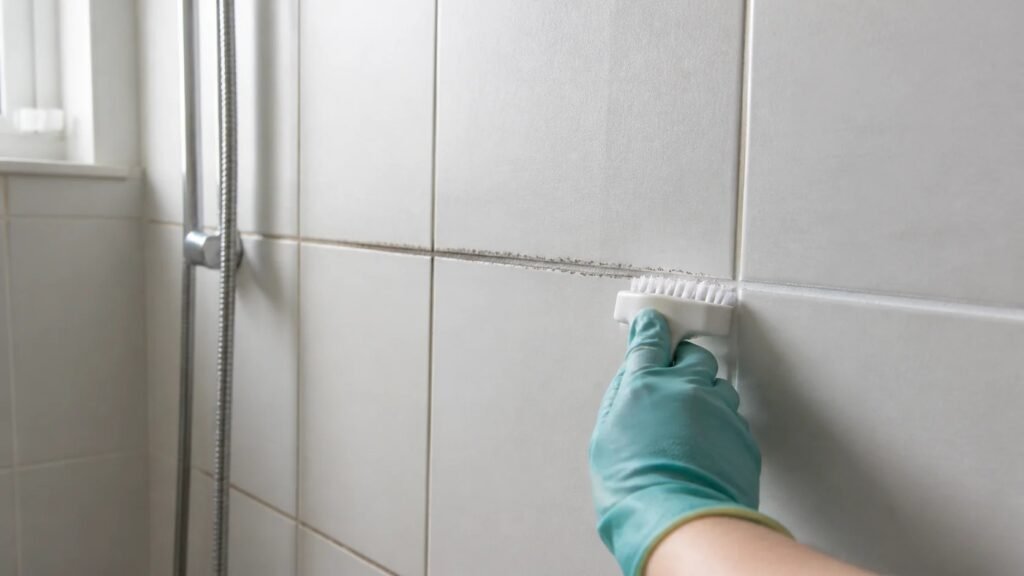
Baking soda paste is the simplest starting point and the safest for colored grout. Mix three parts baking soda with one part water to form a thick paste. Spread it along the grout lines with your finger or a small spatula, let it sit for fifteen minutes, then scrub with a grout brush using short, firm strokes. Rinse with clean water and wipe dry.
This method handles light to moderate dirt well, but it may not be enough for deep stains or mold. Its strength is safety: it will not fade colored grout, damage tile, or harm natural stone. Use it as your first attempt on any grout, and move to a stronger method only if the paste leaves stains behind. For maintenance cleaning every month, baking soda paste alone is often all you need.
Method 2: Hydrogen Peroxide Paste
Hydrogen peroxide is the strongest bleach-free option for white grout. Mix baking soda with three percent hydrogen peroxide instead of water to make a paste, apply it to the grout lines, and let it sit for twenty to thirty minutes. Scrub with a grout brush, then rinse thoroughly. The peroxide gently lightens stains without the harsh fumes or fabric damage of chlorine bleach.
Test this method on colored grout first, because peroxide can lighten some pigments. On white grout it is remarkably effective, often restoring lines that looked permanently gray. Do not use a concentration stronger than three percent, and do not mix peroxide with vinegar in the same application. For moldy shower grout, this is usually the best first choice after plain baking soda paste.
Method 3: Vinegar and Baking Soda Fizz
The classic fizzing combination works well on soap scum and mineral buildup. Sprinkle baking soda along the grout lines, then spray distilled white vinegar over it. The mixture will fizz as the acid reacts with the baking soda. Let it sit for ten minutes, scrub with a grout brush, and rinse with clean water.
This method is satisfying and effective on bathroom grout, where soap scum is the main problem. The fizz helps lift grime out of the pores. However, never use vinegar on natural stone tiles such as marble, travertine, or limestone, because the acid etches the stone surface and leaves dull marks that cannot be wiped away. If your tile is natural stone, skip this method entirely and use baking soda paste or steam instead.
Method 4: Steam Cleaning
A steam cleaner is the chemical-free way to deep clean grout. The hot steam loosens embedded dirt and kills mold and bacteria without any cleaning product at all. Attach the narrow nozzle or grout brush tool, hold it close to the grout line, and move slowly along each line. Wipe away the loosened grime with a cloth as you go.
Steam works best as a follow-up after a paste treatment, but it can also stand alone for grout that is dirty rather than stained. It is ideal for households with children or pets, for people sensitive to cleaning chemicals, and for natural stone floors where acidic cleaners are off limits. The main drawback is cost: a good steam cleaner is an investment, though it pays for itself across many cleaning jobs beyond grout.
Method 5: Oxygen Bleach Soak
Oxygen bleach, sold as a powder, is a gentle whitener that is safe for colored grout and most tile. Dissolve the powder in warm water according to the package directions, pour it over the grout or apply it with a cloth, and let it sit for thirty minutes to an hour. Scrub the lines, rinse well, and let the floor dry.
Oxygen bleach is different from chlorine bleach: it contains no chlorine, produces no harsh fumes, and will not damage fabric or fade most colored grout. It is especially good for large floor areas, since you can mop the solution across the whole floor and let it work while you take a break. For stubborn stains, make a thick paste of the powder with a little water and leave it on the grout overnight before scrubbing.
Method 6: Lemon and Salt Scrub
For small areas and light stains, a lemon and salt scrub is a fresh-smelling natural option. Cut a lemon in half, dip the cut side in table salt, and rub it directly along the grout lines. The citric acid dissolves mineral deposits and soap scum, while the salt provides gentle abrasion. Let the juice sit for ten minutes, scrub with a brush, and rinse.
This method works nicely on sink surrounds and small bathroom areas, but it is slow for a whole floor. Like vinegar, lemon juice is acidic, so do not use it on marble, travertine, or other natural stone. It is best reserved for ceramic and porcelain tile in small spaces where you want a pleasant scent and a chemical-free clean.
Method 7: Dish Soap and Hot Water for Maintenance
Once your grout is clean, keeping it that way takes very little effort. A few drops of dish soap in hot water, applied with a stiff brush once a week in the shower and once a month on floors, prevents new buildup from setting in. Dish soap cuts grease and body oils without damaging grout or tile, and it is safe for every surface.
The key is consistency. Grout that gets a quick weekly scrub never develops the deep stains that demand hours of work. Pair this habit with good ventilation: run the bathroom fan during and after every shower, and squeegee shower walls when you finish. Dry grout grows far less mold than grout that stays damp for hours.
Colored Grout and Natural Stone: Special Cautions
Colored grout needs the gentlest methods. Start with baking soda paste or oxygen bleach, and test hydrogen peroxide or vinegar in a hidden corner before using them on a visible area. If a cleaner lightens the color in the test spot, stop and use a different method. Never use chlorine bleach on colored grout, since it strips the pigment unevenly and leaves patchy lines.
Natural stone tile needs even more care. Acids such as vinegar and lemon juice etch marble, travertine, and limestone permanently. Use only pH-neutral cleaners, baking soda paste, or steam on stone floors. When in doubt about your tile type, check with the installer or test in the least visible corner you can find. A damaged stone tile costs far more to fix than a dirty grout line.
Sealing Grout After Cleaning
Sealing is the step that makes your hard work last. Once the grout is fully clean and completely dry, apply a penetrating grout sealer with a small brush or applicator bottle. Work it into the lines, wipe excess sealer off the tile surface, and let it cure for the time stated on the product, usually a full day before the area gets wet again.
Sealed grout resists water, soap scum, and stains, so future cleaning takes minutes instead of hours. Reseal shower grout once a year and floor grout every two years, or whenever water stops beading on the surface. This single habit is the difference between grout that stays bright and grout that needs deep cleaning every few months.
Cleaning Grout Room by Room
In the bathroom, focus on the shower and the floor near the tub, where moisture and soap scum concentrate. Work top to bottom so dirty rinse water does not run over clean grout. The same bleach-free approach works across the bathroom: if you are already cleaning a bathtub without bleach, you can treat the grout around it in the same session with the same gentle products.
In the kitchen, grease is the enemy. Start with dish soap and hot water to cut the grease, then follow with a baking soda paste or oxygen bleach soak on stained lines. In entryways, vacuum and sweep first so grit does not scratch the tile while you scrub. For shower glass and fixtures, the same gentle philosophy applies, and if soap scum coats your shower doors too, see our guide to removing soap scum from the shower for a matching bleach-free routine.
Mistakes to Avoid
The most common mistake is reaching for chlorine bleach first. It may whiten grout temporarily, but it weakens grout over time, damages colored grout, and releases fumes that are dangerous in a small closed bathroom. Another mistake is scrubbing with a metal brush or steel wool, which scratches tile glaze and gouges grout, creating new places for dirt to hide.
Do not let cleaning paste dry completely on the grout before scrubbing, since dried paste is hard to remove and can leave a white film. Do not mix vinegar and bleach, or peroxide and vinegar, in the same cleaning session without rinsing thoroughly between them. Finally, do not skip sealing. Cleaning without sealing is like washing a car and parking it under a tree: the results will not last.
FAQ
What is the best way to clean grout without bleach?
For most homes, a paste of baking soda and hydrogen peroxide is the best all-round method. It whitens white grout, kills mold, and has no harsh fumes. For colored grout, use plain baking soda paste or oxygen bleach instead.
Can vinegar damage grout?
Vinegar is safe on cement grout and ceramic tile, but it can etch natural stone such as marble and travertine. It can also wear down grout sealer over time, so rinse well and reseal after using vinegar regularly.
How do I get black mold out of shower grout?
Apply a hydrogen peroxide and baking soda paste, let it sit for thirty minutes, scrub with a grout brush, and rinse. Improve ventilation and squeegee the shower after use to stop mold from returning. If mold keeps coming back, the grout may need resealing or replacing.
How often should I clean grout?
Scrub shower grout weekly with dish soap and water, deep clean floor grout monthly, and do a full deep clean with paste or steam every three to six months. Reseal shower grout once a year.
Does steam cleaning really work on grout?
Yes. Steam loosens embedded dirt and kills mold and bacteria without chemicals. It works best on dirty grout and as a follow-up after a paste treatment, and it is the safest option for natural stone floors.
Why does my grout keep turning dark after cleaning?
Unsealed grout absorbs dirt and moisture every time it gets wet. If your grout darkens quickly after cleaning, it almost certainly needs sealing. Clean it thoroughly, let it dry completely, and apply a penetrating grout sealer.