
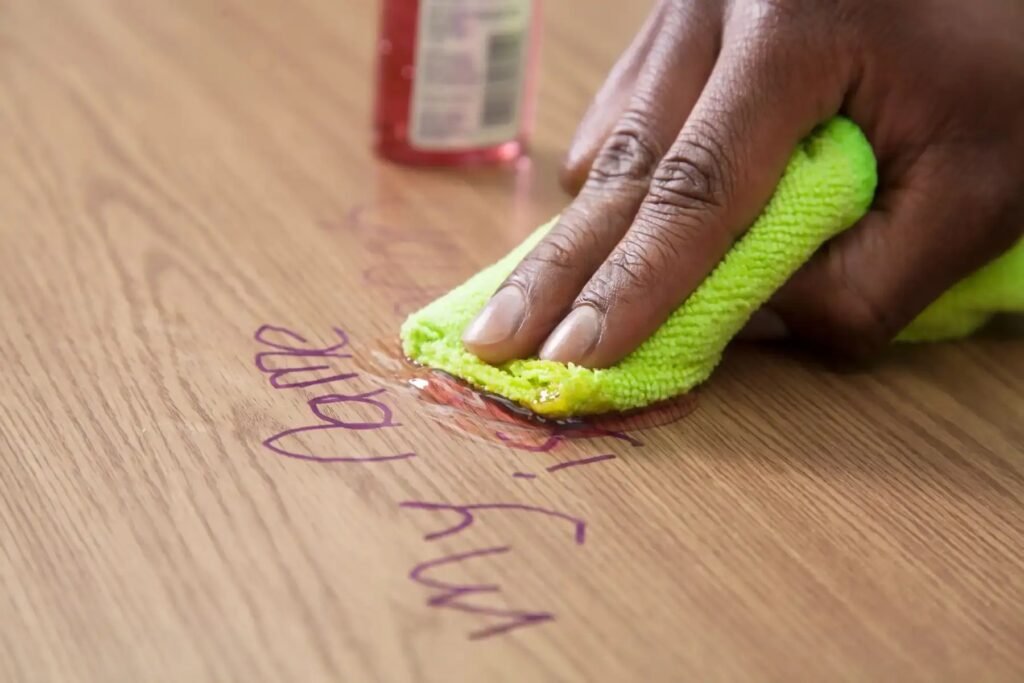
A black streak of permanent marker across a wooden table, dresser, or floor feels like a permanent disaster, especially when there is no rubbing alcohol in the house. The good news is that learning how to remove permanent marker from wood without rubbing alcohol is entirely possible. Several common household products can break down marker ink and lift it off the surface, and most of them are gentler on wood finishes than harsh solvents. The key is to match the method to the type of wood and finish you are dealing with, work gently, and always test on a hidden spot first.
Permanent marker ink is designed to resist water. It contains pigments and dyes in a fast-drying solvent, plus resins that help it bond to surfaces. On sealed or varnished wood, the ink usually sits on top of the finish, which makes it much easier to remove than it looks. On raw wood, the ink can soak into the grain, which calls for a different approach. The methods below cover both situations, starting with the gentlest options.
First, Identify Your Wood and Finish
Before you apply anything to the stain, take thirty seconds to figure out what kind of surface you are working on. The right method depends on it, and the wrong one can damage a finish that was fine a moment ago.
- Sealed or varnished wood: The surface feels smooth and slightly glossy, and water beads on it rather than soaking in. Most tables, dressers, cabinets, and hardwood floors fall into this category. Marker on sealed wood is the easiest kind to remove, because the ink sits on the finish instead of in the wood itself.
- Painted wood: The surface is covered with paint, often with a slight sheen. Marker usually sits on the paint, but aggressive scrubbing can take the paint off along with the ink, so gentle methods matter here.
- Laminate or veneer: These surfaces look like wood but have a thin plastic or paper layer on top. They tolerate mild cleaners well, but harsh solvents and heavy abrasion can wear through the thin top layer.
- Raw or unfinished wood: The surface feels dry and slightly rough, and water soaks straight in. Marker ink sinks into the open grain, so surface cleaners alone may not reach it. These stains need a method that draws the ink out or light sanding as a last resort.
If you are unsure what finish you have, put a single drop of water on a hidden area. If it beads up, the wood is sealed. If it darkens the wood and soaks in, the wood is unfinished.
What You Will Need
You probably already have everything needed for at least two or three of these methods:
- Baking soda and water for a gentle paste
- Plain white toothpaste (not gel, not whitening strips or colored paste)
- Aerosol hairspray or clear hand sanitizer
- A melamine foam sponge, often sold as a magic eraser
- Non-acetone nail polish remover
- Sunscreen lotion or a pencil eraser for small marks
- Clean white cloths, cotton balls, and paper towels
- A soft toothbrush and a bowl of warm water
- Furniture polish, paste wax, or mineral oil for finishing afterward
Use white cloths rather than colored towels, which can transfer their own dye onto damp wood and leave a second mark.
The Golden Rules Before You Start
Every method below works better when you follow a few basic rules:
- Always test first. Try your chosen method on a hidden area, such as the underside of a tabletop, the inside of a drawer front, or the back leg of a chair. Wait a few minutes and check for any change in color, shine, or texture before treating the visible stain.
- Work gently and patiently. Light, repeated passes remove marker ink layer by layer. Pressing hard or scrubbing aggressively wears through the finish and leaves a dull spot that stands out more than the marker did.
- Work from the outside in. Start at the edges of the mark and move toward the center. This keeps the dissolved ink from spreading outward into clean wood.
- Keep the area only as wet as needed. Wood and standing water are not friends. Use damp cloths rather than pouring liquids onto the surface, and wipe the area dry as soon as you finish each pass.
- Stop while you are ahead. If a method has removed most of the mark and the rest is faint, switch to the mildest approach for the remainder rather than escalating to a stronger chemical. A faint shadow is far easier to live with than a damaged finish.
Method 1: Baking Soda Paste (Best First Choice)
Baking soda is the safest place to start on sealed wood. It is a very mild abrasive, fine enough to lift ink off a finish without scratching it, and it is cheap and odorless. This method works especially well on fresh marker and light marks on tables and cabinets.
- Mix two tablespoons of baking soda with just enough water to form a thick paste, about the consistency of toothpaste.
- Spread the paste over the marker stain with your fingertip or a soft cloth, covering the mark completely.
- Let it sit for three to five minutes so the paste can soften the ink.
- Rub very gently in small circles with a soft cloth, following the direction of the wood grain.
- Wipe the paste away with a clean, damp cloth, then dry the area immediately.
- Check the result. If a faint shadow remains, repeat the process once or twice. Each pass should lighten the mark further.
Baking soda paste also works as a first step before a stronger method, removing the top layer of ink so the next product can work on what is left. Do not press hard on raw wood, since the fine grit can lodge in open grain. The same gentle-first principle applies to other household stains, as shown in our guide to removing super glue from wood without acetone.
Method 2: White Toothpaste (Not Gel)
Plain white toothpaste contains the same kind of mild abrasive as baking soda paste, plus a small amount of detergent. It is one of the most reliable ways to remove marker from finished wood, and it works on small marks, thin lines, and even marker that has been there for a few days.
- Squeeze a pea-sized amount of plain white toothpaste directly onto the mark. Avoid gel toothpaste, whitening formulas with peroxide, and colored pastes, which can stain or lighten the finish.
- Rub it gently in small circles with a soft cloth or an old toothbrush, following the wood grain.
- Keep rubbing for a minute or two. You should see the toothpaste picking up color as the ink loosens.
- Wipe the toothpaste away with a damp cloth, then dry the area.
- Repeat if needed. Stubborn marks may take two or three rounds, but each round should make a visible difference.
Toothpaste works best on smooth, sealed surfaces such as tabletops, varnished dressers, and finished shelves. On painted wood, test first and use a light touch, since the abrasive can dull glossy paint. Once the mark is gone, a dab of furniture polish restores the shine.
Method 3: Hairspray or Hand Sanitizer
Most aerosol hairsprays and clear hand sanitizers contain alcohol, which is the same ingredient that makes rubbing alcohol effective against marker ink. Since the goal is to remove permanent marker from wood without rubbing alcohol, these everyday products are a practical substitute, and they are often already sitting in a bathroom cabinet.
- Spray hairspray directly onto the mark until the area is damp, or squeeze a small amount of clear hand sanitizer onto a white cloth.
- Let it sit for about a minute so the alcohol can soften the ink.
- Blot and wipe gently with a clean white cloth, turning the cloth to a fresh section as color transfers.
- Repeat the spray-and-wipe cycle until the color stops transferring.
- Wipe the area with a damp cloth to remove any sticky residue, then dry it immediately.
Choose a basic aerosol hairspray, and a clear, fragrance-free hand sanitizer if you can, since colored gels may add dye. Keep both products away from open flames and work in a ventilated room. This method is particularly useful for marker on laminate and painted wood, where abrasive methods might dull the surface.
Method 4: Magic Eraser (Melamine Foam Sponge)
A magic eraser is a melamine foam sponge that works like an extremely fine sandpaper. It is very effective on marker, and it is often the fastest method on sealed wood. It also carries the most risk to the finish, so treat it as a mid-strength option, not a first resort.
- Dampen the sponge lightly and squeeze out the excess water. It should feel just damp, not dripping.
- Rub the mark very gently, using light pressure and short strokes along the grain.
- Check the surface every few seconds. Stop as soon as the ink is gone.
- Wipe the area with a damp cloth and dry it right away.
The danger with a magic eraser is that it removes a microscopic layer of whatever it touches, including varnish, lacquer, and paint. On a glossy finish, even a few seconds of rubbing can leave a dull patch. Always test on a hidden spot, use the lightest pressure that works, and never use a magic eraser on raw wood, waxed wood, an oiled finish, or an antique. For valuable pieces, stick with baking soda paste or toothpaste.
Method 5: Non-Acetone Nail Polish Remover
Non-acetone nail polish remover can dissolve marker ink effectively, but it is a solvent, so it deserves respect. It can soften varnish, lacquer, and some paints if it sits on the surface too long. Use it only on sealed wood, only after gentler methods have failed, and only with a spot test first.
- Test on a hidden area and wait several minutes to confirm the finish is unaffected.
- Dampen a cotton ball with a small amount of non-acetone remover. Never pour it directly onto the wood.
- Dab the mark gently, lifting the cotton ball often to check how much color is transferring.
- Work in short bursts of a few seconds, wiping with a damp cloth between passes so the solvent does not pool on the surface.
- Once the mark is gone, wipe the area with a damp cloth, dry it, and apply a little furniture polish to restore the shine.
Never use acetone-based nail polish remover on wood. Acetone is far stronger and can strip varnish and lacquer in seconds, leaving a permanent pale blotch. Read the label and confirm the bottle says acetone-free before you start. Our guide to removing nail polish from clothes without acetone covers the same distinction for fabrics.
Method 6: Sunscreen or a Pencil Eraser (Small Marks)
For a small mark, a thin line, or a child’s doodle on a table edge, two surprisingly simple tools can work. Sunscreen lotion contains solvents that break down marker ink, and a clean pencil eraser can lift fresh ink off a smooth sealed surface.
To use sunscreen, rub a small dab of ordinary lotion sunscreen over the mark with a soft cloth, let it sit for a minute, and wipe it away with a damp cloth, then clean off any greasy residue with a drop of dish soap and water. To use a pencil eraser, rub the mark gently with a clean white eraser and wipe the area clean afterward. Both methods cost nothing and carry almost no risk to the finish, so they are worth trying before moving to stronger options.
Marker on Unfinished or Raw Wood
Raw wood is the hardest case, because the ink sinks into the open grain instead of sitting on top of a finish. Start with the gentlest approach and escalate only as far as needed.
- Try baking soda paste first, applied gently and wiped away carefully so the grit does not lodge in the grain.
- If the mark persists, try hairspray or hand sanitizer, dabbing with a cloth and letting the alcohol draw the ink upward out of the grain.
- For a stubborn stain, lightly sand the area with fine-grit sandpaper, around 220 grit, working only on the stained spot and always sanding along the grain, never across it. Sand just enough to remove the stained surface fibers, then wipe away the dust with a tack cloth.
- After sanding, the spot will look lighter and rougher than the surrounding wood. Blend it by applying the same finish the rest of the piece has, such as a matching stain, oil, or clear coat, and let it dry fully.
Sanding is a last resort, because it removes wood and changes the surface. If the piece is valuable, an antique, or a floorboard in the middle of a room, call a professional refinisher instead of sanding it yourself.
Mistakes to Avoid
A few common errors turn a fixable mark into lasting damage:
- Reaching for acetone or paint thinner first. Strong solvents can strip a finish in seconds. Always start with the mildest method and escalate only if needed.
- Scrubbing hard with an abrasive pad. Steel wool, scouring pads, and heavy pressure wear through varnish and paint, leaving a dull patch that is harder to fix than the marker was.
- Using a colored cloth or printed paper towel. Dye can transfer onto damp wood and create a second stain.
- Letting liquids pool on the wood. Standing water or solvent can raise the grain, cloud the finish, or leave a white ring. Use damp cloths, wipe dry promptly, and never leave the surface wet.
- Skipping the spot test. Every finish reacts differently. A product that is safe on one table can cloud the finish on another. Test on a hidden area every time.
- Using a magic eraser on waxed, oiled, or antique wood. The foam removes the finish along with the ink. Save it for sturdy modern sealed surfaces only.
- Painting over the mark without sealing it first. Marker ink can bleed through ordinary paint. Seal it first with a stain-blocking primer, or the outline may show through the new coat.
Restoring the Finish After the Marker Is Gone
Removing the ink is only half the job. The cleaning process can leave the treated spot looking slightly dull or dry compared with the surrounding wood. A few minutes of aftercare makes the repair disappear.
- Sealed wood: Apply a small amount of furniture polish or paste wax with a soft cloth, buffing gently along the grain until the shine matches the rest of the piece.
- Oiled wood: Rub in a few drops of mineral oil or a matching furniture oil, let it soak for ten minutes, and wipe away the excess.
- Painted wood: If the cleaning dulled the paint, a light touch-up with matching paint may be needed. Keep a small labeled jar of touch-up paint for each painted piece in the house.
- Small scratches from cleaning: A furniture touch-up marker or a wax repair stick in a matching shade can fill light scratches and blend the area.
Once the finish is restored, the spot should be invisible in normal light. A faint shadow blends into the wood’s natural grain variation far better than a shiny patch of stripped finish.
Preventing the Next Marker Accident
Permanent markers and wood surfaces meet most often in homes with children, craft projects, or a home office. A few habits keep the next accident from becoming a project:
- Keep permanent markers in a drawer or a closed container rather than loose on a desk or table.
- Use a cutting mat, craft mat, or thick cardboard underneath paper when children draw or when labeling items near wood.
- Put a washable tablecloth or a clear table protector on surfaces that see regular craft work.
- Choose washable markers for children and for labeling, reserving permanent markers for jobs that truly need them.
- Teach children that markers stay on paper. A simple rule, repeated often, prevents most accidents.
If marker accidents happen often in your home, keep a small cleaning kit in one place: baking soda, white toothpaste, a magic eraser, and a few white cloths. Having the supplies ready means you can treat a fresh mark within minutes, when it is easiest to remove. Fresh marker comes off far more easily than marker that has had days to cure, so speed matters more than the product you choose. The same quick-response habit helps with other household stains, as our guide to removing melted crayon from fabric without ironing explains, where acting fast and working gently matters more than reaching for the strongest cleaner.
Frequently Asked Questions
Does baking soda remove permanent marker from wood?
Yes, a paste of baking soda and water is one of the safest and most effective methods for sealed wood. Apply the paste, let it sit for a few minutes, rub gently along the grain, and wipe it away. Repeat once or twice for stubborn marks.
Can toothpaste remove Sharpie from a wood table?
Yes, plain white toothpaste works well on sealed wood tables. Its mild abrasive lifts the ink without harsh chemicals. Use non-gel white toothpaste, rub gently in circles along the grain, wipe clean, and repeat if needed. Avoid whitening or colored toothpaste.
Will a magic eraser damage wood furniture?
It can, because the foam works like an extremely fine sandpaper and removes a microscopic layer of finish along with the ink. Use it only on sturdy modern sealed wood, with light pressure, after a spot test, and stop as soon as the ink is gone. Never use it on waxed, oiled, or antique wood.
How do I remove permanent marker from unfinished wood?
Try baking soda paste and hairspray or hand sanitizer first to draw the ink out of the grain. If the mark remains, lightly sand the stained area with fine-grit sandpaper along the grain, wipe away the dust, and reapply a matching stain or finish to blend the spot.
Can I use nail polish remover to remove marker from wood?
Only use a non-acetone nail polish remover, and only on sealed wood after a spot test. Dab it on with a cotton ball in short bursts and wipe the area dry between passes. Never use acetone-based remover on wood, since it can strip varnish and lacquer in seconds.
Will permanent marker come off wood on its own over time?
No, permanent marker does not fade away on its own indoors. Sunlight may lighten it slightly over a long period, but the mark will remain visible. It is best to treat it promptly with one of the gentle methods above, while the ink is still fresh and easiest to lift.












1 thought on “How to Remove Permanent Marker From Wood Without Rubbing Alcohol”
Comments are closed.