
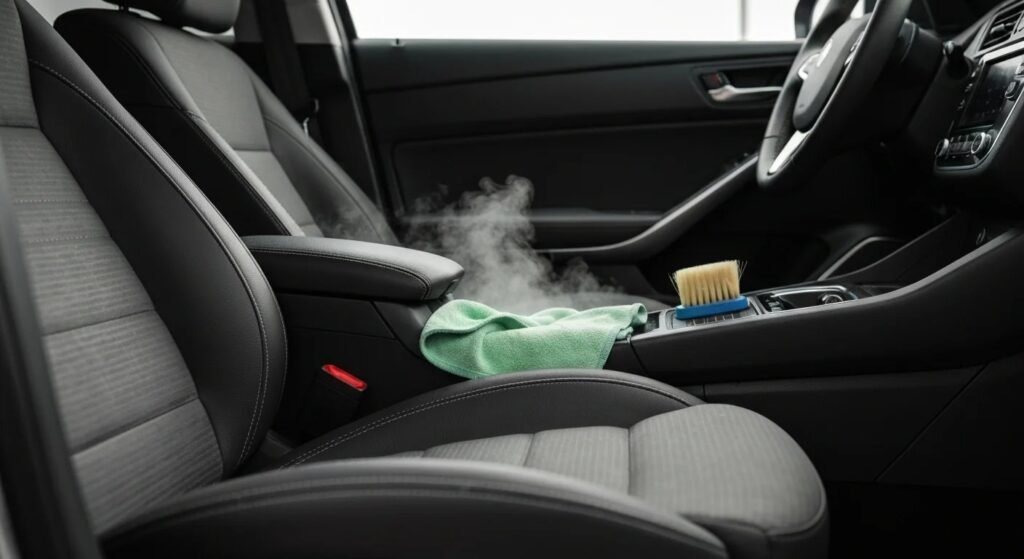
Learning how to get rid of a musty smell in a car without an air freshener starts with one honest fact: an air freshener never fixes the problem. It only covers it up for a few days while the real cause keeps growing underneath the seats. A musty smell means moisture is trapped somewhere in the car, and mould or mildew is feeding on it. Until that moisture is gone, the smell will keep coming back. This guide shows you how to find the damp spot, dry it out properly, and clean the surfaces that hold the smell, using simple household items and no air freshener at all.
Why Your Car Smells Musty
A musty smell is almost always a moisture problem. Water gets into a car in more ways than most drivers realise. Wet shoes and umbrellas soak the floor mats. A spilled drink seeps into the carpet and the padding underneath. Rain leaks in through a worn door seal, a clogged sunroof drain, or a cracked window seal. The air conditioning system itself can breed mould when condensation sits in the evaporator box and the vents. Even leaving the windows shut for weeks in humid weather can trap enough damp air inside to start mildew growing on fabric.
Once moisture is trapped, mould and mildew need only warmth and something to feed on, and a car interior offers plenty: carpet fibres, seat foam, dust, and spilled food. The smell you notice is the gas released by mould colonies as they grow. That is why the smell gets worse on hot days and after the car has been sitting closed up in the sun. It also explains why spraying a freshener does nothing lasting: the mould underneath keeps growing and keeps releasing the same musty gas.
Step 1: Find the Source of the Damp
Before you clean anything, hunt for the damp spot. Start with the obvious places: lift the floor mats and press your hand firmly into the carpet underneath, especially on the passenger side and in the footwells. Carpet can feel dry on top while the padding below is soaking wet. Check under the seats and in the boot, where a leaking seal or a spilled bottle often goes unnoticed for weeks. Look for water stains, dark patches, or a faint white bloom on fabric, which are all signs of past or present damp.
Check the less obvious places too. Run your fingers along the rubber door seals and look for cracks or gaps. If the car has a sunroof, the drain tubes in the corners can clog with leaves and send rainwater down inside the pillars and into the headliner. Sniff the air coming from the vents with the air conditioning on; a sour, damp smell from the vents points to mould in the evaporator. If you find a leak, fix it first. No amount of cleaning will hold if water keeps coming in every time it rains. A blocked sunroof drain can often be cleared with a gentle blast of compressed air, and a worn door seal is a cheap part to replace.
Step 2: Dry Everything Out Completely
Drying is the single most important step, and it is the one most people rush. Take out the floor mats, seat covers, and anything loose in the boot. If the carpet is wet, press old towels firmly into it to soak up as much water as you can, then stand on the towels to press them deeper into the padding. A wet-and-dry vacuum is even better: run it slowly over the carpet in overlapping passes and you will be surprised how much water comes out.
Park the car in the sun with all the doors and the boot open for several hours. Sunlight and moving air are the cheapest dryers you have, and ultraviolet light also slows mould growth. If the weather is poor, run the car’s heater on full with the air conditioning on at the same time: the air conditioning pulls moisture out of the air while the heater warms the interior. Do not put the mats back until everything feels completely dry to the touch, including the carpet padding underneath. A surface that is only dry on top will start smelling musty again within days.
Method 1: White Vinegar Spray for Fabric and Carpet
White vinegar is the best first cleaner for a musty car because it kills most mould and mildew on contact and neutralises odour instead of covering it. Mix equal parts white vinegar and water in a spray bottle. Lightly mist the carpets, the fabric seats, and the headliner, holding the bottle about a foot away so the fabric gets damp but not soaked. Do not spray leather seats with vinegar; leather needs its own cleaner, covered below.
Let the vinegar sit for fifteen to twenty minutes so it can work on the mould, then blot the area firmly with clean towels. Work in sections so you can keep track of what you have treated. Open the doors while you work so the vinegar smell can escape; it fades completely once the fabric dries. For a stubborn patch of mildew, spray it a second time and leave it for half an hour before blotting. Vinegar is cheap, safe on most fabrics, and far more effective than a shop-bought fabric spray at removing the smell at its source.
Method 2: Baking Soda Deep Clean for Carpets and Seats
Baking soda is a natural odour absorber, and it works best as a second step after the vinegar treatment. Once the carpets and fabric seats are clean and fully dry, sprinkle a generous layer of baking soda over every fabric surface: the carpets, the floor mats, the fabric seats, and even the boot carpet. Use far more than you think you need. A thin dusting does almost nothing; a thick, even layer is what pulls the trapped smell out of the fibres.
Leave the baking soda in place for at least four hours, or overnight if you can leave the car parked with the windows cracked open. The longer it sits, the more odour it absorbs. Then vacuum it all up thoroughly with a strong vacuum, going over each area twice. Use a crevice tool along the seat seams and under the seats, where baking soda collects. If the smell is still faint after one round, repeat the whole process. Baking soda will not damage fabric, and it leaves no scent of its own behind, which is exactly what you want when you are trying to get rid of a smell rather than add a new one.
Method 3: Activated Charcoal and Coffee Grounds
Once the car is clean and dry, an odour absorber can pull out the last traces of mustiness from the air itself. Activated charcoal is the strongest option. You can buy small charcoal bags made for cars, or make your own by filling an old sock or a mesh bag with loose activated charcoal from a pet or hardware shop. Place one bag under each front seat and one in the boot, and leave them there. Charcoal absorbs odour molecules from the air continuously, and it keeps working for weeks. Once a month, set the bags in the sun for a few hours to refresh them.
Dry coffee grounds work in a similar way and are easy to find. Fill a small open bowl or a sock with fresh, dry coffee grounds and leave it in the car overnight with the windows closed. Coffee is a strong natural odour absorber, and it leaves a faint, pleasant scent that fades quickly. Do not spill the grounds on the carpet, and do not use wet grounds, which will add moisture back into the car.
Clean the Air Conditioning and Replace the Cabin Filter
If the musty smell hits you the moment you switch on the air conditioning, the problem is inside the system. The evaporator box sits behind the dashboard and collects condensation every time the air conditioning runs. When the car is switched off, that moisture sits in the dark and grows mould, which is then blown straight into the cabin the next time you drive. The fix is to clean the evaporator and the vents.
Start with the cabin air filter, which sits behind the glovebox in most cars. Pull it out and hold it up to the light. If it is grey, damp, or smells musty, replace it. A new filter costs little and takes only a few minutes to fit.
Next, with the engine running and the air conditioning on full, spray an evaporator cleaner into the air intake at the base of the windscreen, following the instructions on the can. Finish by running the heater on full for ten minutes to dry the system out. As a habit, switch the air conditioning off a few minutes before you reach your destination and let the fan run, so the evaporator dries out before you park.
Deep-Clean the Seats, Carpets, and Mats
Even after the damp is gone, the smell can live on in the fabric itself. Remove the floor mats and scrub them outside the car with warm water and a small amount of dish soap. A stiff brush works the soap into the fibres and lifts out the dirt that feeds mould. Rinse them well and let them dry completely in the sun before putting them back. Rubber mats can be hosed down and dried the same way, and they are worth cleaning because the carpet underneath them is often the dampest spot in the whole car.
For fabric seats, work in sections with a damp cloth and a little upholstery cleaner or diluted dish soap. Scrub gently, then blot with a clean towel to lift the dirty water out. Avoid soaking the seats: seat foam holds water for days, and a soaked seat is a new mould problem. Leather seats need a dedicated leather cleaner and conditioner, used exactly as the bottle directs. Never use vinegar or baking soda on leather, because both can dry it out and damage the finish.
Mistakes to Avoid
The biggest mistake is reaching for an air freshener before finding the damp. A freshener hides the smell for a few days, then the mustiness comes back stronger because the mould has had more time to grow. The second mistake is cleaning without drying. Spraying vinegar or cleaner onto a wet carpet and then closing the car up just adds more moisture, which is the opposite of what you want. Always dry first, then clean, then dry again.
Do not use bleach inside a car. Bleach can damage fabric and leather, discolour the carpet, and leave fumes that linger in a closed space. Do not soak the seats or the carpet with a hose or a steam cleaner set too high, because water that reaches the padding underneath will take days to dry and can start a new mould colony. Do not ignore a recurring wet patch in the same footwell. If the carpet keeps getting wet, there is a leak somewhere, and you need to find it before the next round of cleaning. Finally, do not leave wet items in the car: gym clothes, wet towels, umbrellas, and spilled drinks are the most common sources of a musty car, and they are all easy to remove.
Keep the Smell From Coming Back
Prevention is mostly about keeping the car dry and aired. Shake out the floor mats once a week and let them dry in the sun when you can. Take wet umbrellas, gym bags, and damp towels out of the car the same day instead of leaving them in the boot. If you spill a drink, blot it up immediately and leave the windows cracked open for an hour so the carpet dries.
Replace the cabin air filter at least once a year, or more often if you drive on dusty roads. Check the door seals and the sunroof drains every few months for cracks and blockages. Leave a charcoal bag under a seat permanently; it costs almost nothing and quietly absorbs moisture and odour between cleans. A car that is kept dry does not go musty, so the real habit to build is a simple one: water stays out, air moves through, and anything wet comes out the same day.
The same find-the-source approach works for musty smells anywhere in the home. Our guide on how to get rid of a musty smell in a closet without baking soda tackles a damp closet the same way, and our article on how to get rid of a musty smell in a basement without a dehumidifier covers a bigger space. For general fabric cleaning, see how to clean a yoga mat without vinegar.
Frequently Asked Questions
What causes a musty smell in a car?
Trapped moisture. Wet carpets, a leaking seal, a clogged sunroof drain, spilled drinks, or condensation in the air conditioning system all let mould and mildew grow, and the smell is the gas those colonies release as they grow.
How do I get rid of a musty smell in my car without an air freshener?
Find and fix the damp source, dry the interior completely, then clean the fabric with white vinegar and baking soda. Replace the cabin air filter and clean the air conditioning system if the smell comes through the vents.
Will baking soda remove a musty smell from car seats?
Yes, when the seats are clean and dry first. Sprinkle a thick layer over the fabric, leave it for at least four hours or overnight, then vacuum thoroughly. Repeat if a faint smell remains. Baking soda absorbs odour but cannot kill mould, so use vinegar first on the mould itself.
Why does my car smell musty when I turn on the air conditioning?
Mould is growing in the evaporator box behind the dashboard, where condensation sits after the air conditioning runs. Replace the cabin air filter, clean the evaporator with a foaming cleaner, and switch the air conditioning off a few minutes before parking so the system dries out.
How long does it take to get a musty smell out of a car?
A light case can be fixed in a day: a few hours of drying in the sun, a vinegar treatment, and an overnight baking soda treatment. A car with soaked carpet padding or a leaking seal can take two or three days of drying and cleaning, plus the time to fix the leak itself.
Can I use vinegar on leather car seats?
No. Vinegar can dry out leather and damage its finish. Use a dedicated leather cleaner and conditioner on leather seats, and keep vinegar and baking soda for fabric seats, carpets, and mats only.













1 thought on “How to Get Rid of a Musty Smell in a Car Without Air Freshener”
Comments are closed.