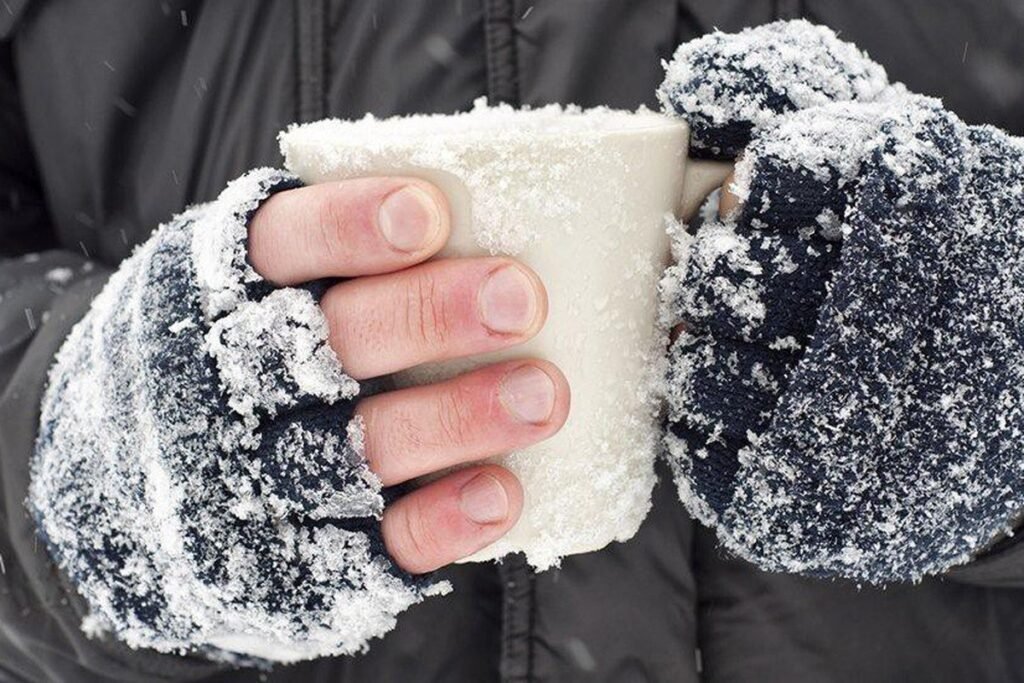
Knowing how to keep your hands warm in winter without gloves matters the moment you step outside and realize you left them behind, or you need your fingers free for your phone, keys, or a camera. Hands get cold first because the body protects its core before its fingers, so the fix is rarely about the hands alone. Warm your core, get blood moving, use friction and shelter, and your hands follow. This guide covers the fastest tricks first, then the habits and gear that keep your hands comfortable through a long cold day, plus what to avoid and when cold hands deserve a doctor’s look.
Warm Your Core First
Your hands are at the end of the line for blood flow, and your body treats them as expendable when your core temperature drops. When you feel chilled, blood vessels in your fingers narrow to keep heat around your chest and organs, which is why your hands can feel icy while your torso feels fine. The fastest way to warm your hands is therefore to warm your core. Add a layer to your torso before you worry about your fingers: a vest, a sweater, or a jacket that seals at the waist and neck makes a real difference. A warm hat matters more than most people expect, because a surprising amount of heat escapes from the head, and a scarf that closes the gap at your neck stops cold air from pouring down inside your jacket. Eat something warm and filling before you go out, since digestion generates heat, and sip a warm drink before you head into the cold. If you are standing still outside, do a few squats or walk in place for a minute; the heat you generate in your legs and core will travel outward to your hands within a few minutes. Think of your hands as a gauge, not the problem itself: when your core is warm and dry, your hands stand a far better chance of staying warm too.
Move to Get Blood Flowing
Movement is the quickest reliable way to push warm blood back into cold fingers, and the exercises are simple enough to do anywhere. Start with arm circles: swing both arms in big, fast circles, like a windmill, for about thirty seconds. The centrifugal force drives blood toward your fingertips, and most people feel a tingle as warmth returns. Follow that by shaking your hands hard, as if you were shaking water off them, for twenty seconds, then clench both hands into tight fists and release them quickly, repeating the squeeze ten or fifteen times. This pumping action works like a second heartbeat for your hands. If you are walking, swing your arms naturally instead of holding them stiff at your sides, and pick up your pace for a few minutes. Brisk walking raises your whole body temperature and keeps circulation strong. For a longer fix, climb stairs, do jumping jacks, or jog lightly on the spot for a minute or two. Even wiggling your fingers inside your pockets helps, because the small muscle movements generate heat and keep blood moving. Move before your hands go numb: once fingers are deeply cold and stiff, movement still helps but takes longer, so move your hands every few minutes whenever you are out in the cold.
Use Rubbing, Friction, and Pressure
When your hands are already cold, friction is the fastest hands-only fix you have. Rub your palms together briskly, as if you were trying to start a fire, for fifteen to twenty seconds. The friction creates heat directly on the skin, and the pressure encourages blood flow. Then rub each finger individually between your thumb and fingers, working from the base of the finger toward the tip, which helps push blood outward. Clap your hands together firmly a dozen times, then press your palms flat against each other and hold them there, letting the trapped warmth build. Another useful trick is to tuck your hands under your arms, against your body, where it is warmest. Hold them there for a minute or two, switching sides so both hands get a turn. You can also press your hands against your neck or the inside of your thighs, which are among the warmest spots on the body. If someone else is with you, ask them to hold your hands between theirs for a minute; shared body heat works quickly. Used together, these simple methods work well: rub, press, and tuck, and repeat until feeling returns. Stop and seek shelter if rubbing causes pain rather than warmth, or if the skin stays pale and waxy.
Use Pockets and Hand Warmers
Your pockets are the best glove substitute you already own, especially coat pockets that sit close to your body. Slip your hands inside and keep them there whenever you are not using them, and wiggle your fingers now and then to keep blood moving. Deep pockets lined with fleece or flannel are warmer than shallow ones, and a coat with hand-warmer pockets placed high on the chest keeps your hands near your core, where it is warmest. If you have a muff, an old-fashioned tube worn around the waist, it is one of the warmest options of all, because both hands share one warm space. Disposable air-activated hand warmers are cheap, light, and very effective: open the packet, shake it, and slip one into each pocket. They warm up within minutes and last for hours, and they are small enough to carry a spare pair. Reusable gel hand warmers work the same way and can be reset in hot water, which makes them a good choice if you want less waste. For a free option, fill a small bottle with warm water and hold it, or wrap it in a cloth and carry it in your pocket. Keep hand warmers in your coat, your car, and your bag during the cold season so you are never caught without one. The trick is to use them early, before your hands go numb, because a warmer can maintain warmth far more easily than it can restore it.
Layering and Mittens as Alternatives
When gloves are not available, layering your hands and switching to mittens can make a big difference. Thin liner gloves, or even a pair of socks pulled over your hands in a pinch, add a layer of insulation that traps warm air next to your skin. Mittens are warmer than gloves because your fingers share one space and warm each other, so if you have a choice, choose mittens for the coldest days. A pair of loose mittens over thin liners gives you both warmth and the ability to slip a hand out briefly when you need your fingers. Keep your wrists covered as well, because bare wrists let heat escape and let cold air in; long sleeves pulled down over the wrist, or a simple wristband, close that gap. The same layering idea applies to the rest of your body: a windproof outer layer stops the wind from stripping heat away, and a snug layer underneath traps warmth. Dry layers matter most: wet fabric pulls heat from your skin far faster than dry fabric, so change out of damp layers as soon as you can. For more ideas on staying comfortable without extra equipment, see how to keep a house cool in summer without air conditioning, and for another simple fix for a dry-air problem in the cold season, see how to get rid of static in hair without hairspray.
Warm Drinks, Food, and Habits That Help
What you drink and eat shapes how warm your hands feel. A hot drink held in both hands warms your fingers directly while the warmth spreads through your body as you sip, so tea, coffee, cocoa, or hot soup are all useful. Sip slowly and enjoy it; gulping a hot drink does not warm you any faster. Hearty food before going out helps too, because your body produces heat as it digests. Spicy food can give a short burst of warmth, since it raises blood flow to the skin, but the effect is brief, so treat it as a bonus rather than a plan. Just as important are the habits that quietly make hands colder. Smoking narrows blood vessels and reduces flow to the fingers, so hands get colder faster and stay cold longer. Caffeine in large amounts can have a similar narrowing effect for some people, so if your hands are always cold, try cutting back and see whether it helps. Alcohol is a trap: it makes you feel warm by pushing blood to the skin, but that heat escapes quickly and your core temperature drops, leaving your hands colder in the end. Stay hydrated, because thick, low-volume blood circulates poorly, and keep moving rather than standing still. Small choices add up, and the people with the warmest hands in cold weather are usually the ones who eat well, stay active, and avoid the habits that choke off circulation.
What to Avoid With Cold Hands
When hands are cold and numb, the instinct is to warm them as fast as possible, but the wrong kind of heat can do real harm. Never plunge numb hands into very hot water or hold them against a radiator, a stove, or a car heater on full blast. Numb skin cannot judge temperature properly, so it is easy to burn yourself without feeling it, and a sudden blast of heat on icy skin can cause pain and tissue damage. Instead, warm your hands gradually: start with lukewarm water, or hold them against your body, and let feeling return slowly. Avoid rubbing snow on cold hands, an old folk remedy that makes things worse by cooling the skin further and scraping it raw. Do not ignore hands that have gone white, waxy, or blotchy, or fingers that feel wooden and will not bend. Those are signs that the cold has gone beyond discomfort, and the right move is to get indoors, warm up gently, and keep the hands still while they recover. Do not drink alcohol to warm up, and do not keep working outside with numb hands as if nothing were wrong. Numb fingers lose grip and coordination, which makes slips, cuts, and dropped tools more likely. Treat numbness as a warning, not an inconvenience, and head for warmth before the problem grows.
When Cold Hands Need a Doctor’s Look
For most people, cold hands are a normal response to cold weather, and the tricks above are enough. But there are times when cold hands are worth a medical conversation. If your hands turn white, then blue, then red in sequence, or if your fingers go numb and painful with even mild cold, that pattern is worth mentioning to a doctor. If one hand is much colder than the other, or if cold hands come with sores on the fingertips that heal slowly, get it checked rather than waiting. The same applies if your hands are cold all the time, even indoors in a warm room, or if the cold comes with tingling, weakness, or pain that does not fade when you warm up. These patterns can be linked to circulation or nerve issues that a doctor can identify and help with, and an early visit is always better than a late one. Keep a simple note of what you notice: when it happens, how long it lasts, and what color changes you see. That note makes the conversation with a doctor far more useful. None of this is a reason to worry every time your hands feel chilly on a cold day. It is a reason to know the difference between ordinary winter hands and a pattern that keeps repeating, and to act on the pattern.
Frequently Asked Questions
Why do my hands get cold before the rest of my body?
Your body protects its core first. When you get cold, blood vessels in your hands and feet narrow so that heat stays around your chest and organs. Hands are far from the heart, have little fat for insulation, and lose heat quickly, so they feel the cold first and warm up last.
What is the fastest way to warm hands without gloves?
Swing your arms in big circles for thirty seconds, then rub your palms together briskly and tuck your hands into your pockets or under your arms. Warming your core with an extra layer or a hot drink speeds the process, because blood flow to the hands improves once your torso is warm.
Are mittens really warmer than gloves?
Yes, in most cases. In a mitten your fingers share one warm space and heat each other, while in a glove each finger sits alone and loses heat faster. Thin liners under mittens give you the best of both: warmth plus the option to free a hand briefly when you need your fingers.
Do hand warmers work well in very cold weather?
Disposable air-activated hand warmers work well and last for hours, and they are most effective when used early, before your hands go numb. Slip one into each pocket and keep your hands in your pockets whenever you are not using them. Carry a spare pair on very cold days.
Why should I not use very hot water on numb hands?
Numb skin cannot judge temperature properly, so water that feels fine can actually burn you. A sudden blast of heat on very cold skin can also cause pain and tissue damage. Warm hands gradually with lukewarm water, body heat, or a warm room instead.
When should I see a doctor about cold hands?
See a doctor if your fingers turn white, then blue, then red, if one hand is much colder than the other, if sores on your fingertips heal slowly, or if your hands stay cold even indoors in a warm room. A short note about when it happens and what you notice will help the doctor understand the pattern.
Keeping your hands warm without gloves comes down to a simple idea: warm your core, keep blood moving, and give your hands shelter whenever you can. Swing your arms, rub your palms, use your pockets, carry hand warmers, and layer up before you go out. These tricks cost little and work fast, and together they will carry you through most cold days comfortably. Save the warning signs in mind as well, so you know when to head indoors and when a repeating pattern deserves a doctor’s look.