Finding small gray moths fluttering around your kitchen is unsettling, especially when you realize they have been living in your flour, rice, and cereal. The good news is that you can learn how to get rid of pantry moths without pesticides and solve the problem completely with cleaning, traps, and better storage. No sprays near your food are needed, and no exterminator is required either. Pantry moths are stubborn, but they are also predictable. They need food, warmth, and dark corners to breed. Take those away, catch the adults, and the infestation collapses. This guide walks you through the whole process step by step, from the first inspection to the habits that keep them from ever coming back.
What Are Pantry Moths and How Do They Get In?
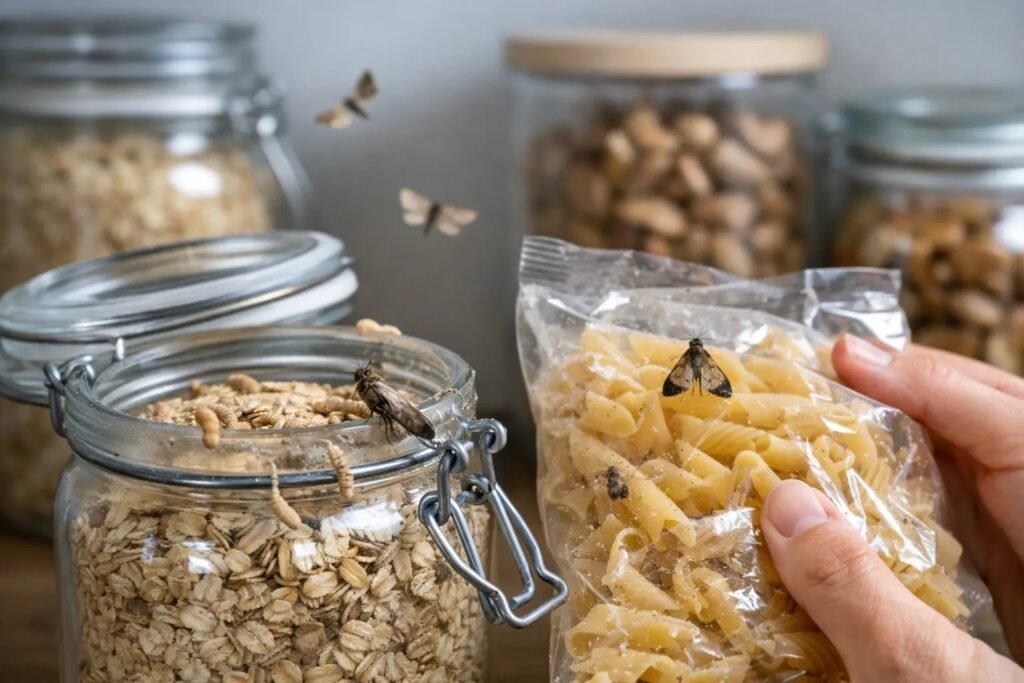
Pantry moths, most often Indian meal moths, are small moths about half an inch long with grayish wings and a coppery band near the tips. The adults you see flying around do not actually eat your food. The damage is done by their larvae, tiny cream-colored caterpillars with brown heads that spin silky webs inside bags of flour, rice, pasta, cereal, nuts, dried fruit, pet food, and birdseed. One female can lay several hundred eggs in her short life, which is why a few moths can turn into a full-blown problem in a matter of weeks.
Most infestations start at the grocery store. Eggs and larvae hitchhike home inside sealed-looking packages of dry goods. A bag of flour with a tiny tear, a box of pasta with a loose flap, or a bulk bin of nuts can carry them in. They can also wander in from a garage, a neighbor, or a bird feeder. Once inside, they spread from one open package to another, and the larvae can chew through thin plastic bags and cardboard boxes to reach new food. Pantry moths are not a sign of a dirty kitchen. They show up in spotless homes all the time, and what matters is whether dry food is stored in containers they can get into.
How to Tell If You Have Pantry Moths
Before you start throwing food away, confirm what you are dealing with. Adult moths flying in lazy loops around the kitchen in the evening are the most obvious clue. You may also spot them resting on ceilings and walls near the pantry. Look inside your dry goods for the real evidence: fine silky webbing in the corners of bags and boxes, small clumps of flour or grain stuck together, tiny caterpillars crawling in cereal or rice, and small black specks that look like sand, which are droppings.
Check the food you use least often first. That half-used bag of cornmeal at the back of the shelf, the box of pancake mix from months ago, and the bag of dog treats in the corner are favorite hiding places. Also check spice jars, dried herbs, and tea, since moths are not picky. If you find webbing or larvae in even one package, assume the infestation has spread and inspect everything. A quick look now saves you from repeating the whole cleanup a month later.
Step 1: Inspect Every Package and Throw Out Infested Food
The first step is the least pleasant but the most important. Take every item out of the pantry and inspect it one by one. Open each bag and box and look for webbing, larvae, or clumps. Any package that shows signs of infestation goes straight into a sealed trash bag and out of the house. Do not put it in the kitchen trash can and leave it there overnight, because the moths will simply crawl back out.
For food that looks clean but sat next to an infested package, you have two safe options. You can freeze it for four to seven days, which kills eggs and larvae at any life stage, or heat it in the oven at 140 degrees Fahrenheit for at least 15 minutes. Freezing is the easier choice for flour, rice, and grains. Put the food in a sealed freezer bag, label it, and leave it in the freezer for a full week to be safe. This is a good habit for all new bulk dry goods too, and it costs nothing.
Be ruthless here. Trying to save a two-dollar bag of rice is not worth weeks of moths. Once the shelves are empty, you will be able to see every crack and crumb, which is exactly what the next step needs.
Step 2: Deep-Clean Every Shelf, Corner, and Crack
With the pantry empty, vacuum every shelf, wall, and corner thoroughly. Use the crevice tool to get into the joints where shelves meet the wall, the gaps under shelf liners, and the tracks of sliding doors. Larvae hide in these tiny spaces and spin cocoons there, and a vacuum picks up eggs you cannot see. Empty the vacuum canister or throw the vacuum bag away outside immediately after you finish.
Next, wash all surfaces with hot soapy water. A simple mix of dish soap and hot water works well, and you can add white vinegar for extra cleaning power. Wipe the walls, the ceiling corners near the pantry, and the shelf brackets. Remove shelf liners and wash or replace them. If your shelves are painted wood, check for flaking paint and tiny holes, since larvae love to pupate in rough spots. A quick pass with a damp cloth along the top edge of every shelf catches cocoons that are easy to miss.
Do not forget the areas around the pantry. Wipe down the kitchen ceiling, the top of the refrigerator, and nearby cabinets, because adult moths rest and lay eggs in surprising places. This deep clean is also a good moment to improve your pantry setup in general. If you are working on making your kitchen easier to maintain, our guide to saving money on groceries without coupons includes tips on buying dry goods in sensible quantities, which also means less food sitting around long enough to attract moths.
Step 3: Trap the Adults With Pheromone Traps
Cleaning removes eggs and larvae, but adult moths can still be flying around, and each female can lay hundreds of eggs. Pheromone traps solve that problem without chemicals. These are simple sticky traps baited with a scent that attracts male pantry moths. The males fly in, stick to the trap, and cannot mate. With no mating, no new eggs appear, and the life cycle breaks.
Place one or two traps inside the pantry and one in the kitchen, near where you have seen moths flying. Replace them every two to three months, or sooner if they fill up. You should see the catch rate drop steadily over two to four weeks. If you are still catching many moths after a month, there is likely a hidden food source you missed, such as a forgotten bag of birdseed in the garage or pet food stored in an open bin.
Pheromone traps are not a complete solution on their own. They only catch males, and they do nothing about larvae already in your food. That is why they work best as part of the full plan: clean first, throw out infested food, then trap the survivors. Used this way, they are one of the most effective pesticide-free tools you can buy, and they are inexpensive and widely available at grocery and hardware stores.
Step 4: Use Natural Repellents to Discourage a Return
Once the pantry is clean and the traps are in place, natural repellents can help keep moths from settling in again. Bay leaves are the classic choice. Tuck a dried bay leaf into each canister of flour, rice, and grains, and tape one to the inside of the pantry door. The scent is unpleasant to moths but does not affect the flavor of your food. Replace the leaves every few months as the scent fades.
Cedar is another option. Small cedar blocks or sachets placed on shelves release an aroma moths avoid. Lavender sachets work too, and they make the pantry smell pleasant. Essential oils such as peppermint, eucalyptus, and tea tree can be dabbed on cotton balls and placed in corners, but keep them away from direct contact with food and out of reach of pets, since some essential oils are not safe for cats and dogs.
Be honest about what repellents can and cannot do. They discourage moths, but they will not stop a determined infestation if food is left in open bags. Think of them as a finishing touch, not the main defense. The real protection comes from the storage habits in the next step.
Step 5: Store Food So Moths Cannot Reach It
Long-term success comes down to storage. Move all dry goods into airtight containers made of glass, hard plastic, or metal. Glass jars with tight-fitting lids are ideal because you can see what is inside and the seal is reliable. Thick plastic canisters with locking lids work well too. Avoid thin plastic bags and cardboard boxes for storage, since larvae can chew through them.
When you bring home new flour, rice, or grains, freeze them for four days before putting them in the pantry. This kills any eggs that came home from the store. Buy in quantities you will use within a few months rather than stockpiling a year of supplies, and label containers with the purchase date so older stock gets used first. Keep the pantry cool and dry if you can, and wipe up spills right away. Crumbs and spilled flour under a shelf are an open invitation.
Pet food and birdseed deserve the same treatment. Store them in sealed containers, never in open bags, and keep them away from the kitchen pantry if possible. The same goes for decorative dried goods such as corn, gourds, and potpourri. These are easy to forget and often turn out to be the hidden source that restarts an infestation. A quick check of these items every month takes five minutes and saves a lot of trouble.
Mistakes to Avoid When Fighting Pantry Moths
The most common mistake is spraying insecticide in the pantry. Chemical sprays are not safe around food, and they do not solve the problem anyway, because they cannot reach eggs and larvae inside sealed packages. Worse, spraying can scatter moths deeper into the house. Another mistake is cleaning only the shelves you can see. The larvae hide in cracks, behind shelf liners, and in the pantry door frame. If you skip those spots, the moths will be back.
People also give up too early. It is normal to keep seeing a few moths for two or three weeks after a thorough cleanup. The traps catch the adults gradually, and pupae in hidden corners may still hatch. That does not mean the method failed. Keep the traps out, keep food sealed, and check the pantry weekly. If numbers are falling, you are winning. Only if moths are still increasing after a month should you search again for a hidden food source.
Finally, do not rely on a single trick. A few bay leaves alone will not clear an infestation, and traps alone will not remove larvae from your food. The combination of removing infested food, deep cleaning, trapping, and airtight storage is what works, because each step covers what the others miss.
How Long Does It Take to Get Rid of Pantry Moths?
Most households see a big improvement within two weeks and a full resolution within four to six weeks. The timeline depends on how large the infestation was and how thoroughly the first cleanup went. Adult moths live for one to two weeks, and the full life cycle from egg to adult takes about a month in a warm kitchen. That means you need to keep traps in place and food sealed for at least six weeks to catch the last stragglers.
Think of it as a season rather than a single event. The deep clean and food purge is one afternoon of work, and the traps and storage habits then do the rest quietly. Set a reminder to check the traps every two weeks and to inspect the pantry once a month. After two months with no moths in the traps and no webbing in your food, you can consider the problem solved.
Frequently Asked Questions
Are pantry moths harmful to eat?
Eating a small amount of pantry moth larvae or webbing by accident is unpleasant but is not generally considered dangerous for most healthy adults. Still, you should throw away infested food rather than eat it, because it can contain droppings, shed skins, and bacteria, and the quality of the food is spoiled.
Can pantry moths bite or sting?
No. Pantry moths do not bite, sting, or spread disease to people. They are a food pest only. Their damage is limited to the dry goods they infest and the annoyance of seeing them fly around your kitchen.
Will pantry moths go away on their own?
Very rarely. As long as there is food available, the moths will keep breeding. An infestation can last for months or longer if nothing is done. Removing the food source and trapping the adults is the only reliable way to end it.
Do bay leaves really keep pantry moths away?
Bay leaves can help discourage moths, but they are not a cure on their own. Use them as a supplement to airtight storage and traps, not as a replacement. Fresh, fragrant leaves work better than old, faded ones.
How do I keep pantry moths from coming back after I clean?
Store all dry goods in airtight glass or hard plastic containers, freeze new flour and grains for a few days before storing them, buy in smaller quantities, and keep a pheromone trap in the pantry as a monitor. Inspect the pantry once a month for webbing or larvae.
Can pantry moths live in the refrigerator or freezer?
No. Pantry moths cannot survive in a freezer, which is why freezing infested or new food kills them. They prefer warm, dark places, so refrigerated and frozen foods are safe. The pantry and the kitchen shelves are where they live and breed.
Getting rid of pantry moths without pesticides is mostly a matter of being thorough and patient. Remove the infested food, clean every corner, trap the adults, and store everything in airtight containers. The moths will not disappear overnight, but they will disappear, and the storage habits you build now will keep your pantry safe for a long time. If your pantry tends to collect half-used bags and forgotten boxes, a little organization goes a long way. Our guide to keeping brown sugar soft without a bread slice is a good next read, since it covers airtight storage tricks that work for sugar, flour, and other dry goods your moths would love to reach.