Prime Minister Narendra Modi has inaugurated Pune Metro’s Pink Line and laid the foundation stone for four new corridors under Phase II, in metro projects worth around Rs 21,800 crore. The programme was held through video conferencing, as Pune’s metro network takes its biggest single step forward since services began in the city.
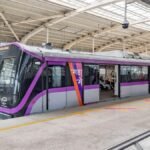
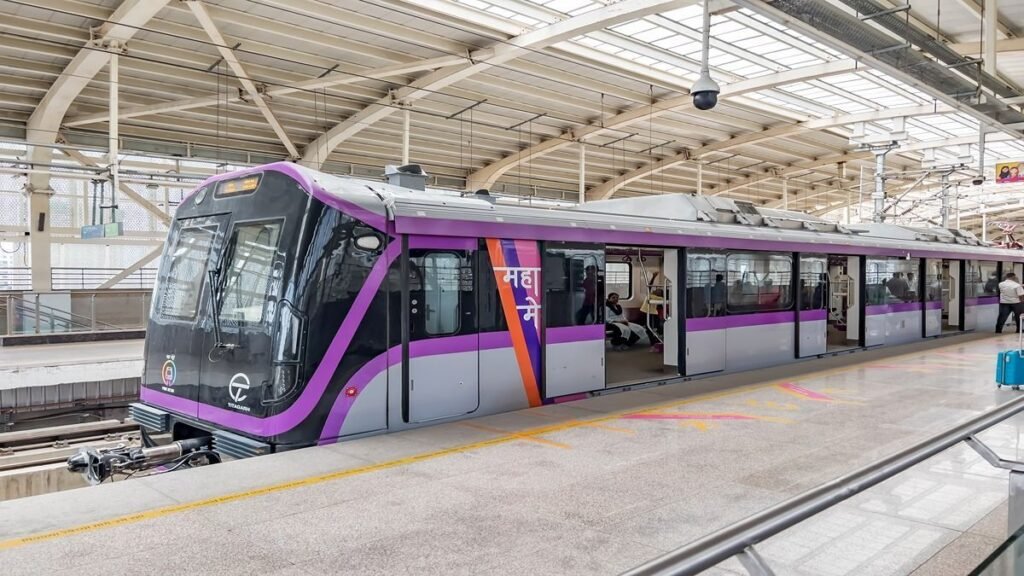
The newly inaugurated Pune Metro Line 3, or Pink Line, stretches approximately 23 kilometres and has been constructed at a cost of more than Rs 8,300 crore. The elevated corridor runs from Maan to the District Court Metro station, connecting the Hinjewadi information-technology hub with Shivajinagar, a major administrative, commercial and transport centre. According to reports, the line will be operated entirely by women train operators, with around 30 per cent of its electricity requirements planned to come from solar power.
Passenger services and stations
Passenger services on the corridor are set to begin with 17 of its 23 stations, while the remaining six stations are expected to open in phases. Sections ready for passengers open first, while finishing work continues elsewhere. For commuters, the distinction matters — the Pink Line is the corridor now inaugurated, while the other four lines form the planned expansion whose construction lies ahead.
Phase II: four new corridors
Alongside the inauguration, the Prime Minister laid the foundation stone for Pune Metro Phase II, estimated to cost around Rs 13,500 crore. The expansion comprises four corridors: Line 2A from Vanaz to Chandani Chowk, Line 2B from Ramwadi to Vitthalwadi, Line 4 from Kharadi to Khadakwasla, and Line 4A from Nal Stop to Manik Baug. Lines 2A and 2B together cover around 12.75 kilometres, strengthening east-west connectivity and access to the expanding eastern suburbs. Line 4 runs about 25.52 kilometres, while Line 4A extends 6.12 kilometres, taking the network deeper into rapidly developing residential, commercial and industrial neighbourhoods.
Why it matters for Pune
The Pink Line is particularly important for Pune’s substantial IT workforce, linking one of the city’s largest technology and employment hubs with the city centre. The Phase-II corridors extend that logic across the city, aiming to improve connectivity between residential areas, workplaces and commercial districts, and to reduce dependence on road traffic in a city whose growth has long outpaced its transport infrastructure. The Prime Minister said expansion of urban transport infrastructure would support economic growth and improve ease of living.
The latest PM-KISAN instalment reaches more than 9.34 crore farmer families, while GST collections provide the fiscal backdrop for central and state spending. The Pune metro expansion shows where part of that spending lands: in the daily commute of one of India’s fastest-growing cities.
#PMModi #PuneMetro #PinkLine #Maharashtra #UrbanTransport #PhaseII