A basement that smells musty can make the whole house feel damp and unwelcoming, even when the upstairs rooms are perfectly fresh. If you want to learn how to get rid of musty smell in basement without a dehumidifier, the good news is that you have many effective options that cost little or nothing. A dehumidifier helps in very damp spaces, but it is not the only way to dry the air, and it does nothing on its own about the mold, mildew, dust, and stored clutter that actually produce the smell. This guide shows you how to find the source, clean it properly, move air through the space, and keep the odor from coming back, all without buying a dehumidifier.
Musty odor is a signal that moisture has sat somewhere long enough for mold, mildew, or bacteria to grow. Concrete, wood, cardboard, fabric, and dust all absorb moisture and hold odor. That is why spraying air freshener never works for long: the fragrance fades, but the damp material underneath keeps releasing the same smell. Lasting results come from drying the material, cleaning the growth, and changing the conditions that let it grow.
First, Find Where the Smell Comes From
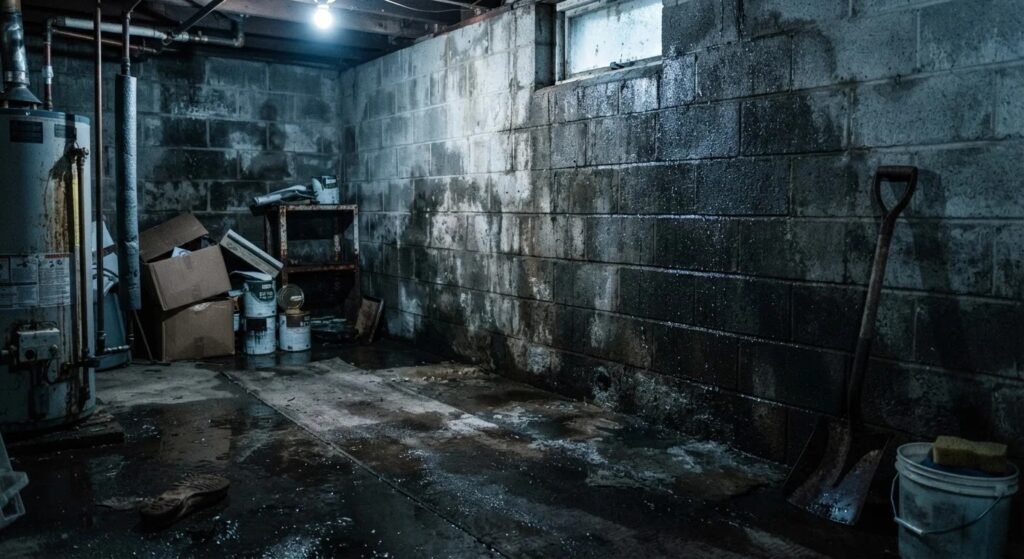
Before you clean anything, walk the basement slowly and use your nose as a guide. The smell is usually strongest near its source, so check corners, the area behind stored boxes, the wall behind the furnace or water heater, the laundry corner, and any spot where the floor meets the wall. Look for dark spots, discoloration, peeling paint, white powdery deposits, warped wood, damp cardboard, and water stains on walls or floors. Touch suspect surfaces with a gloved hand to see if they feel damp, and lift rugs and move boxes to check what is hiding underneath.
Also check for active water under sinks, around the water heater, near sump pits, at window wells, and along foundation walls after rain. A small, steady drip can keep a whole corner damp for months, and a gutter or downspout that dumps water against the foundation can feed moisture from outside. Fixing those exterior issues matters more than any indoor odor treatment, because water will keep returning until its path is changed.
Do not ignore the contents of the basement itself. Cardboard boxes, stored clothing, and upholstered furniture absorb moisture, grow mildew, and release that smell back into the room. If a box still smells strongly after the basement dries, its contents may need cleaning or discarding. Moving storage onto shelves or into plastic bins is one of the simplest long-term improvements you can make.
When to Call a Professional Instead
Most small musty patches can be handled with household cleaning, but some situations need professional help, and recognizing them early protects both your health and your home. If you find a large mold area, roughly bigger than a small patch you could cover with your hand, or mold spread across a wide section of wall, ceiling, or flooring, call a professional remediation service rather than trying to scrub it yourself. Large growth often means moisture has reached inside the wall or under the floor, where surface cleaning cannot reach it.
The same rule applies after flooding, sewage backup, or a long-term leak that soaked insulation, drywall, or carpet padding. Floodwater and sewage carry contaminants that household cleaning cannot safely address, and soaked porous materials often need professional drying or removal. If anyone in the household has asthma, severe allergies, or a weakened immune system, or if the smell comes with visible widespread mold, get professional advice before disturbing the area. Disturbing large mold colonies can release a heavy load of spores into the air.
This article is general household information only, not professional remediation advice. It covers small, surface-level mustiness in an otherwise sound basement. If you are unsure whether your situation is small or large, err on the side of a professional assessment. A short inspection is far cheaper than a hidden moisture problem that keeps growing behind a wall.
Airflow: Your Free Replacement for a Dehumidifier
A dehumidifier works by pulling moisture from the air, but moving air does much of the same job in a basement that is only mildly damp. Still, humid air has to go somewhere, so the goal is to exchange basement air with drier air from outside or from upstairs, and to keep air moving across damp surfaces so they can dry.
Start with windows. On a dry, breezy day, open basement windows on opposite sides to create cross-ventilation; even a small opening on each side moves a surprising amount of air. If your basement has only one window, open it together with the basement door to let air flow up the stairwell. A box fan in a window, blowing outward, pulls stale air out and draws fresher air in. Run it for several hours on a dry day, and repeat over several days until the space feels less stuffy.
Inside the basement, use fans to break up pockets of still air. Point a fan at a damp corner, along a wall, or across the floor, and leave it running for hours. Oscillating fans work well for general circulation, while a fan placed low helps dry surfaces where moisture collects. In a finished basement, running the central fan on circulate mode can also move basement air through the whole house system.
Timing matters. Ventilate on dry days, not during rain or on extremely humid days, when outdoor air may add more moisture than it removes. On wet days, keep windows closed and rely on indoor fans instead.
Deep Cleaning the Surfaces That Hold Odor
Once air is moving, clean the surfaces that are holding the smell. Start with the simplest step: remove everything you can from the worst-smelling area so you can reach the walls and floor. Take out damp cardboard, sort stored items, and set anything that smells strongly outside in fresh air and sunlight for a day if possible. Sunlight and fresh air are powerful, free deodorizers for fabric, wood, and plastic items that are not badly damaged.
For hard surfaces such as concrete, tile, sealed wood, and metal, wash with warm water and mild dish soap, scrubbing with a stiff brush, then rinse and fan-dry thoroughly. For mildew on hard, non-porous surfaces, white vinegar and water can help, but test it first on a hidden spot, and never mix vinegar with bleach. Wear gloves, eye protection, and a dust mask, and keep the area ventilated while you clean.
For unfinished concrete, a baking soda paste can lift odor from porous surfaces. Mix baking soda with just enough water to form a paste, apply it to the stained area, let it sit for an hour, scrub, and rinse. For painted walls, wash gently with soapy water and avoid soaking the paint. If paint is already peeling from moisture, let the wall dry fully before repainting, and consider a mold-resistant primer.
Carpet and rugs deserve special attention, because they trap moisture deep in their fibers. Vacuum slowly, sprinkle baking soda generously over the carpet, leave it for several hours or overnight, and vacuum again. If carpet padding underneath is damp or smells strongly even after cleaning, it may need replacing, since it is very difficult to fully dry once soaked.
Simple Odor Absorbers That Actually Work
After cleaning, odor absorbers help pull the last traces of mustiness from the air and from stored items. Baking soda is the most versatile and cheapest option. Place open boxes or shallow bowls of baking soda around the basement, especially near the worst-smelling corners, and replace them every few weeks. Activated charcoal, sold as charcoal bags or loose granules, absorbs odor even more effectively and can be recharged by placing it in sunlight for a few hours. White vinegar in an open bowl also absorbs odor, though its own sharp smell takes a day to fade, so it works best in a basement you are not using as a living space that week.
Plain clay cat litter in an open container also absorbs moisture and odor. These options are a useful finishing touch, but not a substitute for cleaning and drying: if the damp source remains, the smell will return as soon as the absorber is saturated.
Avoid heavy air fresheners and scented plugins as a fix: they layer fragrance over the musty smell without removing it. A clean basement should smell like fresh, neutral air.
Drying the Basement Without a Machine
Beyond fans and windows, several low-cost habits reduce basement moisture day after day. Keep the basement as uncluttered as possible, because clutter blocks airflow and creates damp pockets. Store items in sealed plastic bins rather than cardboard boxes, and keep bins a few inches away from walls so air can circulate behind them. Raise stored items off the floor on shelves or pallets, which protects them from minor floor dampness and lets air move underneath.
Check the exterior defenses that keep water out. Clean gutters and downspouts, extend downspouts so they release water well away from the foundation, make sure soil slopes away from the walls, seal small foundation cracks, and clear window well drains. Together, these often reduce basement moisture more than any indoor gadget.
Inside, fix plumbing drips promptly, insulate cold water pipes that sweat in summer, and make sure the clothes dryer vents fully outside, not into the basement. A dryer venting indoors can pump large amounts of moisture into basement air with every load. If you have a sump pit, make sure the pump works and the cover fits well. Small repairs like these remove moisture at its source.
Preventing the Smell From Coming Back
Prevention is mostly about routine. Check the basement once a month for new damp spots, especially after heavy rain, looking behind stored items and along the wall-floor joint, where moisture often appears first. Wipe up any small puddle immediately and find out where it came from. Keep baking soda or charcoal bags in place permanently as an early warning: when they start smelling musty, the basement is getting damp again.
Seasonal habits help too. In warmer months, ventilate on dry days and run fans after laundry. In colder months, make sure heating reaches the basement enough to keep surfaces warm, since cold walls attract condensation. Dry wet sports gear and camping equipment fully elsewhere before bringing them downstairs.
For a finished basement, moisture-resistant choices help: washable paint, tile or sealed concrete flooring, and furniture with legs that allow airflow underneath all resist mustiness better than wall-to-wall carpet pressed against walls.
Mistakes to Avoid
The biggest mistake is masking the smell instead of finding its source. Air freshener and scented sprays only hide the problem while mold and moisture keep growing underneath. Another mistake is sealing a damp wall with paint before it has fully dried, which traps moisture and guarantees peeling later. A third is cleaning a large mold area without protection or ventilation. A fourth is storing everything in cardboard on the floor, which recreates damp conditions within months. Finally, ventilating only once is not enough: basement freshness is ongoing maintenance.
When Ventilation Alone Is Not Enough
If water regularly seeps through the floor or walls, if the basement floods in heavy rain, or if the smell returns quickly after thorough cleaning, moisture may be trapped inside walls or under flooring. In that case, a professional waterproofing or moisture inspection is the right next step, since household steps cannot fix a structural water-entry problem.
FAQs
Can I really remove basement smell without a dehumidifier?
Yes, for mild to moderate mustiness. Cross-ventilation, fans, deep cleaning of odor-holding surfaces, and odor absorbers such as baking soda and activated charcoal can freshen most basements without a dehumidifier. The key is to find and fix the moisture source, not just mask the smell, and to keep air moving regularly.
How long does it take for the musty smell to go away?
Light mustiness often improves within a few days of ventilation and cleaning, while deeper odor in carpet, wood, or stored items can take several weeks of repeated cleaning and drying. If the smell has not improved at all after thorough cleaning and several dry, ventilated days, moisture may be trapped somewhere you cannot see, and a professional check is wise.
Is it safe to clean small mold patches myself?
Small, surface-level patches on hard, non-porous surfaces can usually be cleaned with soap and water, gloves, eye protection, and a mask, with good ventilation. Large areas, widespread growth, or mold after flooding or sewage exposure should be left to professionals. This article is general household information only, not professional remediation advice.
What is the best natural odor absorber for a basement?
Baking soda is the cheapest and most versatile choice, while activated charcoal absorbs odor more strongly and can be refreshed in sunlight. Use open bowls or bags near the worst-smelling areas, replace baking soda every few weeks, and remember that absorbers work best after cleaning and drying, not instead of them.
Why does my basement smell worse in summer?
Warm, humid air holds more moisture, and that moisture condenses on cool basement walls and floors, feeding mold and mildew. Summer is also when rain, groundwater, and sweating pipes add the most water. Ventilating on dry days, running fans, and keeping storage off the floor help most during this season.
Should I keep basement windows open all the time?
No, ventilate selectively. Open windows on dry, breezy days for cross-ventilation, and close them during rain, extreme humidity, or very cold weather. On wet days, rely on indoor fans instead. The goal is steady, controlled air exchange, not a permanently open basement that invites rain, pests, and damp air.