India’s northeastern region faces its biggest narcotics challenge as Myanmar cartels smuggle heroin, methamphetamine and opium across a porous border, and security agencies shift from seizure-only action to a network-centric strategy aimed at dismantling entire supply chains. Officials acknowledge that a drug-free India by 2029 will be difficult, but maintain it is not impossible.
An official says merely seizing drugs will not resolve the problem. Agencies now aim to target the sources, financiers and operators behind the trade, rather than treating each seizure as an end in itself: cartels keep generating more narcotics, so shutting down a consignment without shutting down the network leaves the trade intact.
A border that is hard to fence and harder to police
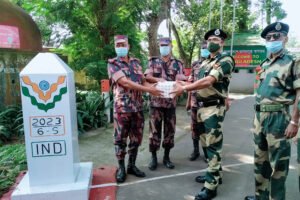
The 1,643 km India-Myanmar border is largely unfenced and cuts through dense forest and difficult terrain in Mizoram, Nagaland, Arunachal Pradesh and Manipur, giving cartels an advantage at times, officials say.
Local communities such as Nagas and Mizos have resisted fencing, and drugs are also pushed into Assam, West Bengal, Mizoram and Tripura through the Bangladesh border.
The barter route investigators describe
Myanmar has replaced Afghanistan as the world’s largest illicit opium producing nation, officials say, with 1,000 to 1,080 metric tonnes produced annually, alongside large quantities of yaba tablets, crystal methamphetamine and ketamine pushed into India.
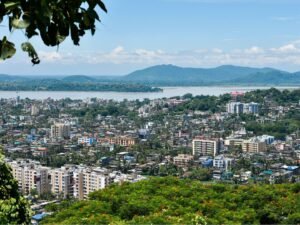
The Enforcement Directorate has traced 1,400 mule accounts belonging to traders in India who help drug syndicates procure goods for exchange for drugs. Drugs produced in Myanmar are carried across the Tiau River at Zokhawthar, opposite Khawmawi in Myanmar, then travel into Champhai in Mizoram, on to Aizawl, Vairengte and Assam, and then to the rest of India.
Transactions are handled through illicit money exchanges and hawala networks in Champhai, with money reaching the town from Delhi, Kolkata and Mumbai. Traders on the cartels’ payrolls procure everyday goods with GST invoices, making purchases look legitimate; the goods are then exchanged for drugs in a barter system, eliminating a money trail.
Why seizures alone fall short
Officials say these cartels are among the most sophisticated, capable of producing drugs on a very large scale, so a couple of seizures do not dent them while production capacity remains untouched. The network approach therefore targets the money trail within India, where investigators say it can be shut down even when the trail from Myanmar and Bangladesh is hard to close.
Enforcement in the region has already produced large seizures. The Directorate of Revenue Intelligence recently seized 50 kg of methamphetamine in twin operations in Assam and Mizoram, while security pressures in Manipur show how fragile peace remains. The drug trade, officials warn, feeds on that fragility.
#Northeast #DrugTrafficking #Myanmar #Mizoram #Manipur #Nagaland #EnforcementDirectorate