

A loaf of homemade sourdough is a small triumph. The crust crackles, the crumb is tender and open, and the flavor is deeper than anything from a supermarket shelf. The disappointment comes a day or two later, when that same loaf turns leathery, dry, or disappointingly soft. Learning how to keep sourdough bread fresh longer without a bread box is mostly a matter of understanding what makes bread go stale, because the storage method that works for soft sandwich bread is not the method that works for a crusty sourdough loaf.
A bread box earns its reputation honestly: it holds just enough humidity to keep the crumb soft while letting enough air circulate to protect the crust. But you can get very close to the same result with ordinary kitchen items you already own. The trick is matching the method to how quickly you will eat the loaf, and knowing which popular storage habits quietly ruin good bread.
Why Sourdough Goes Stale in the First Place
Staling is not the same as drying out, although the two often happen together. As bread cools and sits, the starches inside the crumb slowly reorganize and firm up, a process that makes the interior feel dry and tough even when moisture is still present. This is why a loaf can feel stale while still seeming moist inside, and why reheating can briefly bring it back to life: warmth temporarily reverses that starch change.
At the same time, moisture is constantly moving around inside the loaf. Water migrates from the soft crumb outward toward the crust, which softens the crust and dries the interior. Air circulation speeds up moisture loss from the cut surfaces, and a warm kitchen speeds up the whole process. Sourdough has one natural advantage here. Its acidity slows staling and discourages mold compared with many other breads, which is why a well-made sourdough keeps noticeably longer than a soft white loaf. Good storage builds on that advantage instead of fighting it.
The Golden Rule: Leave the Crust Alone Until You Slice
An unsliced loaf keeps far better than a sliced one, because the intact crust is a natural protective shell. Every cut surface is an open door for moisture loss, so the single most effective habit is also the simplest: slice only what you need, when you need it. If you bake or buy a whole loaf, keep it whole and cut slices from one end as you go.
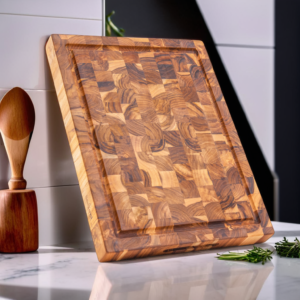
Once the loaf is cut, the exposed crumb becomes the weak point. Covering that cut face is more important than wrapping the whole loaf elaborately. A simple, effective method is to stand the loaf cut-side down on a cutting board or a clean plate. The board seals the exposed crumb against the air while the crust stays exposed and crisp. Cover the loaf loosely with a clean kitchen towel for extra protection, and you have a storage setup that keeps a loaf in good shape for a day or two with no special equipment at all.
The Best Everyday Methods, Ranked
Method 1: Cut-side down with a linen towel
For bread you will finish within two days, this is the best approach. Place the loaf cut-side down on a wooden board, drape a clean linen or cotton towel over it, and leave it at room temperature. The towel slows moisture loss without trapping so much humidity that the crust goes soft, and the board protects the crumb. This method keeps the crust at its best, which matters because a crisp crust is half the pleasure of sourdough.
The downside is that it is a short-term method. After about two days the crumb will start to firm up noticeably, especially in a dry kitchen. It also offers little protection in a very humid kitchen, where the towel can trap enough moisture to encourage mold on the crust. For most kitchens and most loaves, though, this is the method to start with.
Method 2: A paper bag inside a loose plastic bag
If you want the loaf to last a little longer, try the paper-and-plastic combination. Put the loaf in a paper bag first, then slip the paper bag loosely into a plastic bag without sealing it tightly. The paper absorbs excess surface moisture and protects the crust, while the plastic slows overall moisture loss. This combination is a good compromise between crust and crumb, and it often buys an extra day or two over the towel method.
Do not seal the plastic bag tightly. A sealed bag traps humidity against the crust, which goes soft and leathery within hours, and trapped moisture encourages mold. The bag should be closed loosely, folded over rather than knotted or clipped airtight, so a little air still circulates. Check the loaf daily, and if you see any condensation inside the bag, open it up and let the loaf breathe.
Method 3: A clean kitchen towel wrap
Wrapping the whole loaf in a clean cotton or linen towel is another solid option, especially if you do not have paper bags. Wrap it snugly but not tightly, and store it at room temperature away from heat and sunlight. A towel wrap protects the cut face and slows drying while still breathing enough to keep the crust reasonably crisp. Beeswax wraps work on the same principle and are a good reusable alternative if you already use them in your kitchen.
Avoid wrapping sourdough in plastic wrap alone. Cling film pressed directly against the crust traps moisture exactly where you do not want it, and the crust will soften quickly. Plastic wrap has its place in bread storage, but that place is the freezer, not the countertop.
What About the Refrigerator?
Refrigerating bread is one of the most persistent kitchen myths, and for sourdough it is usually the worst option. Cold temperatures actually speed up the starch changes that cause staling, so bread stored in the refrigerator goes stale faster than bread kept at room temperature. A refrigerated loaf may stay mold-free a little longer, but it will taste dry and tough well before mold becomes a concern.
The exception is a kitchen that is very warm or humid, where mold can appear in a day or two. In that case, refrigeration is a trade-off: you slow mold at the cost of faster staling, and you can partly recover the texture by toasting or reheating slices. For most people in most climates, though, the refrigerator is not the answer. Room temperature storage for a few days, or the freezer for anything longer, beats the refrigerator on both flavor and texture.
Freezing: The Best Method for Longer Storage
If you will not finish the loaf within three or four days, freezing is the best choice by a wide margin. Properly frozen sourdough keeps its flavor remarkably well, and a reheated slice can taste almost freshly baked. The key is freezing the bread at its best, not after it has already started to stale. Freeze the loaf on the day it is baked, or the day after, once it has cooled completely.
How to freeze a sourdough loaf
Let the loaf cool fully to room temperature before wrapping, since wrapping warm bread traps steam and creates ice crystals that damage the crumb. Decide whether to freeze the loaf whole or sliced. Slicing before freezing is more convenient, because you can take out exactly the number of slices you need without thawing the whole loaf. If you freeze it whole, you will need to thaw the entire loaf at once.
Wrap the bread tightly in plastic wrap, pressing out as much air as you can, then add a second layer: a freezer bag with the air squeezed out, or a layer of aluminum foil. Double wrapping protects against freezer burn and stray freezer odors, which bread absorbs readily. Label the package so you know what is inside, and use it within a few weeks for the best flavor, although it will remain safe to eat for longer.
How to thaw and revive frozen sourdough
For slices, there is no need to thaw at all. Toast frozen slices directly, adding a little extra time, and they will come out crisp outside and tender inside. For a whole loaf, unwrap it and let it thaw at room temperature for a few hours, then revive it in the oven. Sprinkle or mist the crust lightly with water, place the loaf in a moderate oven for ten to fifteen minutes, and let it cool briefly before slicing. The heat re-crispers the crust and softens the crumb, and the result is strikingly close to a fresh loaf.
The same oven revival works for a loaf that has gone slightly stale on the counter. A few minutes in a hot oven with a light mist of water will not rescue a loaf that is truly old or moldy, but it can bring a two- or three-day-old loaf back to enjoyable eating, especially for toast, sandwiches, or serving with soup.
Storing Half a Loaf and Leftover Slices
Half loaves deserve the same care as whole ones. Stand the half loaf cut-side down on a board and cover it with a towel, or place it cut-side down in a paper bag. The exposed crumb is the part that dries out, so protecting that face matters more than covering the crust. If you have a few leftover slices rather than a partial loaf, stack them with the cut faces together, wrap the stack loosely in a towel or paper bag, and use them within a day or two.
Stale slices are not a loss. Sourdough that is too firm for sandwiches makes excellent toast, and it is ideal for croutons, breadcrumbs, and bread pudding, where a drier crumb is actually an advantage. Cutting a stale loaf into cubes, tossing them with olive oil and seasoning, and baking until crisp gives you croutons far better than store-bought ones. Blitzing dried slices in a food processor gives breadcrumbs with real flavor. Thinking of stale bread as an ingredient rather than a failure takes the pressure off storage entirely.
Common Mistakes That Ruin Good Sourdough
Sealing bread in an airtight plastic bag or container is the most common mistake. It softens the crust quickly and invites mold. Storing bread near the stove, on top of the refrigerator, or in direct sunlight is another, since warmth accelerates both staling and mold. Slicing the whole loaf at once for convenience is understandable, but it exposes far more crumb to the air and shortens the loaf’s life noticeably.
Storing bread in the refrigerator out of habit is a quieter mistake, and so is leaving a loaf unwrapped on the counter, where the cut face dries out within hours. Another overlooked error is storing bread next to strong-smelling foods. Bread absorbs odors easily, so keep it away from onions, garlic, and anything pungent in the pantry or freezer. Finally, do not wait until the loaf is stale to freeze it. Freezing preserves bread at the quality it had when it went in, so freeze early if you know you will not finish it soon.
How Long Does Sourdough Actually Last?
At room temperature, a good sourdough loaf stays enjoyable for about three to four days, with the first two days being the best. After that it is still perfectly good for toasting and cooking, even if it is no longer at its peak for fresh eating. In a warm, humid kitchen, watch for mold after a few days, particularly on the crust and around the cut face. In a cool, dry kitchen, a loaf may stay mold-free for longer but will firm up faster.
Frozen sourdough keeps its best flavor for a few weeks and remains good for longer. The exact window depends on how well it was wrapped and how stable your freezer temperature is. Bread that has been frozen and thawed should not be refrozen, since each cycle degrades the texture further. Instead, thaw only what you need, and keep the rest frozen until you want it.
Choosing the Right Method for Your Household
The right storage method depends on how fast your household eats bread. A household that finishes a loaf in a day or two needs nothing more than the cut-side-down board and a towel. A household that takes four or five days to finish a loaf should freeze half the loaf on baking day and keep the other half on the counter. A single person who eats a few slices a week should slice and freeze the whole loaf, then toast slices straight from the freezer.
Climate matters too. In a dry climate, lean toward methods that slow moisture loss, like the paper-inside-plastic combination. In a humid climate, lean toward breathable methods and keep a closer eye out for mold. And if you bake regularly, consider baking smaller loaves more often rather than one large loaf that sits around. A fresh small loaf beats a large stale one every time, and smaller loaves are easier to store well.
Frequently Asked Questions
How long does sourdough bread stay fresh at room temperature?
A well-stored sourdough loaf stays enjoyable for about three to four days at room temperature, with the first two days at its best. After that it is still good for toasting, sandwiches on a grill, and cooking uses like croutons and breadcrumbs.
Should I store sourdough in a plastic bag?
Not sealed tightly on its own, because trapped moisture softens the crust and encourages mold. A paper bag placed loosely inside a plastic bag is a better combination, since the paper protects the crust while the plastic slows moisture loss.
Can I freeze sourdough bread?
Yes, freezing is the best method for storage beyond a few days. Slice the loaf first if you want to take out a few slices at a time, wrap it tightly in two layers, and toast slices straight from frozen or revive a whole loaf in the oven.
Why does my sourdough crust go soft overnight?
Moisture migrates from the crumb to the crust as bread sits, and any airtight wrapping traps that moisture against the crust. Storing the loaf cut-side down under a breathable towel, rather than sealed in plastic, keeps the crust crisp much longer.
Is it safe to eat sourdough with a small spot of mold?
No. Unlike some hard cheeses, mold on bread can spread invisibly through the soft crumb, so the safe choice is to discard a moldy loaf rather than cutting the spot off. Good storage and timely freezing are the best ways to avoid waste.
How do I revive stale sourdough?
Mist the crust lightly with water and warm the loaf in a moderate oven for ten to fifteen minutes, then let it cool briefly before slicing. This re-crispers the crust and softens the crumb. For individual slices, toasting is the simplest revival.













1 thought on “Keep Sourdough Bread Fresh for Days Without a Bread Box”
Comments are closed.